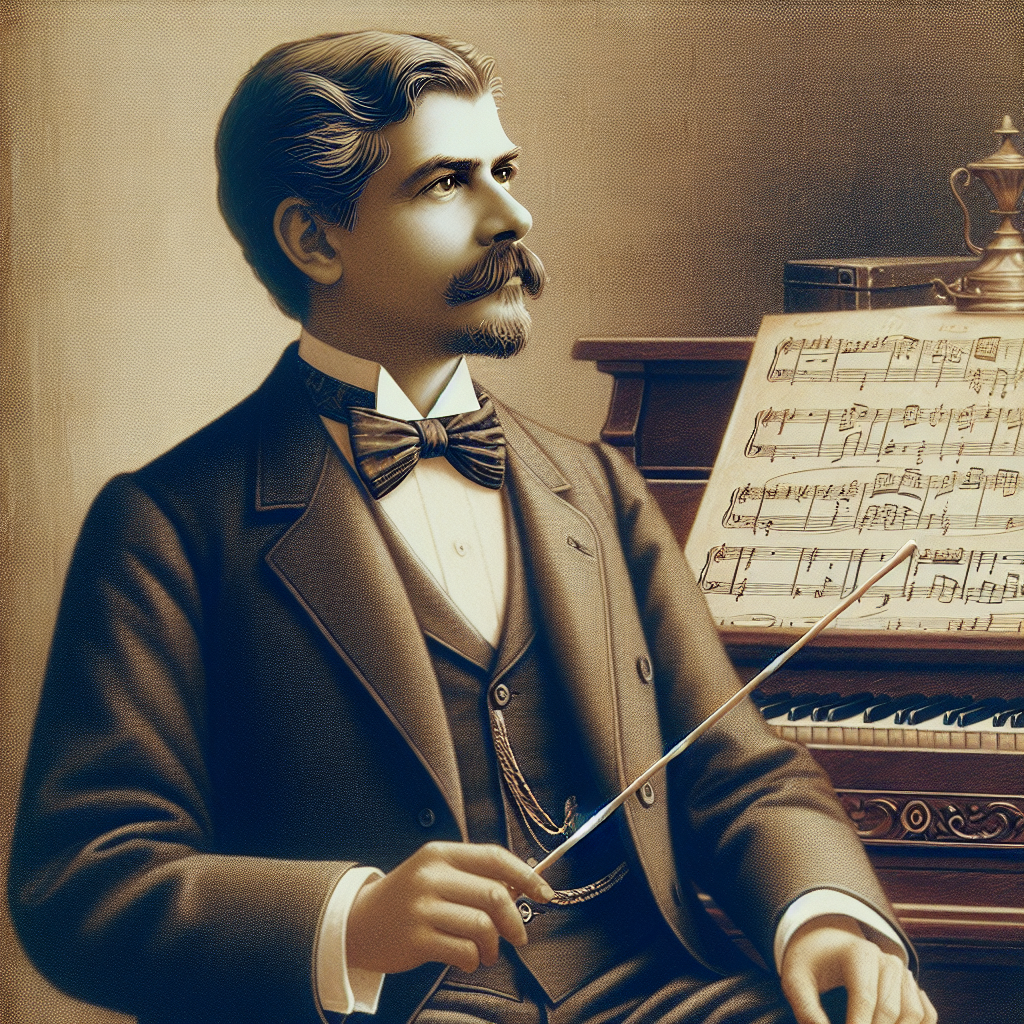

Leopold Damrosch was a maestro who orchestrated more than just musical notes; he conducted a symphony of cultural transformation. Born in a different era, this German-born conductor, composer, and musical missionary demonstrated that music could bridge two worlds. Arriving in America in 1871, Damrosch revolutionized classical music and introduced the grand traditions of European opera to a wider audience in the New World.
Who was Leopold Damrosch?
Leopold Damrosch was not just an ordinary musician but a devoted cultural ambassador. Born in Posen (then part of Prussia, now Poznań, Poland) on October 22, 1832, he was a medical student with a hidden passion for music. His journey from medicine to music underscores the transformative power of following one's passion. Leaving behind stethoscopes for a conductor's baton, Damrosch made his mark by founding the New York Symphony Society, bringing the rich, elaborate sounds of classical music alive in America.
The Genesis of a Musical Giant
Damrosch's journey to the podium was fueled by an insatiable curiosity and an unyielding zeal for music. His initial educational pursuits in medicine reveal the multifaceted nature of his interests, suggesting that even complex scientific inquiry was an avenue to understanding the world more profoundly. However, it was his education as a violinist and his profound service under Franz Liszt that truly set him on the path toward becoming a musical legend.
Before emigrating to the United States, Damrosch had already established his illustrious reputation in Europe. He served as a conductor at the Breslau Philharmonic and even ventured into opera. This period was a crucible that refined his talents and prepared him for the role he would eventually play on the world stage. His journey reminds us that the crossing of disciplines and borders often leads to the most profound innovations.
Championing Change in America
When Leopold Damrosch arrived in America, the classical music scene was ripe for reinvention. His optimistic drive and scientific approach to musical expression positioned him as an innovator. Damrosch founded the Oratorio Society of New York in 1873, aiming to stretch the boundaries of music performance in America. His rendition of oratorios, a type of sacred musical work, underscored the idea that elevating cultural experiences was much like advancing any scientific frontier—possible only through dedication, experimentation, and passion.
In 1878, Damrosch helped create the New York Symphony Society. This achievement symbolized not just personal success, but a collective leap for American audiences, now privy to symphonic grandiosity without the need for transatlantic travel. Through his efforts, concerts became forums where the complexities of human emotions told their stories through the language of music—universally understandable and delightfully resonant.
The Maestro's Legacy
One of Leopold’s most outstanding contributions was his effort to bring Richard Wagner's operas to the American public. At a time when Wagner's works were often seen as too complex or daunting, Damrosch took on the challenge with enthusiasm and saw it as an opportunity to educate and broaden the tastes of American audiences. His passionate belief in the transformative power of music and his willingness to take risks underscore his forward-thinking nature.
Damrosch's legacy is not just contained in the concerts he conducted or the orchestras he founded, but also in his family. His son, Walter Damrosch, continued his father's mission, carrying forward the love for music and continuing to enthrall audiences across America. Through this musical lineage, Leopold’s 'symphony of impact' resonates even today, convincing us that passion, when nurtured, is unstoppable.
Humanizing Harmony
Leopold Damrosch's life story is a testament to humanity's potential when individuals embrace their passions with an expansive outlook. Much like a scientist pursuing a groundbreaking hypothesis serves the whole of humanity, Damrosch's dedication to music advanced not just his own career, but the cultural consciousness of a nation. His drive served as a catalyst for change, proving that when art and ambition unite, extraordinary transformations await.
Even today, we learn from Damrosch's symphonic breakthroughs. In his enthusiasm and genuine belief in the connective power of music, we find inspiration to harmonize our own worlds, transforming ordinary lives into extraordinary movements.