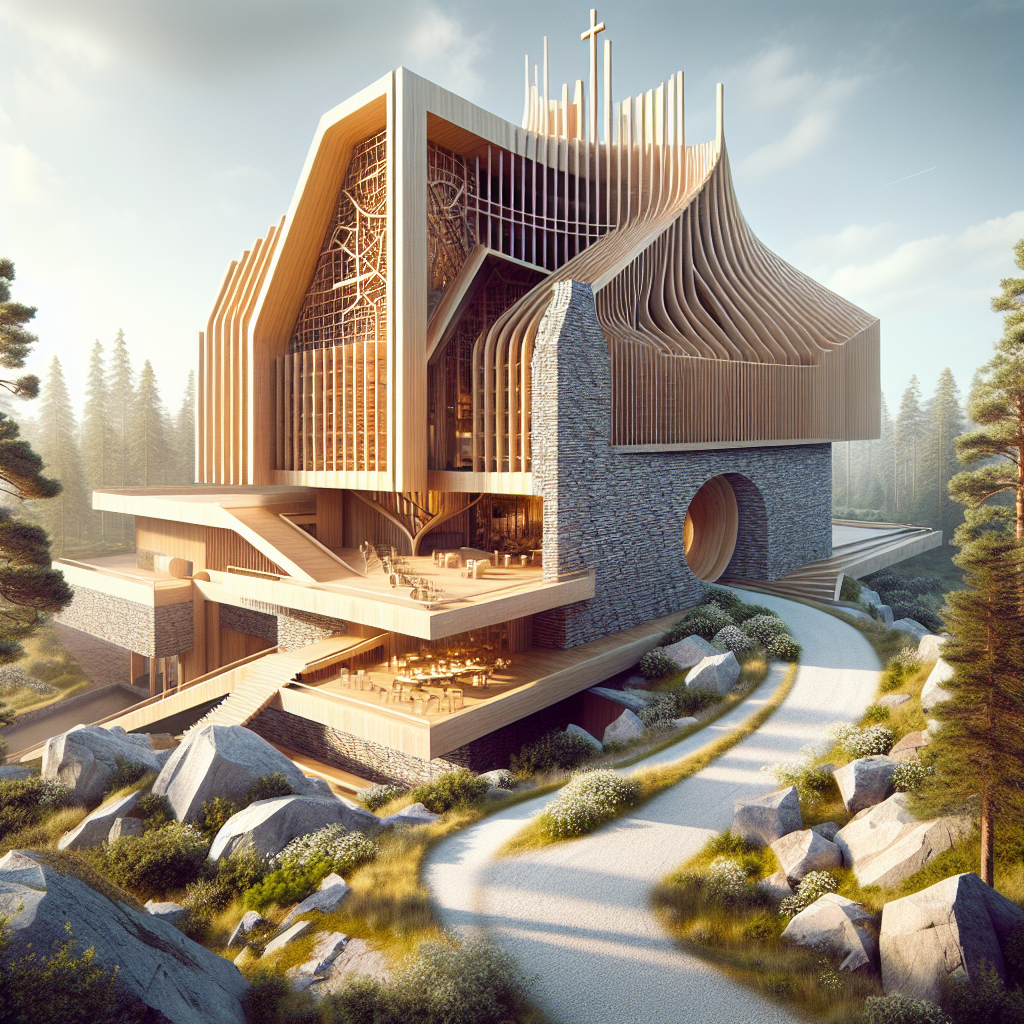

Lars Sonck: Architect of Imagination and Innovation
Have you ever walked into a building so fascinating that it felt like walking into someone’s dream? That's what it can be like engaging with the works of Lars Sonck, the Finnish architect who revolutionized Nordic architecture in the late 19th and early 20th centuries with his innovative and imaginative designs. Born in Kälviä, Finland, in 1870, Sonck’s architectural journey began in a post-industrial world eager for modernization. His creative genius spanned from churches to urban planning, with his most famous works gracing the skylines of Finland’s cities.
The Rising Star of Finnish Architecture
When we talk about Sonck, we're discussing someone who possessed both an academic commitment to architecture and a refreshing curiosity for the new. His academic journey began at the Helsinki University of Technology, where his talent quickly proclaimed him as a prodigy. Imagine crafting a career-defining work at the tender age of 23! That’s exactly what Sonck achieved with the Tampere Cathedral—a masterpiece that beautifully melds both National Romanticism and the fervor of an artist unfettered by tradition.
One cannot discuss Lars Sonck without mentioning his adeptness in blending various architectural styles, often in a single project. This was during a period when Finland was forming its national identity, and its architecture had the weighty task of projecting Finnish culture and aspirations. Sonck embraced elements of Jugendstil—a variation of Art Nouveau with a Northern twist that celebrated native flora and fauna—and stylized them into the structures he crafted.
Lars Sonck's Architectural Portfolio
1. Tampere Cathedral
This project is not just an icon of Finnish National Romantic art; it's a testament to what's possible when architecture transcends itself to become a storytelling medium. Sonck, collaborating with artists Hugo Simberg and Magnus Enckell, transformed the interior into a narrative fresco. My advice? If you ever have the chance, experience Simberg's 'Garden of Death' or 'The Wounded Angel' in person—it's where architecture and art echo each other in haunting harmony.
2. Kallio Church
In stark contrast lies Kallio Church in Helsinki. Commissioned in 1908 and completed in 1912, Sonck envisioned a granite-clad structure that stood like a guardian over the Kallio district. The church is a sublime example of Nordic granite austerity, with Art Nouveau influences softening its robust outline. Unlike Tampere Cathedral, Kallio Church whispers its monumental presence, a testament to Sonck's versatility.
3. Eira Hospital
A venture into urban planning and public health structure, Eira Hospital, completed in 1905, speaks volumes about Sonck’s forward-thinking nature. The hospital stands elegantly, mirroring the Jugendstil tendencies of its era with more muted elegance. Even in medical buildings, Sonck’s work remained celebratory of both functionality and beauty.
The Larger Context of Sonck’s Work
Why did Lars Sonck matter so much to architecture? His designs didn’t just define physical spaces; they echoed the philosophical search for an architectural language that was distinctly Finnish, yet universally applicable. He was working against the backdrop of changing political climates, where Finland was emerging from Russian dominance towards its identity. Sonck succeeded in embroidering Finland's architectural identity onto the fabric of a broader European canvas.
The Science of Style and Substance
Sonck's work can be seen as an exploration of the tension between style and substance—a balance akin to biochemistry, where the structure of molecules defines their function and purpose. His ventures into combining Art Nouveau intricacy with monumental solidity of Finnish Romanticism aren't just expressions of whimsy. They're a codified response to a rapidly modernizing world.
By integrating local materials and motifs with international styles, Sonck became not just an architect, but a cultural alchemist—transmuting raw materials into brick-and-mortar symbols of a nation's dreams.
Legacy and Inspiration
Sonck's influences reverberate through modern architecture, where the integration of tradition with innovation becomes ever more pertinent. Isn’t it fascinating how the structures we build say so much about the ideals and people we value? As an optimist and a lover of human potential, I find it thrilling to consider how architecture holds the power to shape societal behavior and foster community well-being. Like Sonck once did, perhaps we too can imagine spaces that not only shelter but inspire.
Although Sonck passed away in 1956, his work stands the test of time, inspiring new generations to appreciate not just the function of architecture, but its potential to enlighten and unite. As we look to the future, Sonck’s work reminds us that the rigor of exceptionality paired with artistic liberty can indeed sculpt the ethos of a nation.