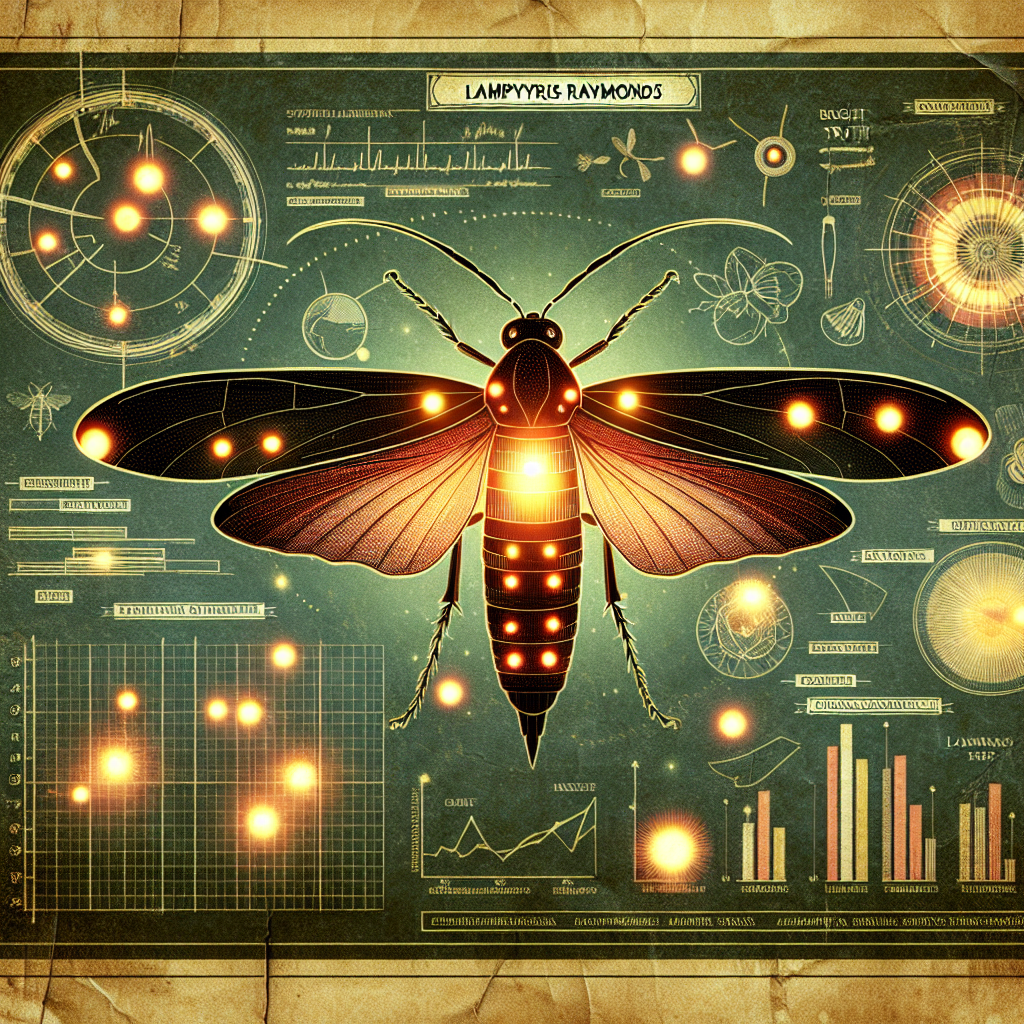

Glimmering Legends: The Luminescent World of Lampyris raymondi
Picture a twilight garden, where the leaves whisper with the soft hum of night and, like tiny stars that have fallen to embrace the earth, beetles flicker with a captivating glow. One such enchanting creature is Lampyris raymondi, more commonly known as the lesser known of the glow-worm species. But who exactly is this radiant resident of the natural world, what makes it unique, and why does it steal the show in the theater of nocturnal wonders?
Who is Lampyris raymondi?
Lampyris raymondi is a species under the beetle family Lampyridae, renowned for its bioluminescent abilities, a characteristic typically associated with the more recognized fireflies. This fascinating beetle has a simpler yet equally mesmerizing glow that captivates scientists and nature enthusiasts alike. Named in honor of the French entomologist Raymond Péricard who dedicated much of his life's work to the study of lampyrid beetles, Lampyris raymondi carries his legacy into the moonlit fields and forests where it thrives.
What Sets Lampyris raymondi Apart?
The spectacular glow of Lampyris raymondi serves not just for beauty but as a practical evolutionary adaptation. Unlike the rhythmic, flashing glow of fireflies which communicate mating signals, the steady, continuous glow of this species primarily deters predators by signaling that they are not a delightful snack. This luminescence results from a chemical reaction involving luciferase, luciferin, and oxygen – a process that's an exemplar of nature's ingenuity.
Interestingly, only the larvae and female stages of Lampyris raymondi exhibit this glow, with adult males remaining unlit, often resembling typical beetles to the untrained eye. The females retain larva-like features into adulthood, a phenomenon known as neoteny, further emphasizing the evolutionary strategies that empower their survival.
The Flickering Habitats
Lampyris raymondi is predominantly found across various parts of Europe, basking in temperate climates and humid environments such as meadows, hedgerows, forests, and gardens. These habitats provide the ideal conditions for their glow to spiral seamlessly in the night, at once spectacular to behold yet subtle against the starry skies.
Globally, the glow-worm’s existence signifies a healthy environment, acting as a bioindicator for ecological balance. Thus, preserving their natural habitats is crucial, not just for their survival but for ours as well. It urges us to maintain our green spaces with conscious care – an inspiring call to action against environmental degradation.
Why They Glow: The Science of Bioluminescence
Bioluminescence is one of nature's most remarkable features, a living light fascinating enough to inspire legends and scientific inquiry alike. In Lampyris raymondi, this glow primarily stems from the reaction between luciferin and oxygen, catalyzed by the enzyme luciferase. The process results in the emission of light without heat – a functionality that human technology aspires to mimic for sustainable lighting solutions.
This entire display unfolds in the beetle's lower abdomen, where specialized cells known as photocytes house the bioluminescent materials. Not only does this enchantment help sustain the glow-worm's life by protecting it, but it equally inspires a sense of wonder that resonates deeply with our innate curiosity about the complexities of life.
Riding the Waves of Time
The magic of Lampyris raymondi isn't just a fleeting spark in our natural history; it is a thread woven through the tapestry of human cultural narratives for centuries. Long considered a luminous messenger across ages, glow-worms appear in literature and folklore, often symbolizing guidance and hope in the darkness. Their light reflects humanity's unyielding quest for knowledge and understanding, transcending the boundaries between nature and life.
Humanity’s Role in Preserving the Glow
Our world is enmeshed in its own versions of darkness, from pollution to climate change, all threatening the very habitats that Lanternimposed races like Lampyris raymondi call home. The luminescent dance of these beetles is a dazzling reminder of the beauty that natural diversity holds, and the profound responsibility we share to protect it.
By fostering biodiversity-friendly choices in our agriculture, gardening, and land management practices, we can safeguard these species and ensure that their lights continue to grace our nights for generations to come. Planting native flora, reducing pesticide use, and conserving habitats allow us not just to preserve glow-worms, but to step hand-in-hand with nature towards a brighter future.
A Flicker of Optimism
Curiosity is a beacon leading us through the mysteries of nature, just as the glow of Lampyris raymondi lights up the night. With each flicker, it ignites not only the surrounding habitats but also the passion within researchers and citizens alike, casting a luminous spotlight on the immense value of even the tiniest creatures.
When we pause to look at these glowing wonders, we're reminded of nature’s resilient elegance and the optimism that comes with scientific discovery and conservation. As you gaze upon a glowing garden, let's remember these sparks of life are channels connecting us to a comprehensive story from life's archives and onto brighter chapters still to be written.