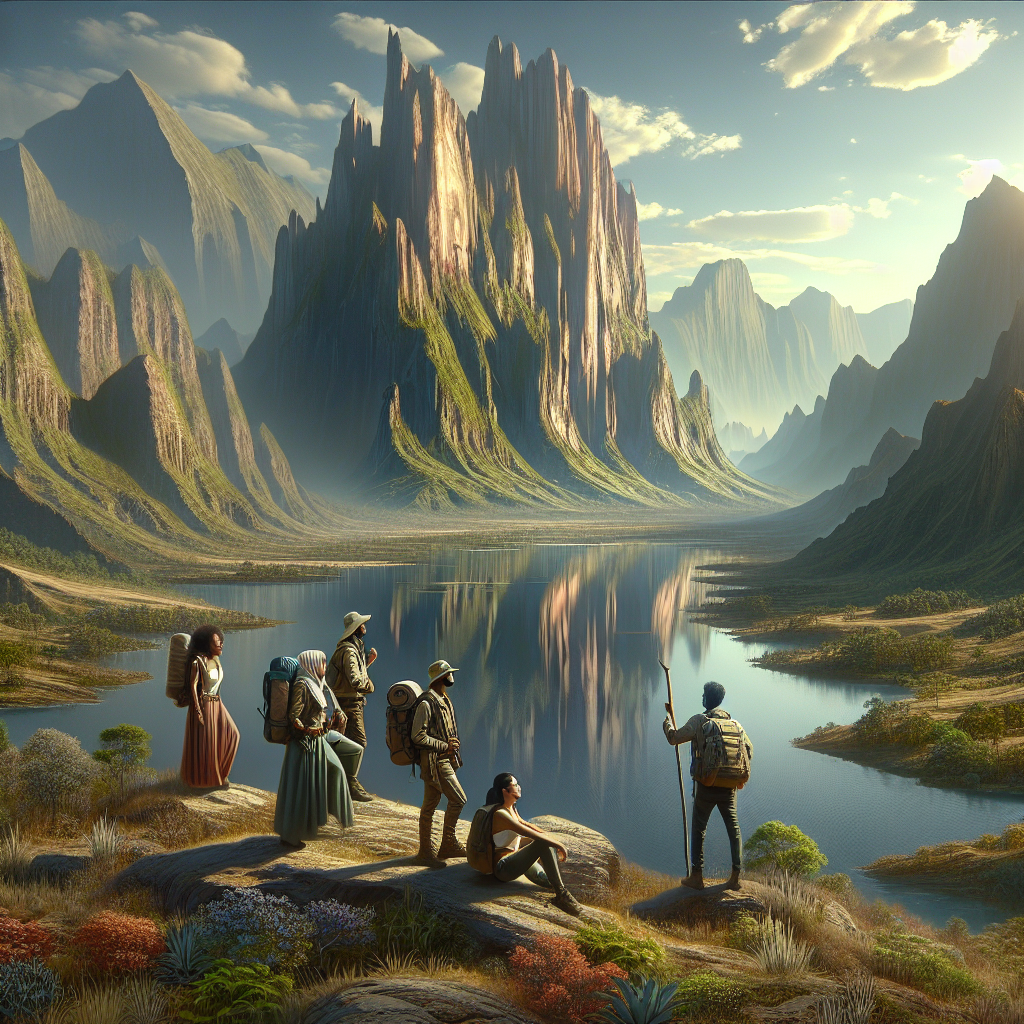

Discovering the Kaimur Range: A Geological Marvel
Imagine a place where ancient rocks tell stories of Earth's distant past, where the landscape is a testament to the forces of nature that have shaped our planet over millions of years. Welcome to the Kaimur Range, a fascinating geological formation located in central India. This range stretches across the states of Madhya Pradesh, Uttar Pradesh, and Bihar, forming the eastern part of the Vindhya Range. The Kaimur Range is a plateau that rises to an average elevation of 300 to 600 meters and is known for its rich biodiversity and historical significance.
The Kaimur Range is a part of the Vindhyan Supergroup, a sequence of sedimentary rocks that were deposited over 1.6 billion years ago during the Proterozoic Eon. These rocks are primarily composed of sandstone, shale, and limestone, and they provide valuable insights into the Earth's geological history. The range is also home to several important archaeological sites, including ancient rock paintings and carvings that date back to prehistoric times, offering a glimpse into the lives of early human civilizations.
The Kaimur Range is not just a geological wonder; it is also a vital ecological zone. The region is covered with dense forests that are home to a diverse array of flora and fauna. The forests of the Kaimur Range are part of the Eastern Highlands moist deciduous forests ecoregion, which supports species such as tigers, leopards, and various types of deer. The range's unique topography and climate create a habitat that is crucial for the survival of these species.
In addition to its natural beauty and ecological importance, the Kaimur Range has significant cultural and historical value. The region is dotted with ancient temples and forts, some of which date back to the Gupta and Maurya empires. These historical sites attract tourists and historians alike, eager to explore the rich cultural heritage of the area.
The Kaimur Range is a remarkable example of how geological formations can influence the environment, culture, and history of a region. Its ancient rocks, diverse ecosystems, and historical landmarks make it a place of great interest for geologists, ecologists, historians, and travelers. As we continue to study and appreciate the Kaimur Range, we gain a deeper understanding of the natural world and our place within it.