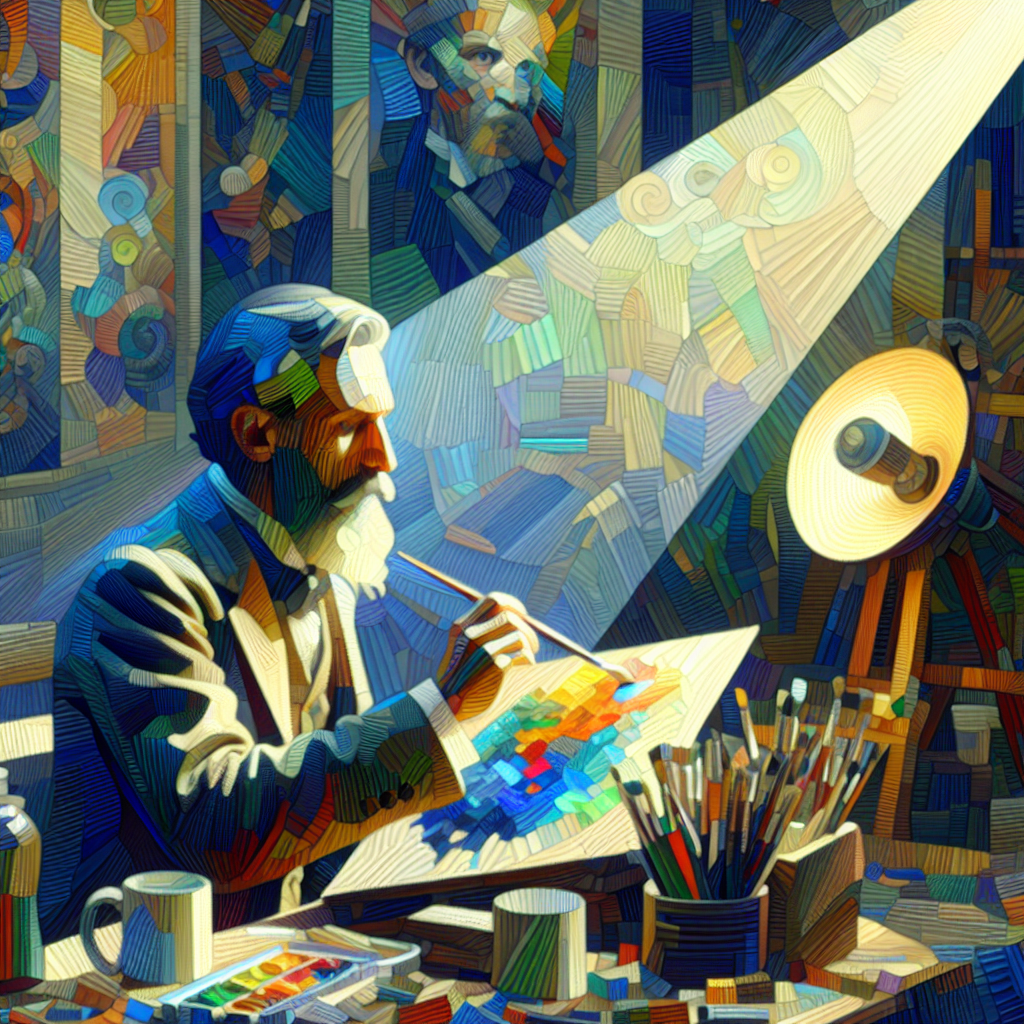

Imagine a mind that skillfully bridges the realms of art and science, leaving a lasting impression on both fields. Enter the world of Josep Reynés, a master sculptor from Barcelona whose work continues to inspire curiosity and admiration. Born in 1850, this Catalonian artist made vibrant contributions to culture before and after the turn of the 20th century. But why does his impact resonate so profoundly? With optimism for human achievement and an analytical approach that breaks down complexity, we explore Reynés' life, work, and lasting legacy.
A Life Embarked on Artistic Excellence
Josep Reynés was born in 1850 in Barcelona, a city that, even at the time, was a cradle of artistic and intellectual fervor. His journey into the world of art was not just a personal choice, but a reflection of the cultural milieu of a city that celebrated its creative spirits. A true optimist, Reynés saw art as a transformative tool—a form of communication across time.
It’s here in Barcelona that he honed his craft, surrounded by the burgeoning Modernisme movement—a local spin on the broader Art Nouveau wave sweeping Europe. His style initially took root in the classical forms before adapting a more fluid, personal interpretation that echoed the organic architecture found in nature. In 1878, Reynés opened his workshop, which quickly became a thriving hub for artistic creation.
Contributions to the Public Space
The optimism in Reynés is most evident in Barcelona’s public landscapes. Walk through the city and you'll likely encounter his craftsmanship in structures like fountains, sculptures and architectural embellishments. Barcelona feels like an open-air museum in part due to his artistic contributions.
One significant work is his collaboration with architect Pere Falqués on the famous "Gran Via de les Corts Catalanes," where Reynés sculpted the sculptural lamp posts that still stand today. These aren’t merely street fixtures; they are meaningful interactions between design, function, and public appreciation.
Reynés' interest in the rhythms and forms of nature allowed him to blend seamlessly into the Modernisme movement, creating works intertwined with botanical motifs and imaginative creatures. His piece "Font dels Nens"—a playful children's fountain—captures the essence of this artistic period with its whimsical depiction of children at play, rendered in meticulous detail.
The Science of Sculpture
Reynés saw art and science as akin in their pursuit of truth and excellence. Sculpture for him was not just about aesthetic appeal but about understanding materials—an intertwining of artistic vision with scientific knowledge. This attitude positions him uniquely in art history, breaking down the notion that science and art are separate endeavors.
His work with marble, bronze, and other materials benefited from his keen understanding of chemistry and physics, allowing him to manipulate structures in revolutionary ways. The technical expertise required to create such works is immense; the choice of material affects everything from structural integrity to longevity and visual impact.
Reynés' Legacy and Influence
Why does Josep Reynés remain relevant today? Besides his tangible contributions to urban spaces, his influence extends to the way we perceive and create art as a part of our scientific understanding of the world. By emphasizing the perceptual relationship between humans and their environments, his work serves as a powerful reminder that both art and science fundamentally aim to explore and reflect human experience.
Through his sculptures, Reynés invites us to think differently about the objects around us. Each creation tells a story, encourages engagement, and provokes thought—all hallmarks of an optimistically scientific mind. His ability to translate complex ideas into universally accessible art underscores his lasting impact on both current and future generations.
For artists, scientists, or even casual observers in today's world, Reynés' legacy speaks volumes. In bridging divergent domains, he challenges us to never box ourselves into single narratives or skillsets. Instead, much like Reynés himself, we should embrace the pursuit of knowledge in all its forms to create enriched, multifaceted lives.
The Crossroads of Creativity
In essence, Reynés reminds us that art and science are not mere isolated fields but interconnected spheres of innovation and enlightenment. As humanity continues to marvel at the cosmos and the human condition alike, his life's work speaks toward an optimistic belief in our endless capacity for creativity and understanding.
So, next time you stroll through Barcelona—or even ponder the art in your own environment—imagine the mind of Josep Reynés, crafting not just sculptures, but forging a legacy woven into the fabric of everyday life.