
Nature’s Hopping Miracle: The Jerboa
Imagine a mouse that can leap like a kangaroo, traverse deserts at night, and has ears that would make Dumbo envious. The jerboa, a remarkable little creature, is a rodent native to the vast deserts of North Africa and Asia. These small mammals have fascinated naturalists and scientists for centuries with their unique adaptations. Deserts, harsh and unforgiving landscapes, are no easy place to survive, but the jerboa has turned this challenge into an evolutionary showcase that we can all learn from and marvel at.
What on Earth is a Jerboa?
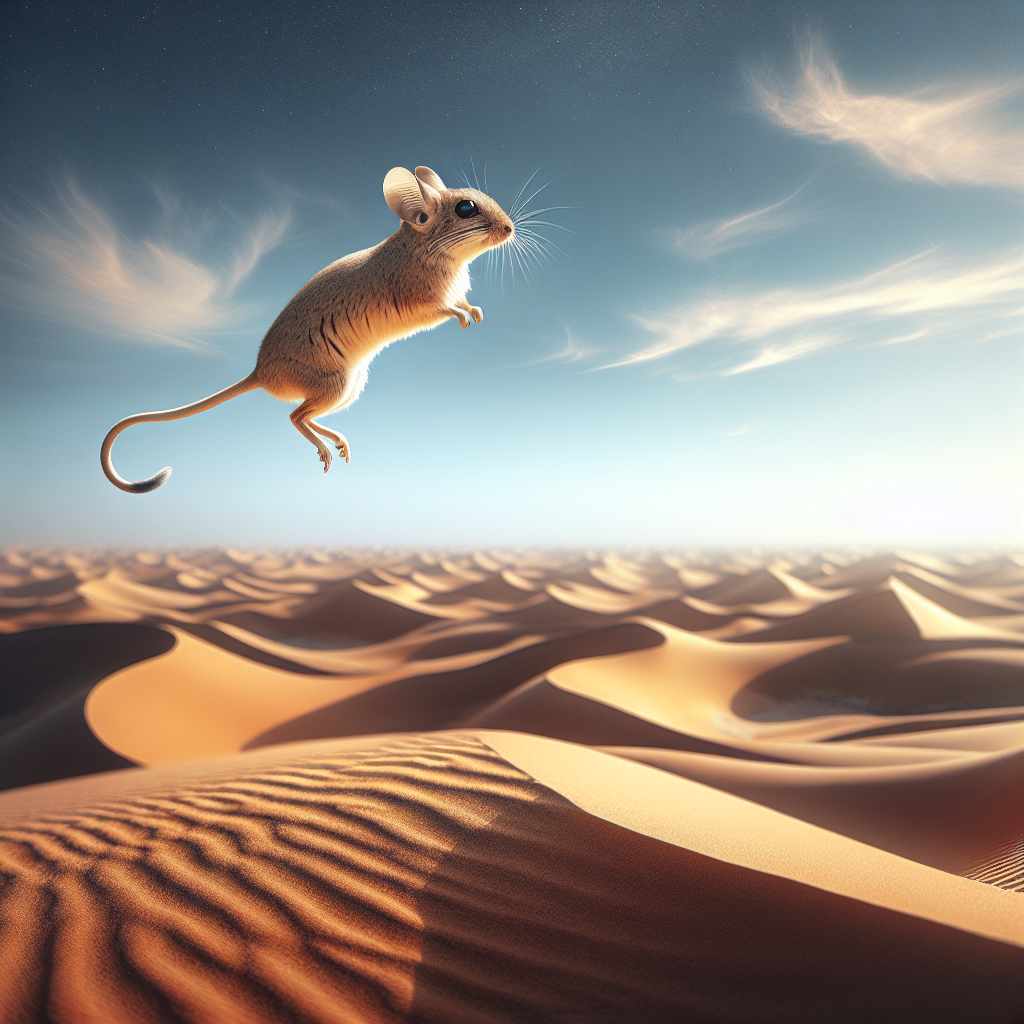
The jerboa might look like a mix between a kangaroo and a mouse, but it belongs to its own unique family — the Dipodidae. What's particularly astounding about these little animals is their ability to hop great distances, sometimes up to ten times their body length! With bodies typically measuring between 2 to 6 inches, their tails can be more than double that length. This, coupled with their disproportionately large ears and hind legs, makes them an extraordinary sight.
A Night Owl in the Desert
Jerboas are nocturnal, meaning they are most active during the night. Living primarily in deserts, their nocturnal lifestyle helps them avoid the scorching sun and dehydration. During these cooler hours, they forage for food, eating insects, seeds, and plants, replenishing their energy reserves for another hopping adventure.
The Evolutionary Acrobatics
Let’s bask in the wonder of evolution for a moment: those incredible legs! Jerboas have evolved elongated hind legs capable of impressive, sometimes whimsical, bounds that serve as their main form of locomotion. This bipedal (two-legged) movement, reminiscent of some birds and the more familiar kangaroo, allows them to conserve energy and quickly escape predators. Meanwhile, their long tails serve as a counterbalance and steering mechanism, ensuring they always land upright and ready for the next leap.
Masters of Adaptation
The jerboa's physiology is a masterclass in adaptation. Take those comically large ears, for example. They're not just for show — they play a crucial role in thermoregulation, helping these critters release body heat and maintain a stable internal temperature amidst the desert heat. Additionally, their fur is sand-colored, providing excellent camouflage against predators in their sandy habitat.
An Example of Modesty in Survival
Unlike larger mammals that might rely on brute force or complex social dynamics to survive, the jerboa exemplifies a lifestyle of modesty and efficiency. It hides in burrows during the daytime, escaping from the heat and offering protection from predators. These burrows also serve as a safe haven to raise their young until they can hop away on their own.
What Can Humanity Learn from the Jerboa?
Besides their undeniable cuteness, jerboas teach us a fundamental lesson in resilience and adaptation. They remind us that flexibility and clever use of even the smallest resources can lead to survival in the harshest conditions. This is an empowering message for humanity, especially as we face our own environmental challenges. What’s more, their hopping mechanics have inspired studies in biomechanics, potentially influencing robotics and prosthetic designs. Imagine a new generation of robots or prosthetics trumping the limitations of traditional designs by hopping instead of walking!
Conservation: A Future for the Jerboas
Though jerboas are generally not endangered, certain species face threats from habitat loss, primarily due to human activities like agriculture and urban development. Protecting their habitat is crucial — not just for the jerboas, but for maintaining the rich biodiversity of desert ecosystems.
In Celebration of This Little Hopper
Finally, let’s appreciate the sheer joy of learning about creatures like the jerboa that remind us of nature's creativity and resilience. Whether it's through their dynamic acrobatics or their clever survival tactics, jerboas add to the vast mosaic of life on Earth that makes our planet such a wondrous place to explore.
As you imagine the jerboa’s nighttime journeys through the dunes under a starlit sky, remember that science is as much about marvel as it is about knowledge. The more we learn, the more we connect with the world around us and its incredible inhabitants.