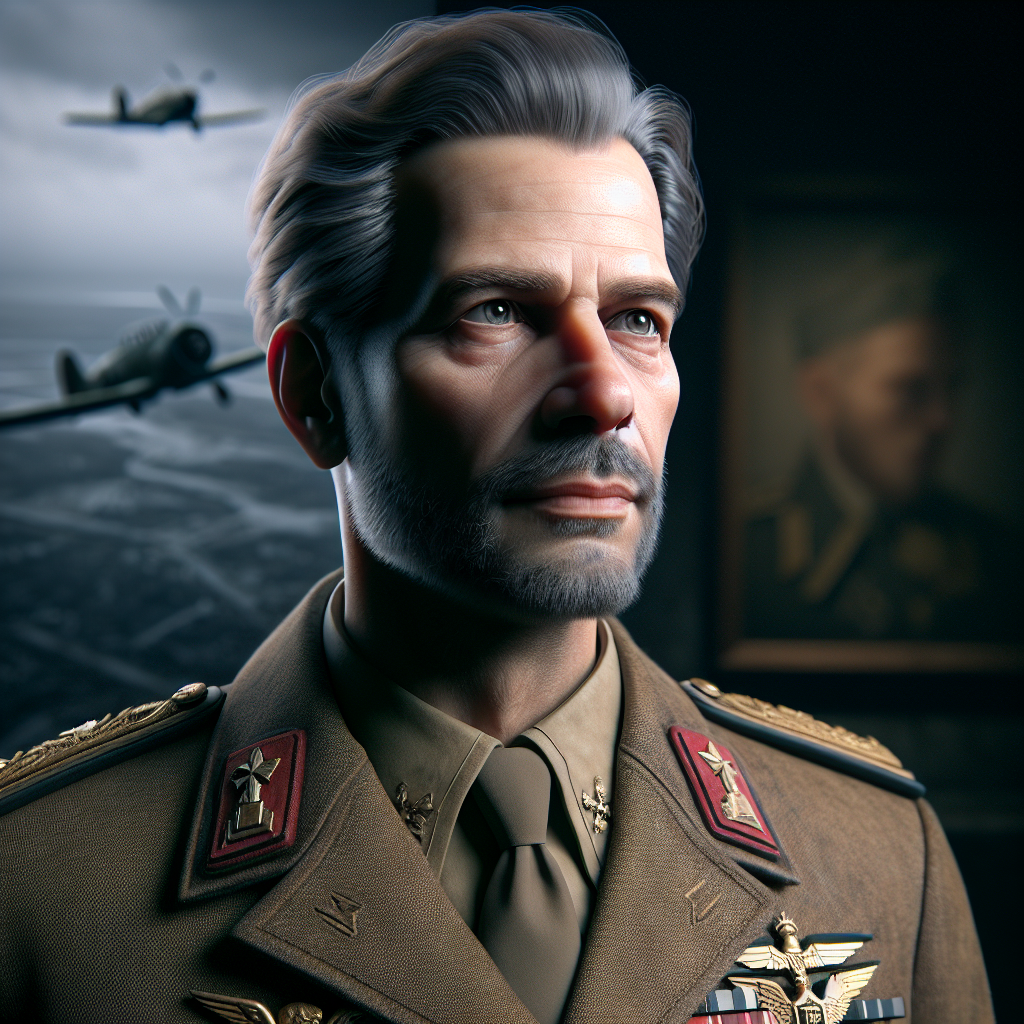

The Extraordinary Life of James Earl Rudder: A Hero of D-Day and Beyond
James Earl Rudder was a remarkable figure whose life story reads like an epic adventure novel. Born on May 6, 1910, in Eden, Texas, Rudder became a celebrated American military officer and public servant. He is best known for his heroic leadership during World War II, particularly during the D-Day invasion on June 6, 1944, where he led the 2nd Ranger Battalion in the daring assault on Pointe du Hoc in Normandy, France. This mission was crucial in disabling German artillery that threatened the success of the Allied landings. Rudder's leadership and bravery not only contributed significantly to the success of the operation but also cemented his place in history as a war hero.
Rudder's journey began in the small town of Eden, where he grew up and later attended Texas A&M University, graduating in 1932. His early career was marked by a passion for education and athletics, as he worked as a high school football coach and teacher. However, with the outbreak of World War II, Rudder's path took a dramatic turn. He joined the U.S. Army and quickly rose through the ranks due to his exceptional leadership skills and tactical acumen.
The D-Day operation at Pointe du Hoc was one of the most challenging and dangerous missions of the war. Rudder's Rangers had to scale 100-foot cliffs under heavy enemy fire to destroy the German guns. Despite suffering heavy casualties, Rudder's determination and strategic brilliance led to the successful completion of the mission, earning him the Distinguished Service Cross for his valor.
After the war, Rudder continued to serve his country in various capacities. He became the president of Texas A&M University in 1959, where he implemented significant reforms that transformed the institution into a modern university. His leadership extended beyond the military and academia, as he also served as the Commissioner of the General Land Office of Texas, contributing to the state's development.
James Earl Rudder's legacy is one of courage, leadership, and dedication to service. His life exemplifies the impact one individual can have on history, inspiring future generations to strive for excellence and make a difference in the world.