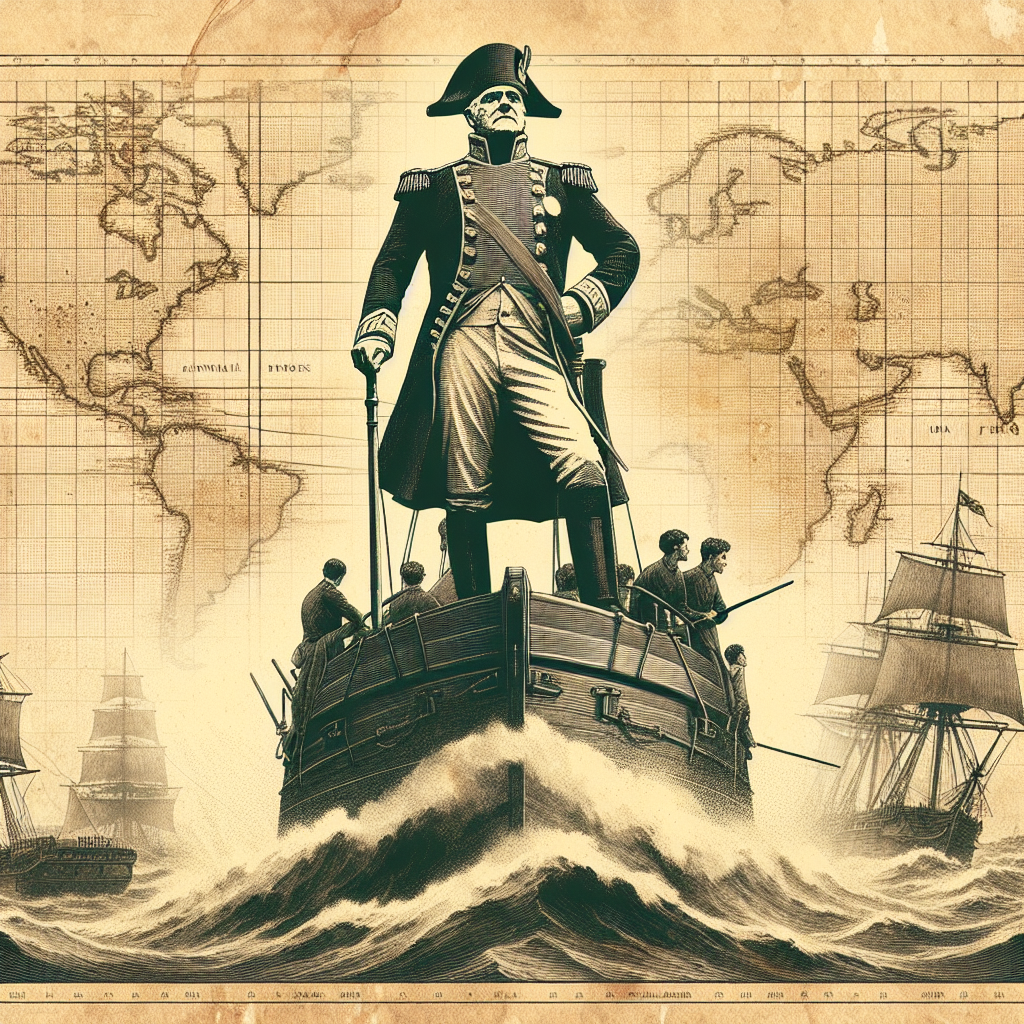


Imagine a world where the strategic arts of military operations get blended with the rigorous discipline of engineering—welcome to the life of Henry W. Buse Jr. Born on December 18, 1912, in New Orleans, Louisiana, Buse distinguished himself as a United States Marine Corps lieutenant general whose career spanned several decades, culminating in pivotal roles that shaped military logistics and amphibious warfare strategy. His career is a glowing testament to how one individual can channel systematic thinking and innovative strategies towards national defense enhancements.
Buse's early years were marked by his education at the U.S. Naval Academy from which he graduated in 1934. His time at the academy laid a strong foundation for his affinity with engineering and eventually led to his obtaining a Master of Science degree in Engineering from Purdue University. The confluence of military training and engineering acumen positioned him as a traveler's best guide through the transitional phases of mid-20th-century warfare. By applying an engineer’s precise problem-solving skills to his military duties, Buse helped pioneer developments that were indispensable during World War II and the Korean War.
The Man Behind the Stars
Henry W. Buse Jr. wasn’t just a man in uniform; he was an intellectual powerhouse. His innate curiosity about engineering principles combined with the demands of military life allowed him to introduce efficiency and strategic foresight into Marine Corps operations. During the peak of World War II, he demonstrated tactical brilliance as an officer of the 1st Marine Division, particularly during the Guadalcanal Campaign, where his leadership contributed to the eventual Allied success in the Pacific Theatre.
Post-World War II, Buse continued to ascend the ranks, and his work evolved from battlefield strategies to logistics – a domain sometimes underappreciated yet critical to military success. One of his standout roles was when he became Deputy Chief of Staff for Logistics. It was here that he harnessed his engineering knowledge to optimize supply chains—ensuring that material and human resources were used with unparalleled efficiency.
Leading by Example
The Cold War period was critical in reshaping military doctrines and strategies. Buse, armed with a wealth of practical battlefield experience and engineering insights, helped formulate and implement systems that modernized and streamlined Marine Corps operations. Particularly impressive was his involvement in integrating emerging technologies and engineering solutions within various military infrastructures, making him a pioneer in military engineering practices.
As the Commanding General of the Fleet Marine Force, Pacific, his duties encapsulated not just oversight of military operations but also the responsibility for fostering international relations. These roles required multilingual communication skills and cultural understanding—qualities Buse diligently nurtured, displaying his versatility and forward-thinking approach.
His retirement in 1970 did not mark the end of his work or contributions. Buse continued to share his insights and experiences, effectively passing on the baton of knowledge to the next generation. This commitment to education reflects the broader humanistic perspective he embodied; he believed in empowering those around him to better our shared future.
A Legacy of Innovation and Dedication
What can we learn from a man like Henry W. Buse Jr.? His life reminds us of the importance of diversification in skills—not limiting oneself to predefined paths but seeking intersections of interest where magic truly happens. The blend of military tactics with engineering underscores a transformative approach applicable across disciplines today—from business management to technological innovation.
As we uncover more about historical figures like Buse, we find ourselves inspired to make breakthroughs in our spheres, pursuing cross-disciplinary insights with vigor. Buse exemplified how collaboration and cross-disciplinary thinking can contribute to solving real-world challenges and improving systems, whether in military strategy or beyond.
In essence, Henry W. Buse Jr. showed that one could serve with unwavering dedication while simultaneously exploring fields of passion, ultimately crafting solutions that reverberate across time. His career elucidates the critical role human intellect and perseverance play in shaping the contours of history, reminding us of the boundless potential that arises from an insatiable curiosity about the world.
The commitment to lifelong learning and problem-solving epitomizes the core essence of human progress. Isn't it inspiring to realize that by broadening our understanding across seemingly unrelated fields, we elevate our capacity to create, innovate, and impact humanity positively?
Therefore, let us take a page from Buse’s book: explore beyond conventionality, embrace interdisciplinary curiosity, and strive for excellence in our pursuits. Who knows, perhaps, this path will let us contribute tools and ideas to better our future, just as Buse did in his time.