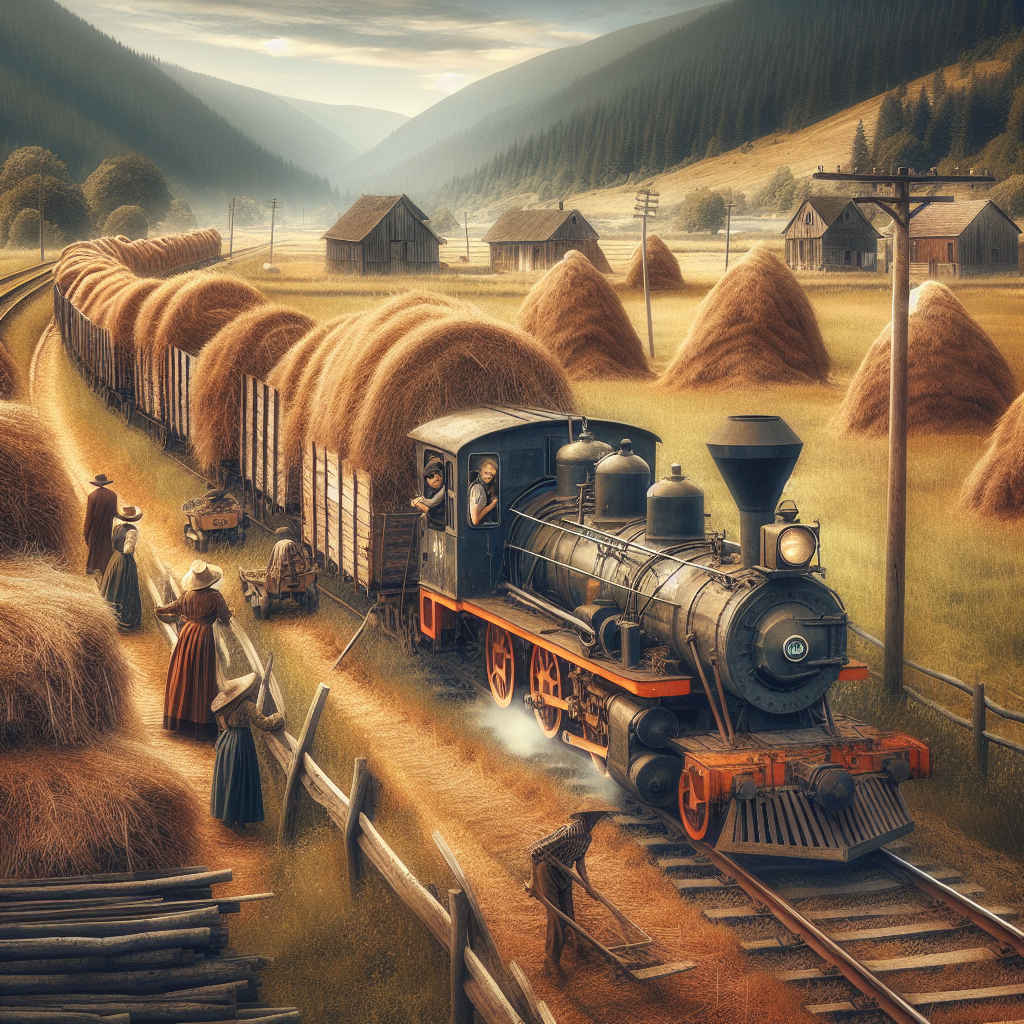

The Little Railway That Could
Picture this: a quaint little railway winding its way through the picturesque landscape of the early 19th century British countryside. This is the Hay Railway, an intriguing example of early industrial transportation innovation. Established in 1816, it was located in the lush settings of Herefordshire and Brecknockshire (modern-day Powys) and stretched from Watton Wharf in Brecon to the bustling market town of Kington—a journey of about 24 miles. Even though it was a simple wagonway, it showcased remarkable ingenuity and set the stage for the marvels of modern railways.
Who Were the Pioneers Behind This Innovation?
The Hay Railway was born out of necessity, catalyzed by figures such as John Hodgkinson, an engineer driven by a vision to create efficient trade routes in the challenging terrain of the UK’s hilly areas. The railway was predominantly used to transport goods, particularly lime and coal, from remote quarries to local merchants. Imagine the optimistic spirit of local businessmen, who invested time and money into a project that would soon become a vital artery for trade and economic progress. This humble yet ambitious endeavor mobilized not just goods, but also the local populace, connecting towns and fostering a sense of community, much like the digital networks of today.
Understanding the Early Infrastructure
Breaking it down with scientific simplicity: the Hay Railway was composed of a simple, yet effective, wagonway. Early tracks were mostly made of cast iron, laid upon stone blocks—a precursor to the wooden sleepers and steel tracks we see today. This infrastructure was perfectly suited to its light wagons, which were often horse-drawn, taking full advantage of gravity on downhill stretches. Operated much like cable cars in hilly regions, the Hay Railway exemplified the adaptive use of available technology to solve logistical problems—in this case, enabling goods to traverse difficult terrain with minimal human effort.
The Impact on Early Industrial Economy
Peering into the pages of economic history, the Hay Railway played a key role in regional development. This seemingly simple transportation network was a game-changer as it drastically cut down the time and cost required to move goods. The local agricultural economy benefited greatly, with farmers able to export their produce faster and more efficiently. Furthermore, the railway encouraged the growth of industries and even spawned new ones, laying an economic framework that would support the next wave of industrial advancements.
A Tribute to Human Ingenuity
Venturing into innovation, the Hay Railway embodied the spirit of human progress and resilience. Before the advent of steam locomotives and electricity, engineers relied heavily on mechanical ingenuity and the geographical characteristics of the landscape. This railway, an exemplar of creativity, utilized manual labor and horse power ingeniously. The meticulous engineering and planning involved in creating such a system speak volumes about the human capacity to innovate with whatever resources are at hand.
Why Did the Hay Railway Matter?
Beyond the immediate economic impacts, the Hay Railway was a trailblazer for subsequent technological developments in transportation. It’s fascinating to consider how experimenting with nascent concepts like rail transport paved the way for more sophisticated systems. Innovations often arise from these small projects—initiatives like the Hay Railway that quietly underscore the larger movements in technology and society.
The Legacy and Its Lessons for Today
Though the Hay Railway ceased operation in the late 19th century as railway development surged forward with steam technology, its legacy lives on. This narrative of progress is a testimony to human ambition and the relentless pursuit of efficiencies, which is as relevant today as it was two centuries ago.
Today's digital age is not unlike the railway age, with innovations springing from modest beginnings to change the world. As we stride into the future, we are reminded of how simple beginnings in rail transport transformed societies, just as new technologies are poised to drive change today, be it in renewable energy, artificial intelligence, or biotechnology.
So, as we marvel at the magnetic levitation trains and whispering electric cars, let’s also tip our hats to the humble horse-drawn wagons of the Hay Railway. Its story is a testament to human imagination, turning challenges into opportunities, and inspiring a legacy of innovation that continues to propel humanity forward.