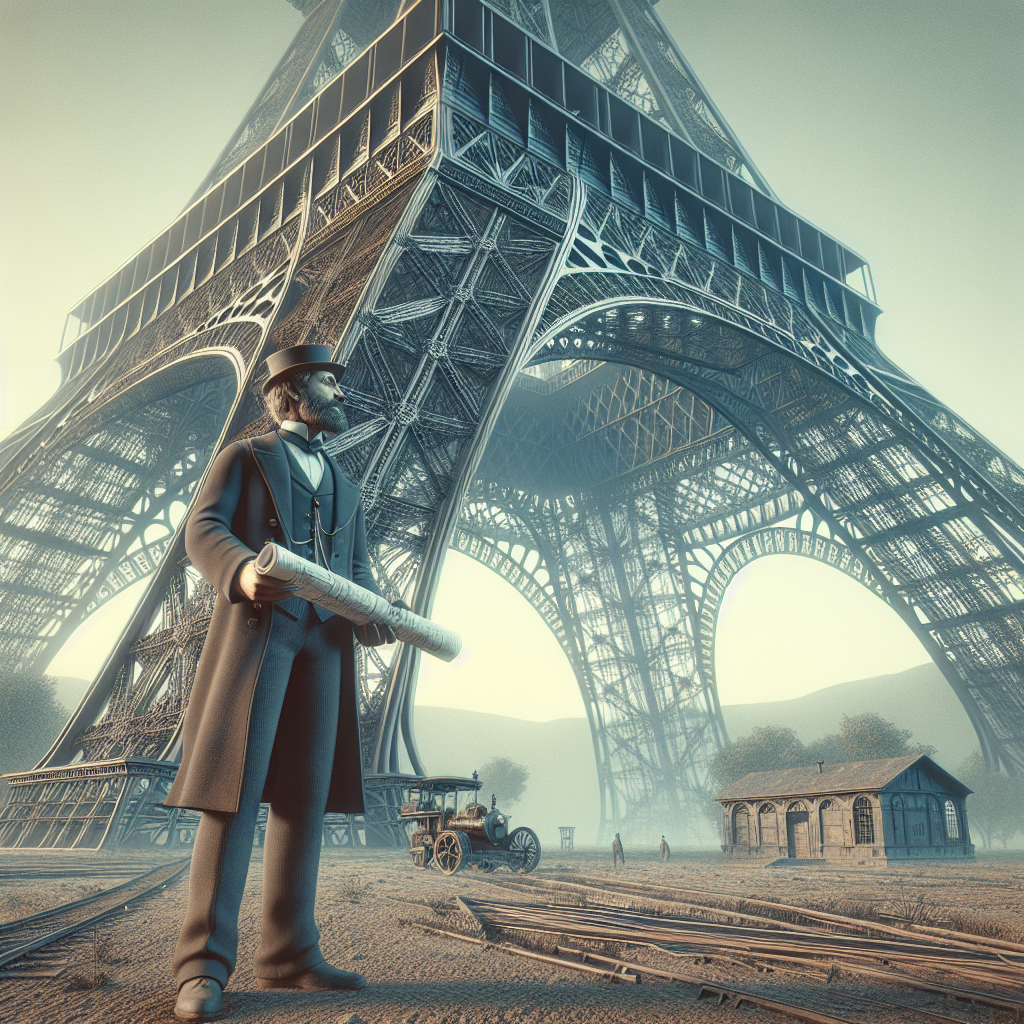

Gustave Eiffel: The Man Behind the Iron Giant
Imagine a world where the skyline of Paris is missing its most iconic silhouette. This was the reality before Gustave Eiffel, a visionary French civil engineer and architect, came into the picture in the late 19th century. Born on December 15, 1832, in Dijon, France, Eiffel's innovative spirit and engineering prowess led to the creation of the Eiffel Tower, a masterpiece unveiled at the 1889 Exposition Universelle (World's Fair) in Paris. But why did Eiffel embark on this monumental project? The tower was designed to showcase France's industrial prowess and to celebrate the 100th anniversary of the French Revolution.
Gustave Eiffel's journey into the world of engineering began with his education at the École Centrale des Arts et Manufactures in Paris, where he graduated in 1855. His career took off as he worked on various railway bridges, which honed his skills in metal construction. Eiffel's expertise in iron structures was evident in projects like the Garabit Viaduct in southern France, which was one of the highest bridges in the world at the time. His work on the Statue of Liberty's internal framework further cemented his reputation as a master of iron architecture.
The Eiffel Tower, initially met with skepticism and criticism, was a testament to Eiffel's forward-thinking approach. Standing at 324 meters (1,063 feet), it was the tallest man-made structure in the world until the completion of the Chrysler Building in New York City in 1930. The tower's design, with its lattice structure, was not only aesthetically groundbreaking but also a marvel of engineering efficiency, using minimal materials for maximum strength and stability.
Eiffel's legacy extends beyond the tower that bears his name. He was a pioneer in aerodynamics, conducting wind tunnel experiments that laid the groundwork for modern aeronautical engineering. His contributions to science and engineering have inspired countless innovations and continue to influence the fields of architecture and engineering today.
Gustave Eiffel's life and work remind us of the power of human ingenuity and the impact one individual can have on the world. His creations, especially the Eiffel Tower, remain symbols of innovation and the enduring spirit of exploration and progress.