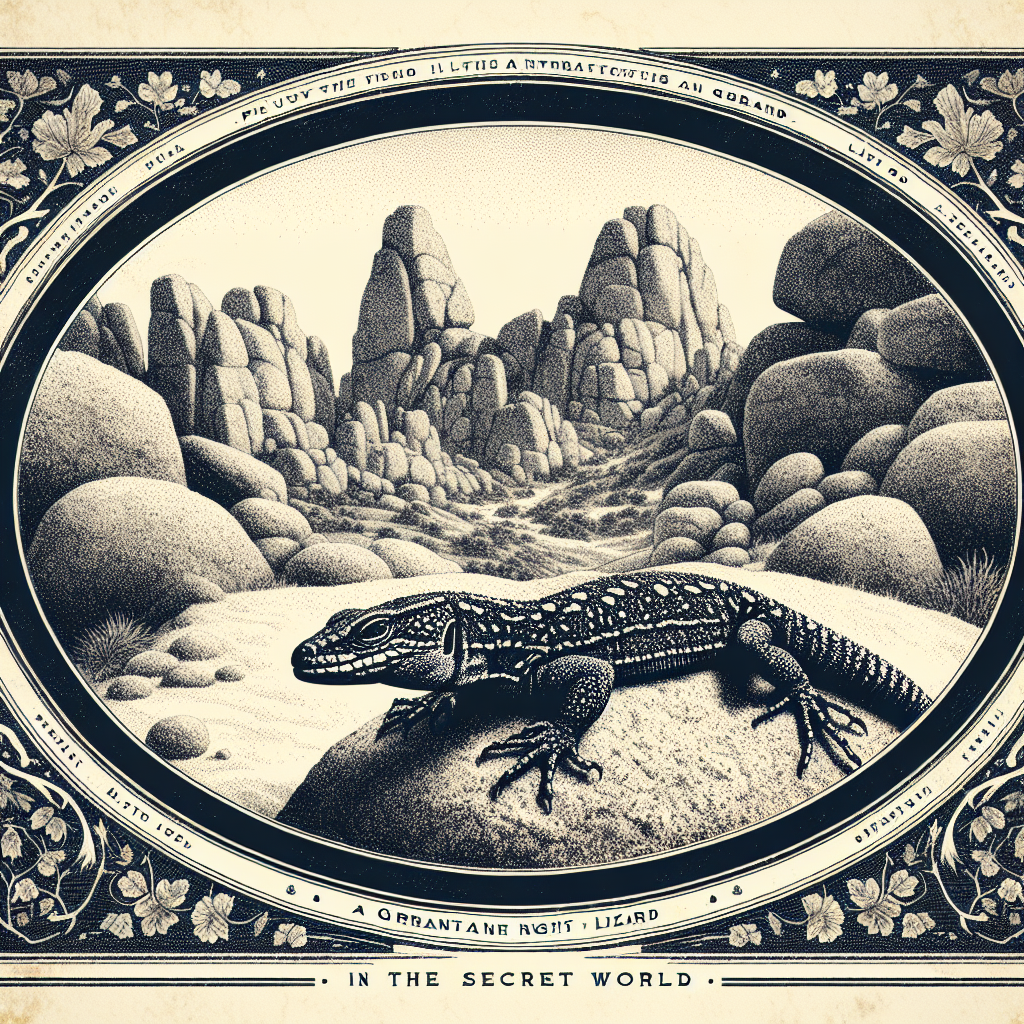

Unveiling the Mystique of the Granite Night Lizard
Imagine the bustling nightlife, where the stars twinkle and inquisitive creatures emerge from their daylight retreats to explore the moonlit world. Within this nocturnal parade is our fantastic subject, the Granite Night Lizard (Xantusia henshawi), a small yet significant member of the reptilian family. While their name might suggest these lizards are mineral enthusiasts, they’re far more fascinating than just their rocky moniker. Living primarily in the creased terrains of Southern California and parts of Baja California, these elusive reptiles have carved out a unique ecological niche that sparks curiosity and amazement.
Who Are These Secretive Creatures?
The Granite Night Lizard is a petite, nocturnal reptile, measuring just about 5 to 6 inches, including its tail. Remarkably, what they lack in size, they compensate with their adaptability and survival skills. Covered in a set of muted brown hues with patterns that aid in camouflage within their rocky homes, they are true masters of disguise. Unlike most reptiles who bask in the sun to regulate their body temperatures, the Granite Night Lizard thrives under cover of darkness, fantastically adapting to environments with extreme temperatures.
Their Unique Homes: A Rocky Necessity
The Granite Night Lizard has a distinct relationship with its environment, making it an incredible subject of study for ecologists and biologists alike. Preferring the cracks and crevices of granite formations, these lizards are often found in the Joshua Tree National Park, Anza-Borrego Desert, and the Peninsular Ranges. They ingeniously use the granite's insulating properties to maintain a relatively stable temperature and shield themselves from predators, including snakes and birds. Isn’t it fascinating how nature crafts such intricate connections between organisms and their habitats?
Nighttime Activities and Diet
Venturing out when most of us are winding down for the night, the Granite Night Lizard embarks on a nightly quest for food. Their primary diet consists of small invertebrates such as insects and spiders, which they adeptly hunt using their keen sense of sight and smell. Interestingly, they exhibit a unique feeding behavior in captivity sometimes referred to as `voracious'. Despite their size, their appetite and hunting strategy exemplify a marvel of nature’s resourcefulness.
Why Are They Important?
Though they may not have the allure of charismatic megafauna, Granite Night Lizards play a vital role in their ecosystem. By helping control insect populations, they contribute to the balance of the local fauna and flora. Moreover, studying these reptiles can offer insights into evolutionary biology, particularly how species adapt to extreme environments, both a challenge and a joy in the ever-unfolding story of life on Earth.
Conservation Status: Challenges and Stewards
While the Granite Night Lizard is not currently considered endangered, its habitat faces threats from urbanization, climate change, and human recreation. Preserving their rocky homes is essential not just for their survival, but for the broader ecological network they support. Conservation efforts, primarily focused on habitat protection and combating climate change, can help secure their continued existence. Importantly, such efforts also foster a healthy planet for humanity at large, reminding us all of our interconnectedness with the myriad life forms we share this Earth with.
The Future of Discovery and Understanding
For those passionate about herpetology or simply enchanted by the wonders of nocturnal life, the Granite Night Lizard offers a glimpse into nature’s poetry hidden beneath our feet. Ongoing research and increasing public awareness are crucial in ensuring these lizards thrive in their native setting. After all, every new discovery deepens our appreciation for the world and excites the unending quest for knowledge that defines the human spirit. There is so much more to learn and be inspired by as we explore and revere nature's less trodden paths.