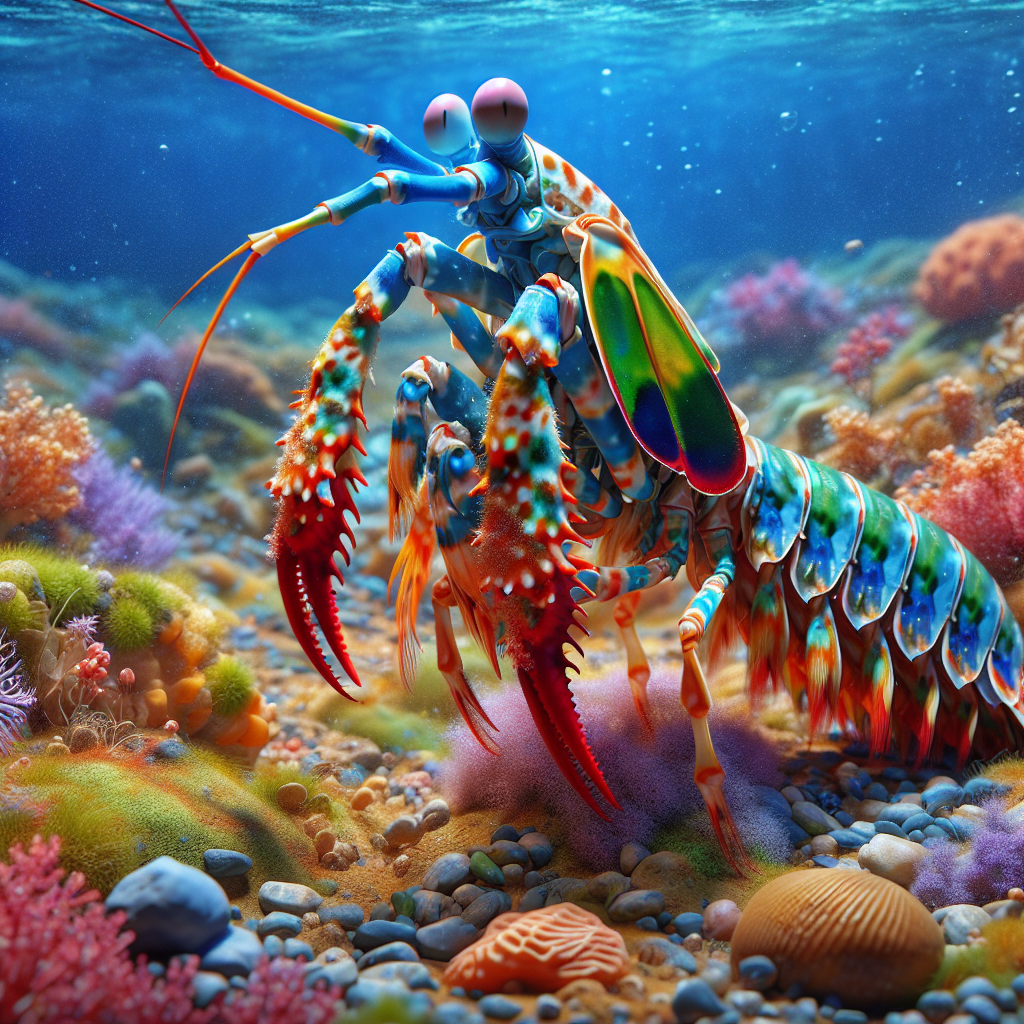

The Marvelous World of the Peacock Mantis Shrimp: Gonodactylus chiragra
Welcome to the vibrant and thrilling underwater world where one of nature's most formidable fighters, the Gonodactylus chiragra, holds court! Commonly known as the peacock mantis shrimp, this fascinating creature resides in the warm waters of the Indo-Pacific region, from East Africa to the Red Sea. Why, you ask, is this marine marvel truly worth our gaze? Because it's not just any shrimp—it's a vibrant bundle of color and power, delivering punches with the speed of a bullet!
Anatomy and Appearance
Picture this: a crustacean so colorful that it could outshine a rainbow! Gonodactylus chiragra, with its striking iridescent carapace, is a visual delight. Its body is divided into three main sections: the head, thorax, and abdomen, showcasing spectacular hues. The peacock mantis shrimp can grow up to 18 centimeters in length, a relatively large size compared to other mantis shrimp species.
What truly sets this creature apart are its unique raptorial appendages—specialized fore limbs that endow the peacock mantis shrimp with its incredible boxing prowess. In the animal kingdom, there's nothing quite like its ability to strike with the force of a .22 caliber bullet, frequently resulting in shattered aquarium glass when kept in captivity!
Habitat and Distribution
Gonodactylus chiragra graces the vibrant coral reefs and rock crevices of the Indo-Pacific region, a favorite haunt from the eastern coast of Africa to the lively waters of the Red Sea. This habitat offers the shrimp both protection and a strategic advantage in its predatory lifestyle. The abundance of hard surfaces also provides the perfect environment for the creature to bore holes, using them as homes and ambush points for unsuspecting prey.
Despite their fearsome reputation, peacock mantis shrimps play a vital role in maintaining the ecological balance of their habitats. Their predatory habits help control populations of other small marine organisms, contributing to the reef's health.
The Science of the Punch
Now, let’s talk about that legendary punch! The Gonodactylus chiragra doesn’t merely rely on brute force. Instead, it employs intricate biomechanics and specialized muscle structure that allow it to unleash strikes at speeds of 23 meters per second. This movement not only helps incapacitate its prey but also enables the mantis shrimp to crack the hard shells of mollusks and crustaceans with astonishing ease.
Here’s where things get even more exciting: the water rapidly evaporates behind a mantis shrimp's punch, forming a cavitation bubble. When this bubble collapses, it produces a flash of light and heat, creating a secondary shockwave capable of stunning or killing prey. Nature sure knows how to pack a punch!
Vision That Sees Beyond
Beyond its physical prowess, the Gonodactylus chiragra is endowed with an almost extraterrestrial way of seeing the world. It boasts incredibly complex eyes equipped with 16 types of light-receptive cones (humans have only three!). This feature grants the peacock mantis shrimp the ability to perceive polarized light and spectral hues in ultraviolet and infrared wavelengths, providing it a vivid perception of its environment that remains beyond the grasp of the human eye.
This complex visual system not only aids the shrimp in capturing prey but also plays a significant role in communication and navigation through the reef's colorful labyrinth.
Behavior and Social Structure
Despite their solitary reputation, peacock mantis shrimps engage in ritualized displays during mating or territory defense. These displays often involve vigorous waving of their rapacious limbs, showcasing their vitality and deter potential rivals or predators from encroaching their realm.
Mating involves a delicate dance of trust and aggression, as the female must accept the male's advances without fear of attack. Successful pairs are known to cohabit burrows temporarily as they raise their fertilized eggs.
Conservation Status and Human Interactions
Currently, Gonodactylus chiragra is not listed as an endangered species. However, as with many marine species, the peacock mantis shrimp faces threats from habitat destruction and pollution. The health of coral reefs is critical to its survival, underscoring the urgent need for conservation efforts.
Enthusiastic aquarists often seek out these shimmering combatants for their home aquariums, although their tendency to shatter glass can pose challenges. Understanding and respecting their natural habitats remain paramount for those wishing to encounter these majestic creatures while ensuring their protection.
The Enduring Allure of Gonodactylus chiragra
From its eye-popping colors to its breathtaking speed and power, the peacock mantis shrimp is a testament to the wonders of evolution. Its complex biology and mesmerizing presence continue to intrigue scientists, offering insights into biomechanics, vision, and communication. The Gonodactylus chiragra invites us to marvel not just at its beauty but also at the intricate interplay of life beneath the waves—an enduring reminder of our planet's boundless natural wonders.