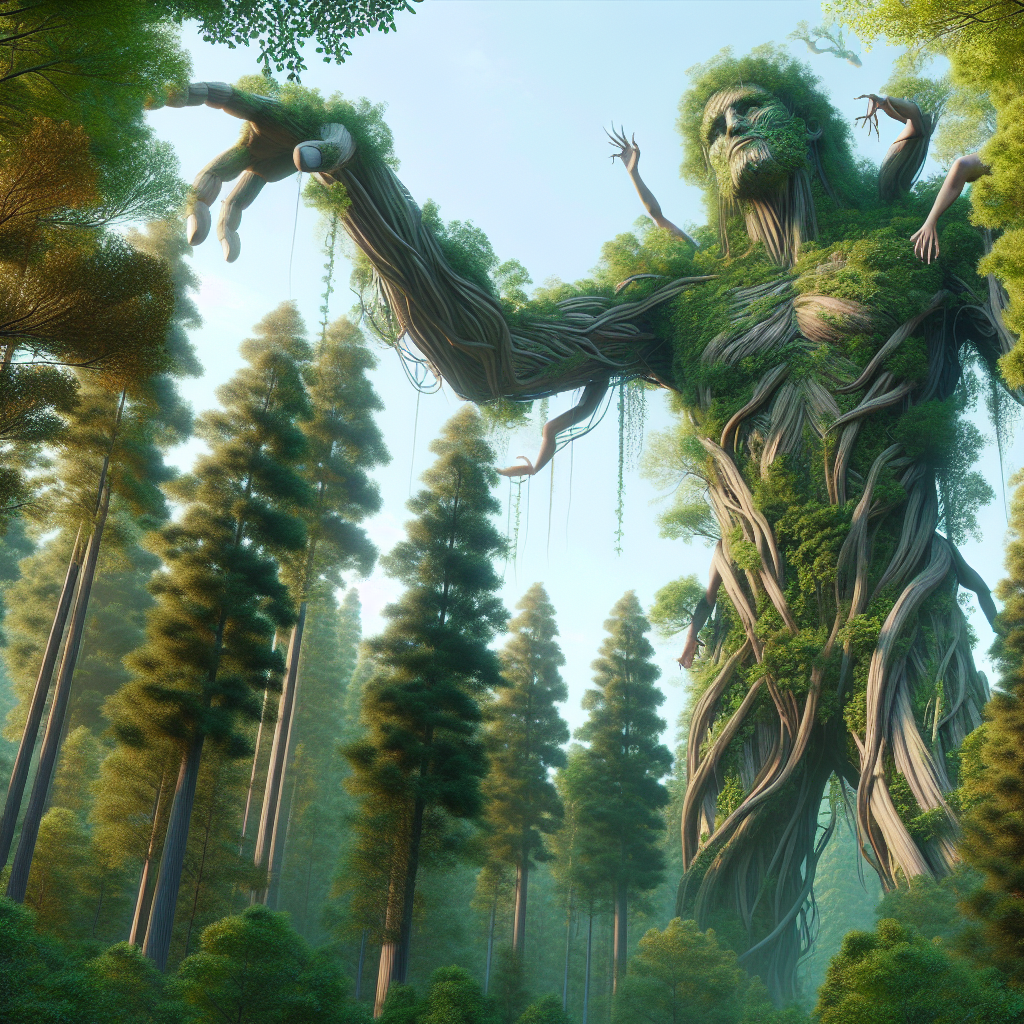

Reaching for the Sky: The Fascinating World of Giants in the Trees
Imagine cruising along a moss-carpeted forest path and suddenly looking up to find yourself dwarfed by ancient giants that seem to reach into the clouds. Welcome to the magnificent world of Giants in the Trees! These awe-inspiring, towering structures, often seen in the verdant forests of the Pacific Northwest, hold secrets and stories that have grown alongside them for centuries. From the who and what of these natural marvels to the when, where, and why, let's explore the complex world of these majestic beings while keeping our feet firmly on the scientific ground.
The term 'Giants in the Trees' directly brings to mind the colossal, ancient trees like the coast redwoods and giant sequoias that dominate the western strip of the United States. Often reaching heights of more than 300 feet, these trees are among the tallest and largest organisms on Earth. The "who" in this scenario, interestingly, is everyone interacting with this incredible part of nature, from scientists studying their ecological importance to tourists inspired by their sheer scale. These trees have existed for millions of years, serving as both a historical archive of climate and ecosystems and as active participants in today's environmental processes.
The Giants' Historical Tapestry
The history written in the rings of these towering trees is nothing short of a time capsule. Scientists have been studying tree rings—a field known as dendrochronology—to uncover truths about our prehistoric environment. By understanding the climate conditions that these trees endured, researchers can forecast changes in future climates. This is no mere academic endeavor; it provides real data that can guide crucial conservation efforts.
Why do these trees grow so tall? Well, this is where physics and biology mesh in a beautiful dance. Trees reach for the light, with sunlight being their primary source of energy through photosynthesis. In a dense forest, the race is on to absorb as much light as possible, and growing taller is a perfect adaptation to outpace competitors. However, towering high has its risks. It challenges the tree to transport water from roots to leaves efficiently—a complex process involving xylem tissues that can handle significant tension.
A Complex Canopy of Life
An intriguing aspect of these arboreal giants is their ability to support entire ecosystems high above the ground. The tree canopy becomes a bustling metropolis for various birds, insects, and even mammals like the enigmatic Humboldt's flying squirrel. Mosses, lichens, and epiphytes find a home on branches, tapping into the moist air and filtered sunlight that the forest provides.
Each layer of the tree contributes to the complex ecological web. The fallen branches and leaves return nutrients to the soil and serve as a habitat for a variety of ground-dwelling organisms. The giants have evolved to not only adapt to their environment but to support entire communities both below and above.
Guardians of the Environment
Why are these giants so critical today? It's because their existence is intricately linked to global environmental health. These trees act as massive carbon sinks, demonstrating the pivotal role forests play in mitigating climate change. By absorbing carbon dioxide and other pollutants, they effectively clean our environment and breathe out oxygen—essentials for life.
Forests comprising these giant trees are increasingly seen as vital areas to protect in our efforts to conserve biodiversity and tackle global warming. Conservation approaches are being shaped by our ever-deepening understanding of how interconnected these trees are with the larger ecosystem and atmospheric changes.
An Optimistic Future
As the importance of giant trees becomes clearer, human efforts to conserve these natural wonders are becoming more robust. National parks, conservation projects, and sustainable forestry policies are helping ensure these trees stand tall for future generations.
However, the work isn't complete. Scientists are actively discovering new ways these ecosystems function and finding innovative ways of preserving them. Through community participation and increased public awareness, there is a hopeful outlook that we can balance humanity's needs with those of the planet.
Being naturally optimistic, I am excited by the progress made in uniting global citizens around the importance of conservation. Each small step, when made collectively, significantly impacts preserving not just the giants in the trees but the intricate network of life they support.
Conclusion: An Invitation to Explore
The next time you find yourself near one of these majestic giants, take a moment to appreciate not just their grandeur but the complex role they play in the environmental orchestra. They are indeed guardians of heritage and harbingers of hope.
Whether through learning, active involvement, or simply spreading awareness, we all have the chance to become part of the story that ensures these grand beings will continue to reach towards the sky.