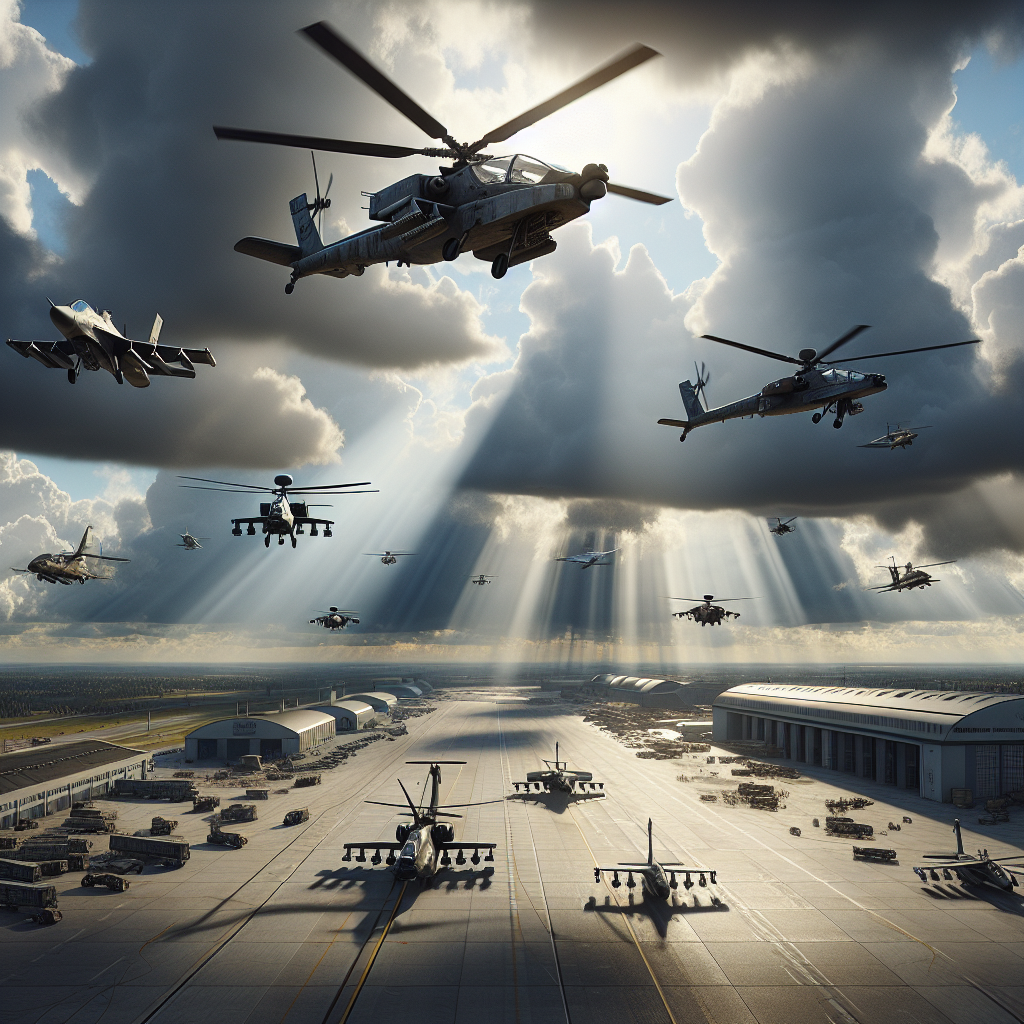

Soaring Through History: The German Army Aviation Corps
What do birds and helicopters have in common? They've both inspired dreams of mastering the skies! The German Army Aviation Corps, or Heeresfliegertruppe, has been fulfilling this vision since October 15, 1956. This impressive wing of the German Army was birthed amidst the recovery and reconstruction post-World War II, with the task of providing air mobility and rapid response capabilities on the European battlefield. Stationed at several locations across Germany, including Bückeburg and Fassberg, these airborne warriors play an indispensable role in security, rescue, and humanitarian missions.
The Birth of the Eagles: A Historical Perspective
With Europe reeling from the aftermath of World War II, the geopolitical landscape had shifted dramatically. In the wake of Germany's rearmament in the 1950s, the formation of an air support unit was paramount. Thus, on October 15, 1956, the seeds of the Heeresfliegertruppe were sown. This unit aimed to support ground forces with mobility, observation, and logistics, transforming the nature of warfare by capitalizing on the lessons learned during the war.
Interestingly, the Heeresfliegertruppe emerged during a time when aviation technology was making leaps and bounds. Helicopters became the focal point, offering agility and speed that previously impossible airframes couldn't match.
Machines of the Sky: Aircrafts and Helicopters
An army is often defined by its arsenal. The German Army Aviation Corps isn't any different. With an impressive field of aircraft, including the ubiquitous Airbus H145M helicopter, attack helicopters like the Eurocopter Tiger, and utility helicopters such as the NH90, the Corps has demonstrated the diverse applicability of rotary-wing aircraft.
The utility helicopters of the Corps, such as the NH90, are the workhorses. They perform multiple roles from troop transport to medevac operations, reminding us that the rescue of lives is as crucial as defensive strategies. The Eurocopter Tiger, on the other hand, depicts advancements in attack helicopter technology, with its fire support capability lending a tactical advantage in combat scenarios.
Right from the Core: The Personnel Behind the Machines
These machines of the sky are piloted and maintained by highly skilled personnel committed to constant learning and improvement—a theme that resonates deeply with those of us fascinated by human advancement and capability. The role of a pilot in the German Army Aviation Corps goes beyond technical proficiency. It's about precision, decisiveness, and the ability to perform under pressure.
Aspiring members undergo rigorous training, starting with theory and simulation at Army Aviation School in Bückeburg. This foundation is critical to ensuring that once they take to the skies, they can handle any situation that arises with aplomb.
Into the Future: Adaptability and Innovation
Adaptability isn't just a buzzword—it's a necessity. The rapid pace of technological evolution means that the Corps must constantly evolve, incorporating new technologies like drones and UAVs to stay ahead of potential adversaries. The future of military aviation might be autonomous, but the human spirit of innovation and learning will always be at the heart of these operations.
The German Army Aviation Corps acknowledges the necessity to adapt by fostering innovation through technological partnerships and cooperative training exercises with countries worldwide. The continuous learning and adoption of advanced technologies highlight their optimism and commitment to not just keeping pace with the tides of change but leading them.
Wings of Humanity: Beyond Battle
Here comes what's perhaps the most aspirational aspect of the Heeresfliegertruppe—it is not limited to the battlefield. Providing aid during natural disasters, such as relief efforts after floods or earthquakes, and participating in international humanitarian missions underscores the Corps' commitment to humanity.
By providing logistical support, rescuing civilians in crisis zones, and using their skillset for peacekeeping missions, they remind us that the realm of military aviation can bridge the gap between conflict and compassion—a heartening thought for all of us who believe in harnessing military capabilities for humanitarian good.
The Lasting Impact: Why it Matters
The German Army Aviation Corps is more than just a military unit. It's a testament to how far humanity has come in turning ancient dreams of flight into reality. Each maneuver, each mission underscores an optimistic belief in humanity's capacity to learn, innovate, and protect.
From its historical roots to futuristic aspirations, the Heeresfliegertruppe is a fascinating case study of military aviation enhancing both security and humanitarian efforts, flying high not just with technology but with the trust and hope of those they serve.