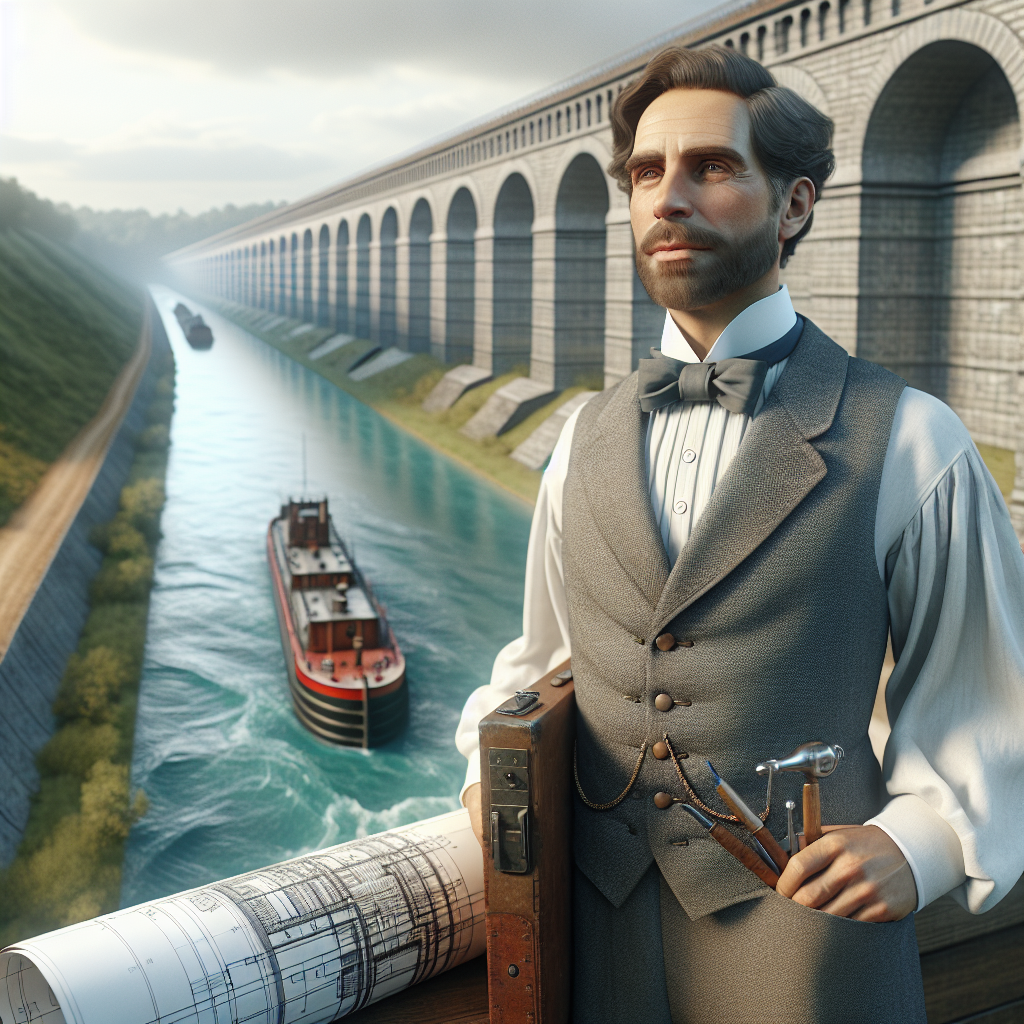

George Washington Goethals wasn't just a man with an unforgettable and grand name—he was the lifeblood behind one of the most ambitious engineering feats in human history, the Panama Canal. Born on June 29, 1858, and through his immense contributions in the early 20th century, Goethals carved out a lasting legacy in engineering and leadership from his work during his time as a U.S. Army officer and civil engineer.
The Magnificent Undertaking: The Panama Canal
Imagine this: Cutting through nearly 50 miles of challenging terrain with bugs, diseases, and tropical storms all thrown in for good measure. What might sound like a treacherous survival game was the real-life task facing Goethals when he became the chief engineer of the Panama Canal project in 1907. The canal, located in the middle of Panama, a narrow strip of land linking Central and South America, was envisioned to bridge the Atlantic and Pacific Oceans, revolutionizing maritime trade routes.
Goethals was appointed by President Theodore Roosevelt, who trusted him to carry out this Herculean task after earlier French attempts had succumbed to tropical diseases and engineering failures. As a West Point graduate and a seasoned engineer, Goethals was tasked with not only facing gigantic physical and managerial hurdles but also overcoming the depression of countless lives lost to yellow fever.
 Panama Canal during its construction under Goethals.
Innovative Solutions: The Goethals Approach
George Goethals approached the Panama Canal with the precision of a scientist and the creativity of an artist. He implemented stringent sanitation programs to tackle malaria and yellow fever, employing a medical officer named Dr. William Gorgas. Together, they organized extensive mosquito control measures, which included draining swamps, applying oil to standing water, and screening buildings. This crucial step drastically reduced disease transmission, significantly cutting down the death toll.
Technologically, Goethals cleverly optimized canal operations. He designed a system of locks and dams rather than the initially proposed sea-level canal. The construction included three sets of locks that were controlled in such a synchronized ballet of water engineering brilliance that giant ocean liners can glide through and across the continental divide with ease. Such was the precision and the scale of his planning!
Leadership in Action
Leading such a vast project was akin to orchestrating a symphony with thousands of instruments. It was chaotic at times, but Goethals' calm and democratic telegraphic leadership style was the glue that held this enterprise together. He empowered workers and implemented impressive organization tactics, ensuring that everyone on-site was treated fairly and motivated towards their common gargantuan objective.
He demanded performance but also ensured fair pay and working conditions, gaining great respect from his workforce. His approach resonated with people at various levels of the project, from laborers to foremen, laying a foundation of mutual respect and performance that would ensure the canal project didn’t derail.
 A workforce in action during the canal's construction.
Triumph and Beyond
The Panama Canal was finally completed and opened in 1914. It remains a testament to George Goethals' vision and tenacity. What many believed was impossible, he made possible. This monumental World engineering marvel transformed global trade patterns and showcased the impact of persistent human ingenuity.
But Goethals' story didn’t end in Panama. After serving as the first Governor of the Panama Canal Zone until 1916, he returned to the U.S., where he engaged in various advisory roles. His expertise was called upon again during World War I, where he directed operations supplying vital materials for the war effort.
Goethals was a pioneer in thinking structurally and globally—something we can still use as inspiration today. His belief in science and technology, coupled with the human capability to conquer challenges with optimism and determination, remains a powerful narrative reverberating through history.
A Lasting Legacy
George Washington Goethals passed away in 1928, but his legacy lives on every day in what he accomplished. The Panama Canal continues to be a critical artery of global trade more than a century later. His work exemplifies how the smart combination of science, leadership, resilience, and care for people can overcome adversity.
His story fuels an optimistic belief in humanity’s capacity to achieve, learn, and grow. So dear readers, let's keep innovating, dreaming, and creating, because who knows what wonders we can build next!