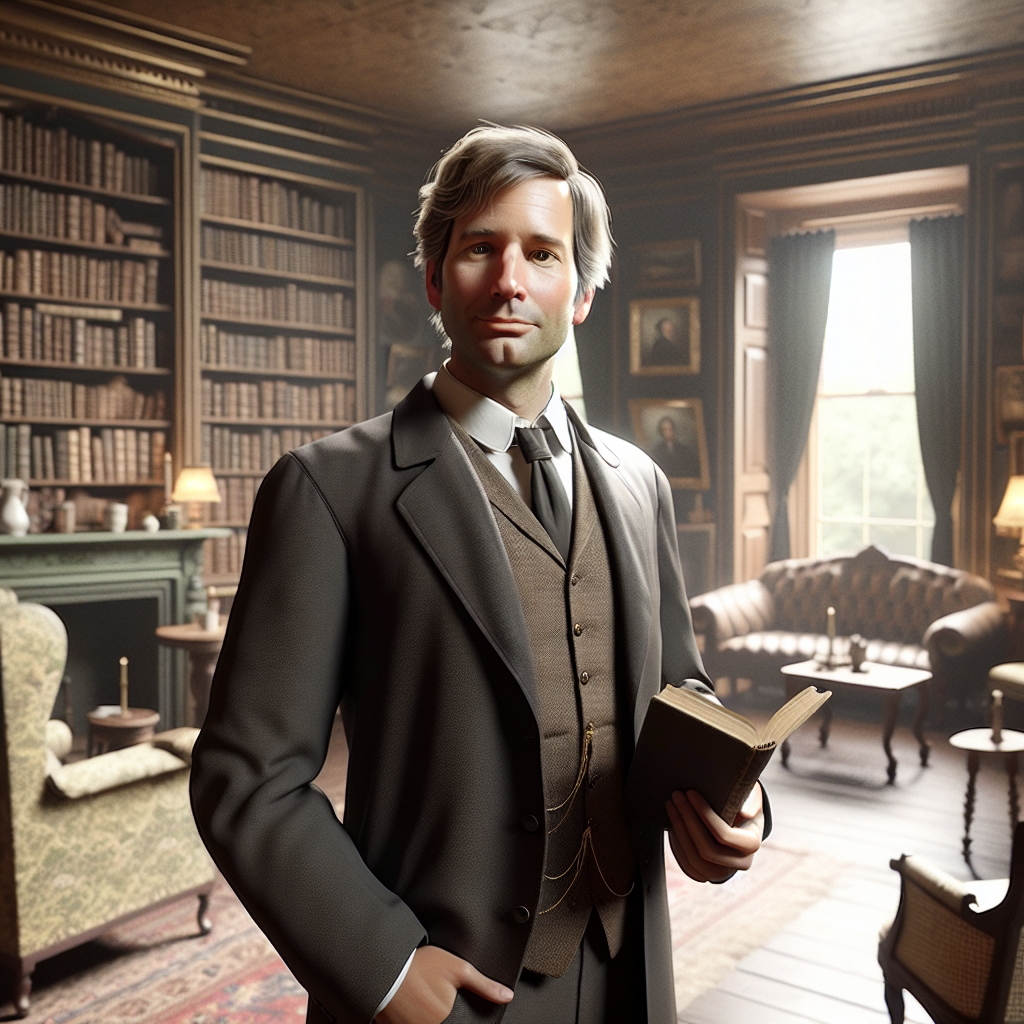

Frederic Morton: The Optimistic Scientist Who Wrote Humanity into History
Imagine a storyteller so engrossing that his words could dance like sparks through the corridors of history, making them accessible to all. That’s the kind of enchantment Frederic Morton cast over his readers. Born in 1924 in Vienna, Morton was a historian, essayist, and novelist who left an indelible mark on literature with his unyielding optimism and gift for making complex subjects understandable. From the streets of early 20th century Europe to the vibrant cultural melting pot of New York, Morton's works take us on journeys through time infused with meticulous detail and human perspective.
Unwrapping the Layers of Complexity with Precision
At the heart of Morton's prolific writing was his mastery of simplicity. Much like a skilled scientist who can dismantle the most complex of equations into bite-sized understanding, Morton had an unrivaled ability to make history feel eye-openingly accessible. Books like The Rothschilds: A Family Portrait meticulously illustrate the dynamics of one of history's most influential banking families, but it's Morton's touch that transforms them into characters with whom readers feel familiar, even intimate.
His approach was scientific yet fueled with imagination. Morton believed in distilling vast amounts of data into coherent narratives, revealing how the mundane could intersect vibrantly with the significant. This, in turn, elevated the discourse around history from pure academia to something everyone could grasp and enjoy.
A Life Steeped in Transition and Growth
Frederic Morton’s journey from Vienna to America was not just geographical but a symbolic dive into new worlds of opportunities and ideas. Escaping the oppressive atmosphere of Austria before the Second World War, Morton and his family found themselves amidst the buzzing streets of New York City. This transition played a pivotal role in expanding Morton's worldview and honing his literary craft.
In New York, Morton found a confluence of cultures and ideas that energized his writing. Here, he was not only a passive observer but an active participant in the grand narrative of discovery, innovation, and optimism—a theme that permeated much of his work.
The Intersection of Humanity and History
Morton's detailed narratives often brought to life the human stories behind historical events. His works were more than just presentations of facts; they were celebrations of human endeavor, imagination, curiosity, and resilience. Each story was a universe waiting to be explored, characterized by hope and the belief in progress.
A book like A Nervous Splendor: Vienna 1888-1889 embodies this philosophy. By looking through the lens of historical moments, Morton retained an unwavering focus on the individuals who lived through them. His depiction of iconic personalities such as Sigmund Freud and Gustav Mahler during significant cultural shifts was more than just an exercise in historical recounting; it was about understanding the pulse of a city and the triumphs and tragedies of its people.
Bridging Past and Present
An exciting aspect of Morton's writing is his anticipation of modern-day themes, rooting their origins in history and then tracing them to contemporary times. In doing so, he peels back layers of society, showing us that today's innovations are the result of yesterday's dreams and struggles.
Morton's storytelling amplifies a profound optimism, a belief that while the struggles of humanity are constant, so too is the will to overcome them. His curiosity and scientific approach to history challenged readers to see narratives not as static relics, but as evolving tapestries.
Legacy in the Literary Cosmos
Frederic Morton’s contributions are not confined merely to the pages of the books he penned. His work left a lasting impression on how history is presented and consumed. Morton's influence persists through scholars and enthusiasts who have taken a leaf from his book—literally and metaphorically—by adopting an approach that fuses detailed research with readability and universal compassion.
Understanding Morton is pertinent even today, as his life's work bridges the past with the present, offering us tools to understand current affairs and anticipate future dynamics. His stories serve as reminders of where humanity has been and the potential for where it can go.
As we continue to explore the depths of human knowledge, Morton's work remains a shining beacon of hope, scientific acumen, and optimism. Whether you are a history buff, a literary enthusiast, or a curious learner, Frederic Morton’s legacy invites you to view history not as a mere record of past events, but as a continuous narrative full of wonder and potential.