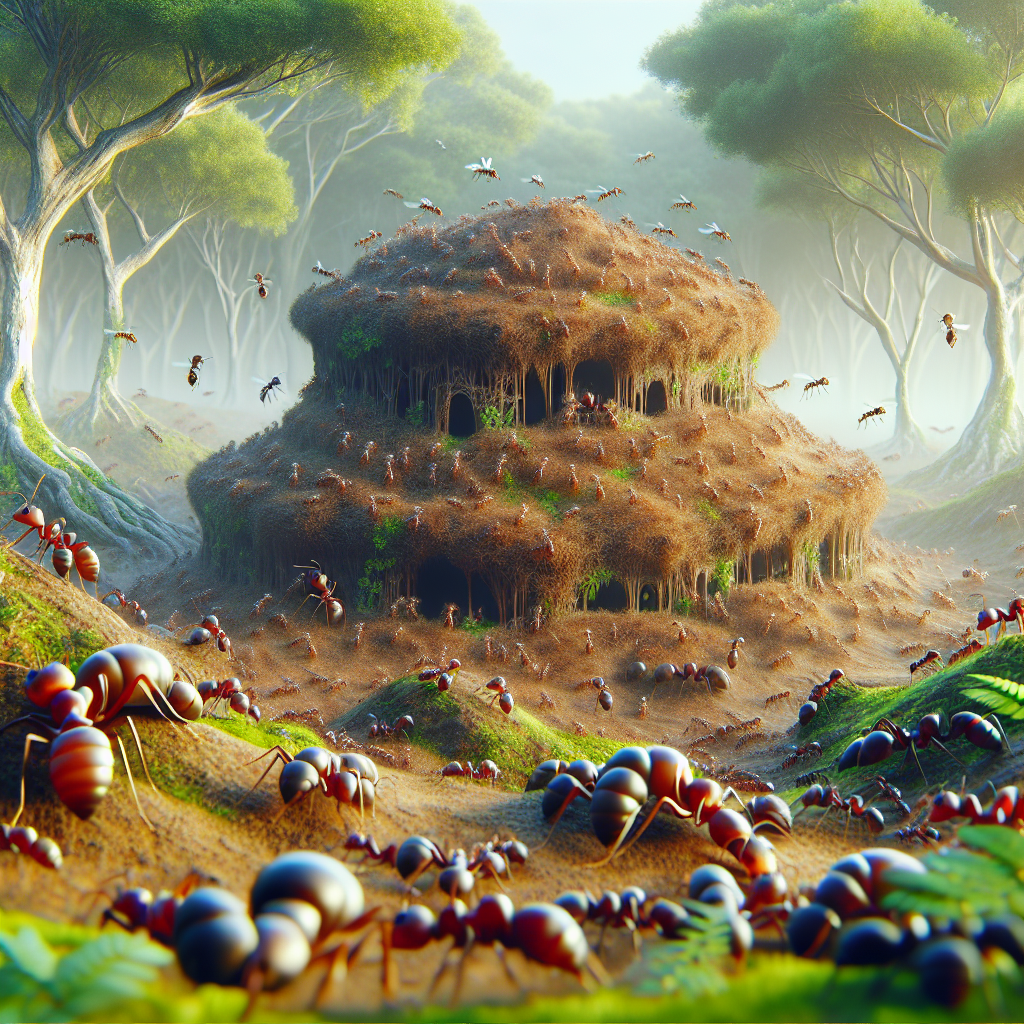

The Fascinating World of Ants: Nature's Tiny Marvels
Ants, those tiny yet mighty creatures, are nature's incredible engineers and social architects! These industrious insects belong to the family Formicidae and are found almost everywhere on Earth, except for Antarctica. With over 12,000 known species, ants have been around for more than 100 million years, evolving alongside flowering plants and even dinosaurs. Their success is largely due to their complex social structures and ability to adapt to various environments.
Ants live in colonies that can range from a few dozen individuals to millions, depending on the species. These colonies are highly organized, with a division of labor that includes workers, soldiers, and a queen. The queen's primary role is to reproduce, while the workers maintain the nest, forage for food, and care for the young. Soldiers, on the other hand, protect the colony from predators and rival ant colonies. This social structure allows ants to efficiently exploit resources and thrive in diverse habitats.
One of the most fascinating aspects of ants is their communication system. They use pheromones, which are chemical signals, to convey messages to one another. This allows them to coordinate complex tasks such as foraging, building, and defending their colony. For example, when a worker ant finds a food source, it leaves a pheromone trail for others to follow, ensuring a steady supply of food for the colony.
Ants also exhibit remarkable problem-solving abilities and teamwork. Some species are known to build bridges with their bodies to cross gaps, while others can form living rafts to survive floods. Leafcutter ants, for instance, are famous for their agricultural skills, as they cut leaves to cultivate fungus, which serves as their primary food source.
The study of ants, known as myrmecology, continues to reveal new insights into their behavior and ecology. Researchers are particularly interested in understanding how ants can inspire innovations in robotics, swarm intelligence, and even sustainable agriculture. By studying these tiny creatures, scientists hope to unlock secrets that could benefit humanity in numerous ways.
Ants are not just fascinating; they play crucial roles in ecosystems. They help aerate the soil, disperse seeds, and control pest populations, making them essential to the health of many environments. As we continue to learn more about these incredible insects, we gain a deeper appreciation for the complexity and interconnectedness of life on Earth.