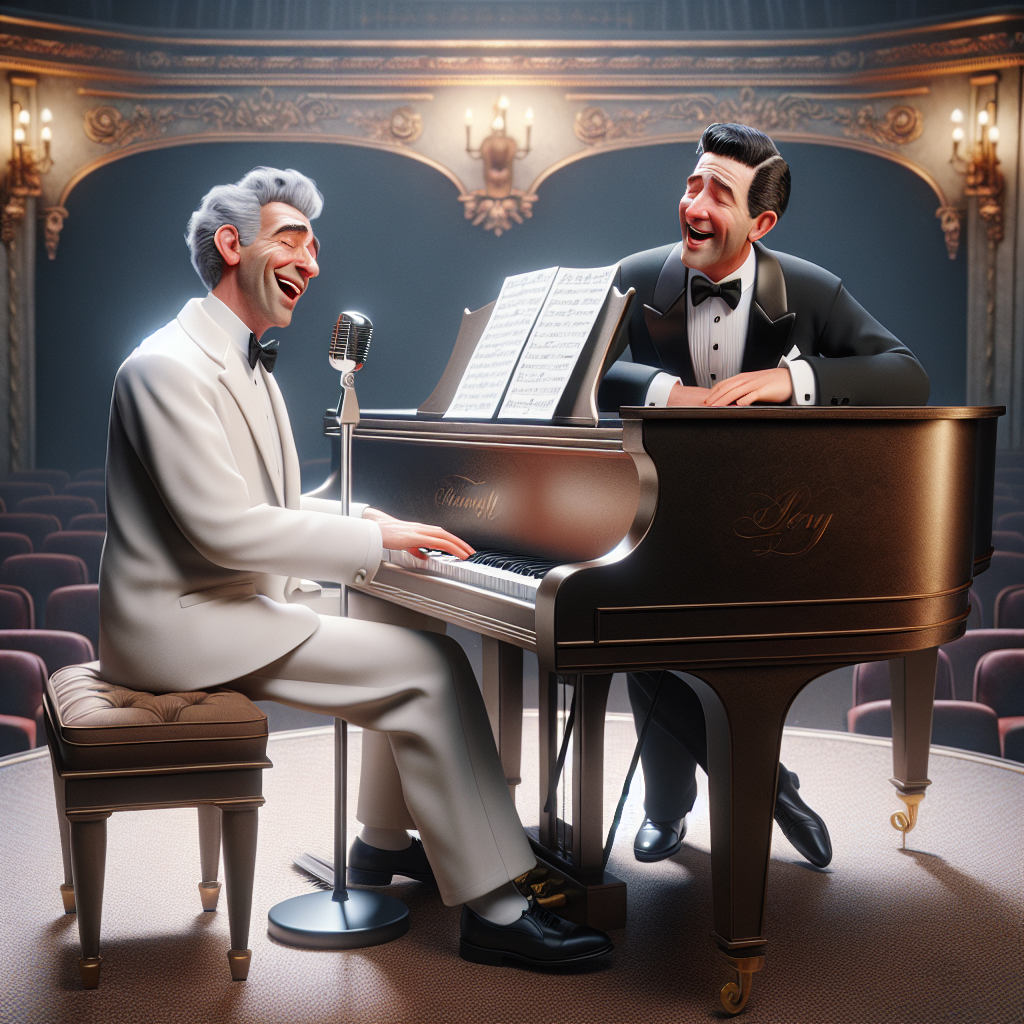

The Wonderful World of Flanders and Swann: Unpacking Witt, Humor, and Melodious Charm
Picture this: a room filled with laughter, rapid-fire wit, and perfectly performed melodies that dance delightfully around words we thought we knew. This is the realm of Flanders and Swann, a 1950s and 1960s British musical comedy duo whose lighthearted and satirical songs captured hearts and tickled funny bones worldwide. But who exactly were Flanders and Swann, and how did they infuse humor with music in such an engaging and timeless manner?
Who Were Flanders and Swann?
Michael Flanders and Donald Swann were an inspired partnership. Born just a year apart in the early 1920s in England, the two met at Westminster School and later embarked on a friendship and professional relationship that would etch their names into the annals of comic-music history. Despite often being associated with each other, their independent personas shaped the nature of their joint oeuvre.
Michael Flanders, with his commanding voice and theatrical flair, was a talented lyricist and performer. Paralyzed from polio, he navigated through his career on a wheelchair—a fact that, instead of hindering, only added depth to his stage presence. Donald Swann, on the other hand, brought melodies to life. An accomplished pianist and composer, Swann had a remarkable ability to translate words into music, crafting tunes that would forever accompany Flanders’ witticisms.
When, Where, and Why?
Their collaboration began during World War II, with sporadic partnerships in radio plays and musical pieces. Post-war, the duo reunited in London and hit their stride in the late 1950s with their revue, “At the Drop of a Hat.” Going further, they successfully wowed audiences until the late 1960s with successor shows like “At the Drop of Another Hat.” Their performances were adored for their satirical humor, keen observations on British society, and, occasionally, gentle digs at international affairs.
Delving into Their Work
A standout aspect of Flanders and Swann's work was how they tackled complex and mundane topics alike, turning everyday life and pervasive social themes into something whimsical yet revealing. You’ve likely come across titles such as “The Hippopotamus Song” (Mud, Mud, Glorious Mud) or “The Gnu,” even if just in passing. They ingeniously spat out satire weaved through amusing stories, all the while serenading audiences with charm and wit.
Science and Nature Through Humor
For scientific minds and nature enthusiasts, Flanders and Swann served a delightful treat with works like “The First and Second Law.” The intricacies of thermodynamics might seem inaccessible to the layperson, but the duo boiled it down to a refreshingly simple perspective. Take the lines:
“Heat won't pass from a cooler to a hotter. / You can try it if you'd like but you'd far better not-a.”
In mere minutes, this song communicates energy concepts that might otherwise take physics textbooks several chapters to elucidate. Their ability to distill scientific principles into jokingly memorable lines embodies their genius.
Laughing with the Satire of Society
Their work was hardly ever offensive; rather, it brought an energizing jolt of consciousness without waving accusatory fingers. “A Song of Patriotic Prejudice” is a classic example that marries humor with sharp commentary, poking fun at national stereotypes in a way that compels simultaneous laughter and reflection. They successfully challenged the pace of societal norms with performances that remain surprisingly relevant.
Cultural Legacy and Influence
While Flanders and Swann themselves have passed on, their legacy endures. They helped pioneer a style of musical comedy that remains influential. Their catchy, satirical tunes have inspired both stage and screen personalities who blend humor with music.
For the avid learners and society watchers, their works offer a historical snapshot infused with testimony to both how they've helped shape comedic discourse and how far humor can evolve. Flanders and Swann’s irreverent examination of social etiquette and timeless humor serve not only as entertainment but as sparkling cultural commentary.
Why Flanders and Swann Matter Today
In a world of increasing complexity and rapid change, Flanders and Swann remind us of the enduring power of music and satire. Their songs offer us a break—a chance to pause, smile, and marvel at the whimsical dance of language and melody that they created so effortlessly.
Beyond the chuckles they inspire, their performances offer a poignant reminder: humor and music can prop open the doors of understanding. Through laughter, listeners are invited to engage with topics they might otherwise shy away from. The legacy of Flanders and Swann is in their capacity to make us want to understand—whether it's the perplexities of science or the fickleness of society—wrapped in a tune we can’t quite forget.
Ultimately, the charm of Flanders and Swann doesn’t lie merely in what they sang, but in the joyous, optimistic analytical spirit they embody, celebrating the human curiosity and desire for enlightenment one tune, one laugh, one glorious verse at a time.