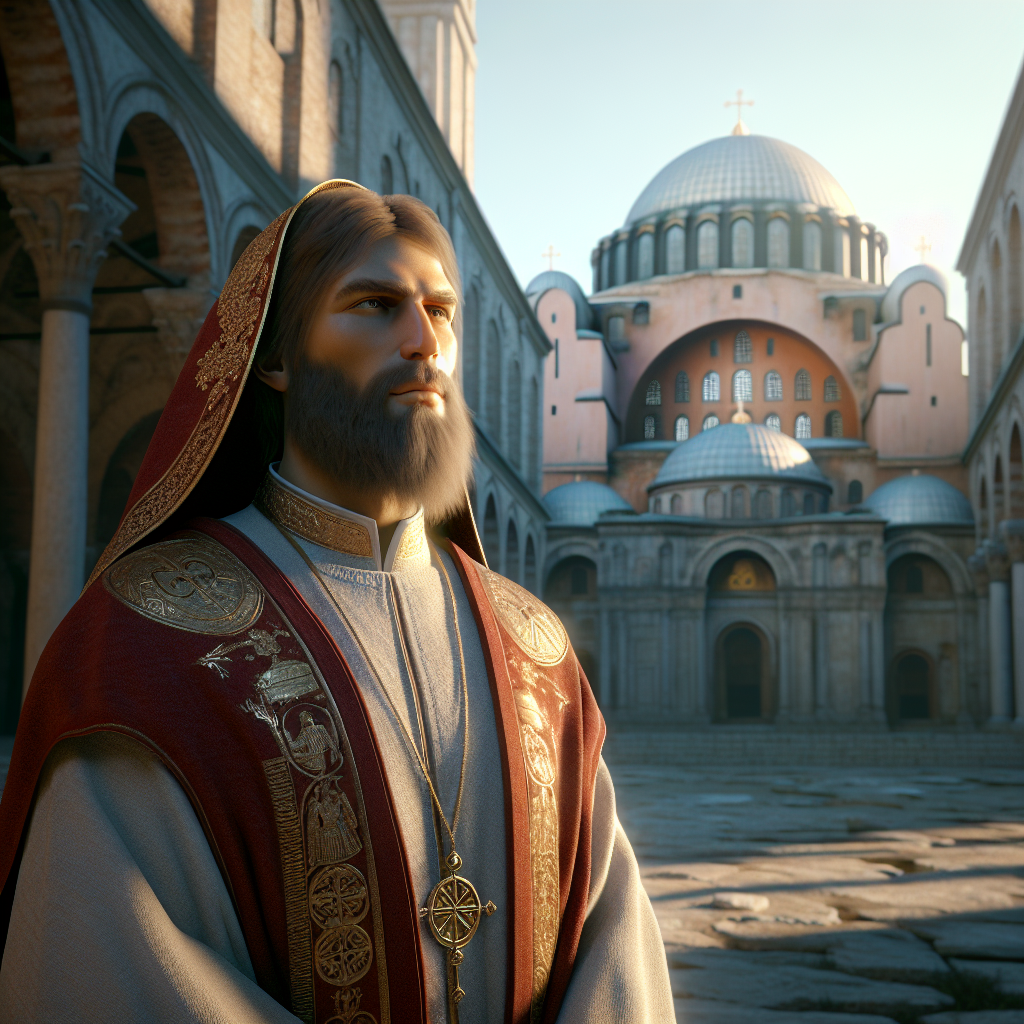

Euthymius I of Constantinople: The Monk Who Became a Patriarch
Imagine a humble monk rising to the heights of religious leadership in one of the most influential cities of the medieval world! Euthymius I of Constantinople, born around 834 AD, was a significant figure in the Byzantine Empire, serving as the Patriarch of Constantinople from 907 to 912 AD. His journey from monastic life to the patriarchal throne took place in the bustling city of Constantinople, now known as Istanbul, during a time of political intrigue and religious reform. Euthymius was appointed by Emperor Leo VI, also known as Leo the Wise, who sought a trusted advisor and spiritual leader to navigate the complex religious landscape of the time.
Euthymius was originally a monk at the Monastery of St. Theodora in Constantinople, where he was known for his piety and dedication to the monastic life. His reputation for wisdom and holiness caught the attention of Emperor Leo VI, who was embroiled in a controversy known as the "Tetragamy"—a dispute over his fourth marriage, which was against church law. Euthymius was chosen as Patriarch to help mediate this delicate situation, balancing the demands of the emperor with the strictures of church doctrine.
During his tenure as Patriarch, Euthymius I was known for his diplomatic skills and his efforts to maintain the integrity of the church amidst political pressures. He was a key figure in the resolution of the Tetragamy controversy, ultimately supporting a compromise that allowed the emperor's marriage to be recognized under certain conditions. This decision was not without its critics, but it demonstrated Euthymius's ability to navigate the complex interplay between church and state.
Euthymius's leadership was marked by his commitment to monastic values and his efforts to reform the church. He worked to strengthen the spiritual life of the clergy and laity, emphasizing the importance of moral integrity and religious devotion. His tenure as Patriarch was relatively short, ending in 912 AD, but his impact on the Byzantine church was significant, leaving a legacy of thoughtful leadership and spiritual dedication.
Euthymius I of Constantinople's story is a fascinating example of how individuals of great faith and wisdom can influence the course of history, even in the face of daunting challenges. His life and work remind us of the enduring power of religious leadership to shape societies and guide them through times of change and uncertainty.