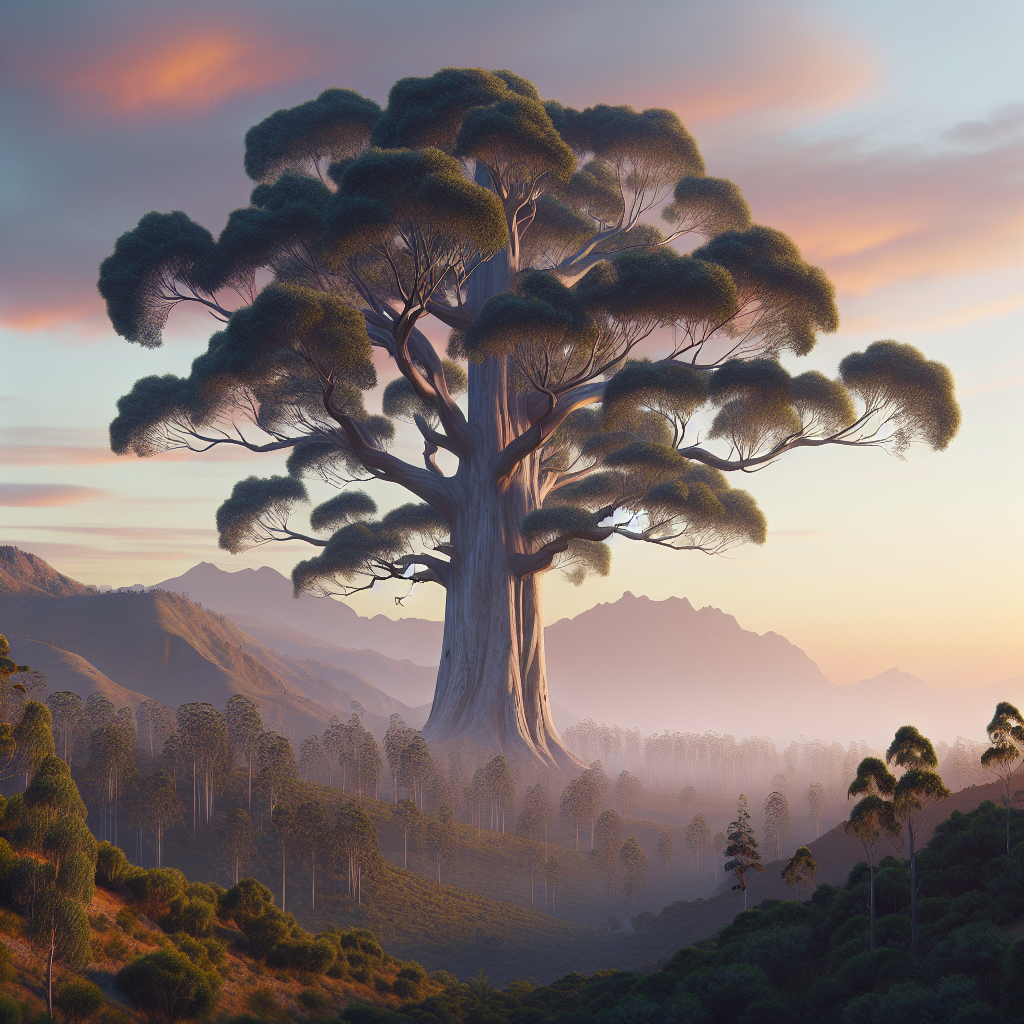


Imagine walking through an ancient forest, surrounded by towering titans whose canopies touch the sky, and among these natural giants is the magnificent Eucalyptus jacksonii, one of nature's architectural masterpieces. Known colloquially as the "Red Tingle," this extraordinary tree species has captured the curiosity and admiration of botanists, adventurers, and environmentalists alike.
The Majestic Eucalyptus jacksonii
Eucalyptus jacksonii, commonly referred to as the Red Tingle, is a eucalyptus species endemic to the south-western region of Western Australia. It belongs to the Myrtaceae family and is known for its impressive height and strikingly large trunk. These trees can soar to astonishing heights of 75 meters (approximately 246 feet) and boast trunk girths that measure up to 24 meters (about 79 feet) in circumference. The species was first formally described in 1925 by the renowned botanist Charles Gardner and has since been a significant point of interest for ecological studies.
Anatomy of a Giant
Why does Eucalyptus jacksonii grow so large? It's a combination of genetics, environment, and a little bit of evolutionary magic. The region's favorable climate – characterized by mild, wet winters and dry summers – is ideal for supporting the growth of these colossal entities. They possess a uniquely fibrous bark, which aids in shedding dead tissues and promoting new growth, ensuring the tree's longevity and protection against pests and diseases.
The Red Tingle's root system, which is both wide-reaching and strong, allows it to anchor deeply into the ground, drawing essential nutrients and water. This vital network not only supports the tree's colossal structure but also helps in sustaining the local ecosystem by preventing soil erosion.
A Keystone of the Ecosystem
The Eucalyptus jacksonii is not just a passive giant; it's an ecosystem engineer! These trees play an integral role in their habitat, providing shelter and food for various wildlife. Birds, marsupials, and insects all rely on the Red Tingle for nesting sites and nourishment through its foliage and flowers. Despite the harsh conditions of the Australian outback, Eucalyptus jacksonii thrives, thanks in part to its ability to attract and support pollinators like bees and honey possums.
Moreover, these trees are adaptive survivors. Their thick bark offers protection from bushfires, allowing them to withstand and recover from the periodic blazes that sweep through Australia's landscapes. This resilience contributes to their longevity, with some individuals estimated to be over 400 years old.
Conservation and Importance
Where can one witness the towering marvels of Eucalyptus jacksonii? The trees are predominantly found in the Walpole-Nornalup National Park, particularly the Valley of the Giants, a famous tourist destination where visitors can embark on the Tree Top Walk to experience the forest canopy up close. This area is part of a larger biodiversity hotspot that remains a priority for conservationists due to its unique flora and fauna.
Why is conservation important? The conservation status of Eucalyptus jacksonii is currently regarded as "not threatened." However, the expansion of farmland, urban development, and climate change pose ongoing threats to their habitat. Protecting these trees ensures the preservation of an entire ecosystem that relies on them for survival, as well as maintaining their role in carbon sequestration, which is crucial in combating climate change.
Embracing Humanity's Role
The study and preservation of Eucalyptus jacksonii highlight humanity's capacity to interact positively with the environment. As stewards of our planet, our responsibility is to understand and advocate for ecosystems, which act as the Earth's life support. There's a sense of optimism in how science and community efforts can come together to protect these natural wonders. With enthusiasm and a commitment to sustainable practices, we can ensure that future generations will have the opportunity to marvel at the Red Tingle and draw inspiration from nature's tallest and mightiest.
Whether you're a seasoned botanist, a nature-loving traveler, or simply someone captivated by the wonders of the natural world, the Eucalyptus jacksonii stands as a testament to the beauty and complexity of life on Earth — a reminder that even in the most remote corners of the world, nature crafts spectacular masterpieces that deserve our awe and protection.