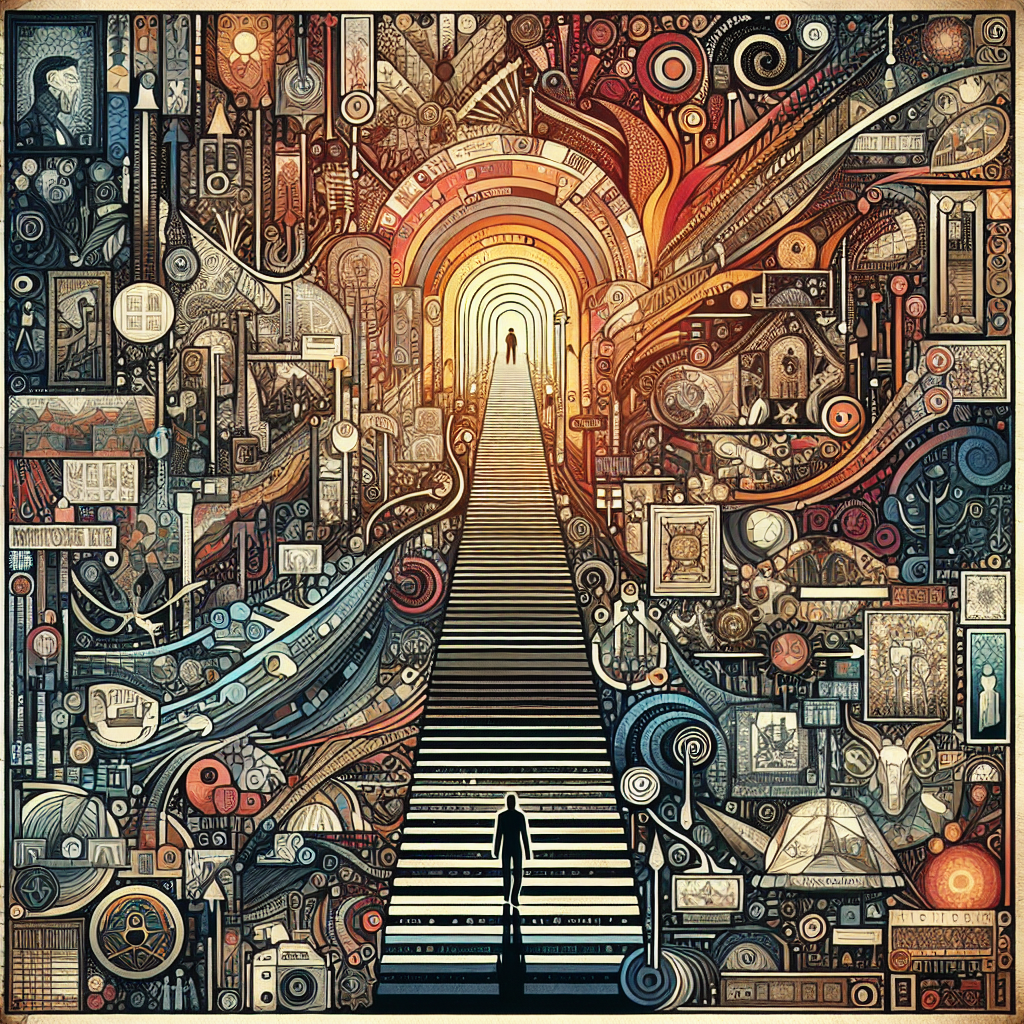

Eric Forman: Where Art Meets the Science of Innovation
Imagine walking into a room where the art seems alive, responsive, as though engaging in a dialogue with its environment. This is not a scene from a science fiction movie but rather the innovative work of Eric Forman, an American artist breaking new ground at the intersection of art, technology, and interactivity. In the bustling artistic hub of New York City, Forman has spent his career crafting installations that not only challenge our perceptions but also invite us to explore the dynamic world where creativity meets scientific thought.
Forman's journey as an artist began with his education and early career, deeply rooted in a blend of fine arts and technology. Having completed his studies at the prestigious Brown University and New York's Interactive Telecommunications Program at NYU, he fostered a unique skill set. His work is characterized by an optimistic outlook on the fusion of technology and humanity, expressing ideas that are complex yet gracefully accessible. His installations often engage viewers in a way that simplifies daunting scientific concepts, making them tangible and thrilling.
The Science Within the Art
At its core, Eric Forman’s artistry is an exploration of interaction and perception. His projects often incorporate real-time data, sensors, and feedback loops to create fluid and evolving pieces that react to their surroundings and human participants. One of his notable installations, 'Kinect to Nature,' is a prime illustration. This piece uses motion sensors to map observers' movements, translating them into digital renderings that mimic natural phenomena such as wind patterns or water currents. Observers find themselves as both viewers and participants, an idea that embodies the artist's philosophy—a seamless blend of art and life.
Forman's scientific inspiration roots in his fascination with emerging technologies and their implications for human experience. By translating these into interactive installations, he transforms the technical into the tangible. His work serves as an optimistic reminder of the potential that technology holds not just for innovation but for enriching human connection and understanding.
The Art of Interaction and Engagement
Forman’s projects extend beyond individual experience; they are dialogues that encompass broader social and environmental narratives. Projects like ‘Reactive Places’ offer commentary on urban spaces and their relationship with natural ecosystems. By embedding sensors in cityscapes, Forman allows physical sites to 'react' to human presence, challenging us to rethink our roles within larger ecological and social systems.
Such works question traditional boundaries and embrace a future where art transcends the static and becomes a co-participant in the shared narrative of space and time. This perspective aligns closely with scientific exploration—an enduring quest to understand and coexist with the unknown. Through his art, Forman propels this quest, inviting audiences to consider their interactions not just with art, but with the environment at large.
The Community of Curiosity
Eric Forman's art is grounded in the belief that curiosity fuels progress. He sees technology as a medium that can inspire curiosity and drive communal discovery. His installations often act as catalysts for discussion, drawing spectators into a shared inquiry full of wonder and possibility.
He has also taken his passion for education to heart, teaching courses in digital media at Parsons School of Design in New York. Here, he nurtures the next generation of artists and thinkers, empowering them to explore their curiosities and innovate. His efforts in education ensure that his optimistic vision for the synergy between humanity and technology continues to inspire future innovators.
Society's Narratives Woven through Technology
Core to his belief in interactive art is its potential as a social tool. Forman envisions a future where artistry and interactivity serve as a means to foster understanding and empathy. His works often invite viewers to partake in a shared experience, crafting a communal story through participation and interaction.
By transforming art into a collaborative encounter, Forman's work underscores the idea that we are not simply passive consumers of information and artwork but active participants in the narrative of the world around us. His creative endeavors remind us that art is not just to be seen—it is something to be lived.
Conclusion
Eric Forman stands as a beacon of the harmonious possibilities between art, science, and human engagement. His work invites us to thoroughly embrace the unknown with optimism and curiosity, championing an age where creativity ignites innovation. As we navigate through a world increasingly shaped by technology, his art stands as a testament to the profound beauty and human potential that lies at the intersection of curiosity and interaction.