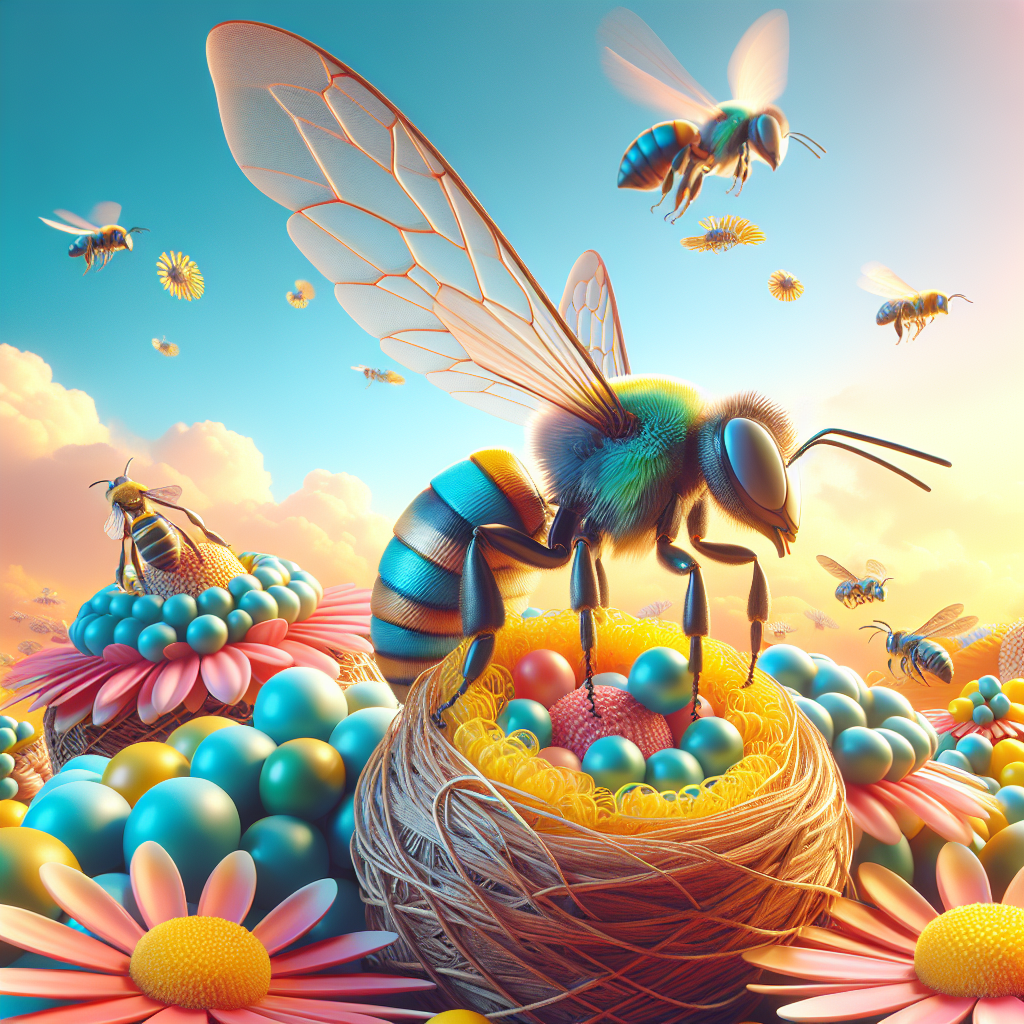

Epeolus Carolinus: The Intriguing Cuckoo Bee
Have you ever wondered about the secret lives of bees that lurk in the shadows? Meet Epeolus carolinus, a quirky member of the bee family that doesn't collect pollen like most bees. Instead, these enigmatic creatures engage in the fascinating behavior of 'brood parasitism,' a concept that sounds more like it belongs in a mystery novel than nature. Known as a cuckoo bee, Epeolus carolinus inserts its eggs into the nests of other bees, most notably those of the genus Colletes. These crafty critters are found across North America, where they mainly make their homes in diverse floral habitats.
The Epeolus carolinus belongs to the family Apidae and subfamily Nomadinae, characterized by their distinct behaviors and adaptations. Unlike typical bees that are celebrated for their industrious nature and honey-making prowess, these cuckoo bees rely on their unwitting hosts to do the heavy lifting. They do not possess pollen collectors (or scopa) on their hind legs, as is common in other bees, because they don't gather pollen themselves.
Journey into the Lifestyle of Epeolus Carolinus
Understanding the life cycle and habits of Epeolus carolinus can unearth a treasure trove of evolutionary strategies. These bees have evolved alongside their host species, mimicking the scent and slipping past the defenses of host nests with an audacious strategy: survival of the sneakiest.
It begins with a careful selection of a host nest. Once a female cuckoo bee locates a suitable nest, she bides her time, sometimes quite literally buzzing behind her potential hosts until the moment is right. Then, with the nimbleness of a ninja and timing of a skilled tactician, she lays her eggs near the host's larvae provision. Her offspring, upon hatching, will eliminate the host’s offspring and take advantage of the food supply the unsuspecting host bee meticulously gathered.
Physical Characteristics
Epeolus carolinus, resembling a smaller version of their industrious honeybee cousins, sport striking black and white patterns with red-brownish hues. This not only makes them a sight to behold but also likely serves a purpose in their survival tactics. Their compact and robust bodies facilitate swift maneuvers needed to infiltrate host nests, evoking fascination about how form perfectly follows function in the natural world.
The Importance of Parasitism in Evolution
While at first glance, brood parasitism might seem devious or even harmful, it highlights nature's relentless pursuit of adaptation and survival. The existence of Epeolus carolinus contributes to a dynamic balance within ecosystems. It pressures host species to constantly evolve defensive strategies, ushering a cycle of adaptation akin to a biological arms race. This delicate dance drives biodiversity, a reminder of how intertwined life forms constantly adapt in response to each other.
Moreover, the role of such parasitic behaviors might hold crucial insights into tackling agricultural challenges. Understanding these bee dynamics can help develop strategies for biodiversity conservation and promote healthy, thriving ecosystems that benefit humanity in unexpected ways.
Unraveling the Mysteries: Research and Discoveries
Leading researchers are particularly fascinated by the coevolutionary relationships between Epeolus carolinus and their hosts. Recent studies utilize advanced genetical approaches to comprehend how these astonishingly specific adaptations have allowed cuckoo bees to thrive stealthily. As technology advances, so too does our understanding of these complex ecological relationships.
One of the exciting aspects of researching Epeolus carolinus is the opportunity to work on the frontlines of discovery. With every field study, parasitic bee, and host interaction recorded, scientists can piece together a wider picture of the environmental challenges, climate impacts, and conservation needs specific to these and other similar species. It isn't just about the bees—as resilient as they are—but about piecing together an intricate web that sustains biodiversity.
Why We Should Care
Humanity's future is intricately linked with the health of our natural world. Bees hold an irreplaceable place within this delicate system, tying together countless ecosystems through pollination and other vital roles. Although cuckoo bees like Epeolus carolinus don't directly pollinate plants, their interactions and existence signal the complexity of ecological interactions. They remind us of a crucial lesson: each creature, no matter how small or seemingly peculiar, plays a role in the grand theater of life.
Understanding kin like the Epeolus carolinus enriches our appreciation of nature's ingenuity, reminding us of the interconnectedness that sustains life's diversity. Even as we consider the common phrase "to bee or not to bee," taking a deeper look into these unique creatures inspires both curiosity and hope for preserving biodiversity through conscientious stewardship of our planet.