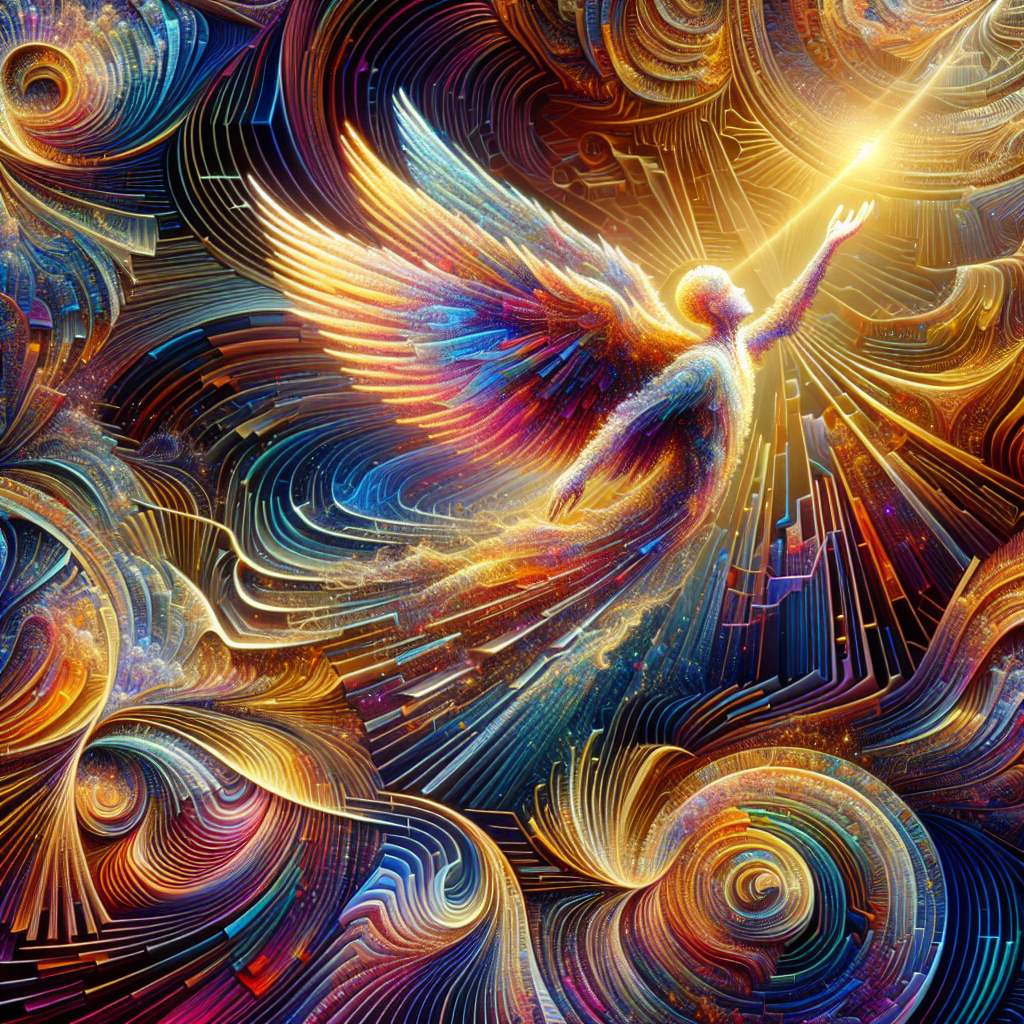

Have you ever pondered upon the mystical beings we call 'angels'? They are celestial figures that captivate the human imagination, dancing delicately within stories of spirituality, history, and even science. But what exactly are angels, and what do they represent in our march through history and our quest for understanding the universe?
Angels, known as 'Engeln' in German, are primarily seen as supernatural messengers bridging the heavens and Earth, a fascinating fusion that combines elements of theology, folklore, and psychology. Often depicted as winged guardians in sacred texts, they appear in various faiths, ranging from Christianity and Islam to Zoroastrianism and beyond. Their presence, while deeply rooted in religious traditions, extends far into art, literature, and popular culture, transforming through centuries of storytelling and interpretation.
Origins and Transformations of Angels
The concept of angels is likely to have originated in the ancient Near East cultures. Early references can be traced back to Zoroastrianism—one of the world's oldest organized faiths, where divine creatures serve as intermediaries between the Almighty and humans. Triggered by spiritual needs and the desire for guardianship, the notion of angels spread and morphed across cultures and religions.
In Judaism and Christianity, angels serve as God's messengers, protectors, and executors of His will, featuring prominently in scriptures such as the Bible. Notable figures like Gabriel and Michael are seen relaying divine messages or waging spiritual battles. Meanwhile, Islam introduces a rich tapestry of angelic beings, central in guiding the faithful and recording good and bad deeds.
Artistic and Cultural Depictions
Angels have enthralled artists for centuries. From the Renaissance masterpieces to the ethereal figures in Gothic cathedrals, the visual portrayal of angels is strikingly iconic. The Renaissance artists endowed angels with a blend of beauty and mystery, creating ethereal figures with flowing robes and majestic wings.
In literature, angels play diverse roles, from Milton’s Paradise Lost to modern fantasy novels, angels often symbolize good, hope, and salvation but also the complex interplay of free will and predestination. Contemporary media has embraced angels with intrigue, visible in television series and films where angels assume all sorts of roles—from protectors awaiting redemption to avenging entities raging against evil.
The Science of Angels?
Can something that springs from the pages of sacred texts and ancient lore intersect with the scientific realm? While angels remain within the supernatural domain, scientific inquiry offers perspectives that can illuminate why humanity is fascinated by such entities.
Psychology may explain the universal attraction to angels through cognitive metaphors, embodying concepts like safety and morality. Carl Jung’s theories of archetypes suggest that angelic figures may reside in our collective unconscious, representing timeless virtues or guiding spirits.
Furthermore, neuroscience provides insights into spiritual experiences such as angelic visions. Certain brain activity patterns linked with spiritual practices might elicit the perception of ethereal entities, offering a naturalistic understanding that does not diminish their symbolic significance.
Why Are We So Fascinated With Angels?
Angels hold an intriguing place in human consciousness and culture. Perhaps it is their role as mediators between the divine and the mundane that attracts us. In times of uncertainty, people often seek signs of assurance, and angels promise a form of cosmic guardianship.
They kindle hope—the belief that there may be more to our existence than meets the eye. Who wouldn’t feel comforted by the thought of a benevolent presence protecting or guiding them, especially during life's most challenging moments?
Their omnipresence in religious traditions speaks to a universal human desire for connection with the ineffable, tapping into our innate quest for meaning, security, and understanding of life's biggest questions.
Looking Ahead
Even in our highly scientific era, where skepticism prevails, the fascination with angels thrives. Representing more than mere figments of fantasy, they are an ode to humanity's boundless imagination and relentless curiosity. This endless capacity to dream about angels, to imbue them with purpose and positivity, shines light on the resilience and optimism inscribed in the human soul.
The study of angels blends everyone's favorite subject—human curiosity—with an open invitation, urging us to explore stories and symbols from our ancestors, holding the potential to understand ourselves and our universe more deeply.
So, the next time you encounter an angel in story, song, or serene speculation, remember they are the imperfect mirrors of our humanity, waiting in the wings to inspire, challenge, and comfort in their uniquely spectral way.