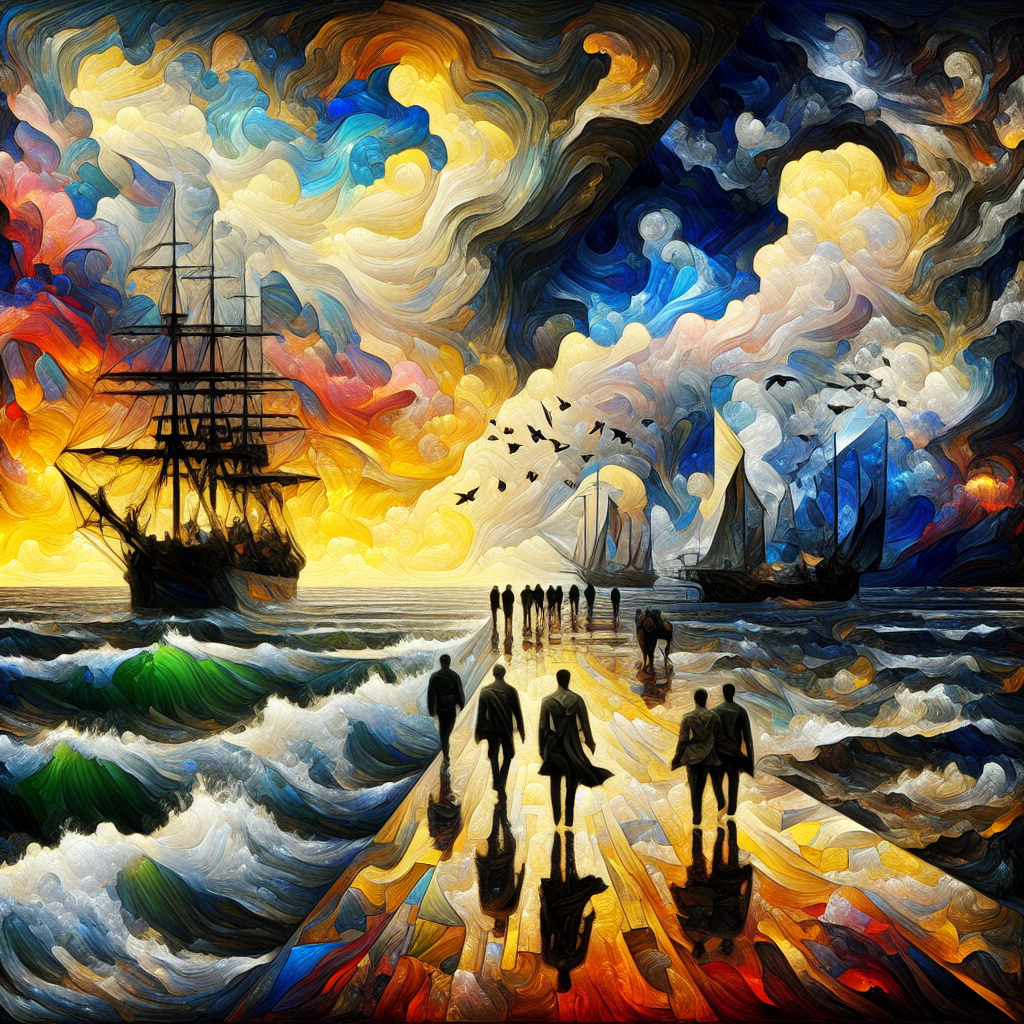

The Captivating Journey of Beckmann's "Departure"
Max Beckmann, a German painter, created the mesmerizing triptych "Departure" between 1932 and 1935, a period marked by political upheaval and personal turmoil. This artwork, now housed in the Museum of Modern Art in New York City, is a vivid exploration of human suffering and liberation. Beckmann, who fled Germany due to the rise of the Nazi regime, used this piece to express his complex emotions and critique the oppressive political climate of the time. The triptych format, traditionally used for religious art, adds a layer of irony and depth to the work, inviting viewers to ponder the human condition and the quest for freedom.
"Departure" is a striking example of Beckmann's unique style, which blends elements of Expressionism and New Objectivity. The central panel of the triptych depicts a serene scene of a king and queen in a boat, symbolizing hope and escape. In contrast, the side panels portray scenes of violence and captivity, reflecting the artist's perception of the world around him. Beckmann's use of bold colors and distorted figures creates a sense of tension and urgency, drawing the viewer into the narrative.
The creation of "Departure" was influenced by Beckmann's personal experiences and the broader socio-political context of the early 1930s. As the Nazis rose to power, Beckmann's art was labeled "degenerate," and he was dismissed from his teaching position. This personal and professional upheaval is mirrored in the chaotic and oppressive imagery of the side panels. Yet, the central panel offers a glimmer of hope, suggesting that even in the darkest times, the possibility of escape and renewal exists.
Beckmann's "Departure" continues to captivate audiences with its powerful imagery and profound themes. It serves as a testament to the resilience of the human spirit and the enduring power of art to challenge and inspire. Through this masterpiece, Beckmann not only captured the tumultuous spirit of his time but also created a timeless exploration of the human journey toward freedom and self-discovery.