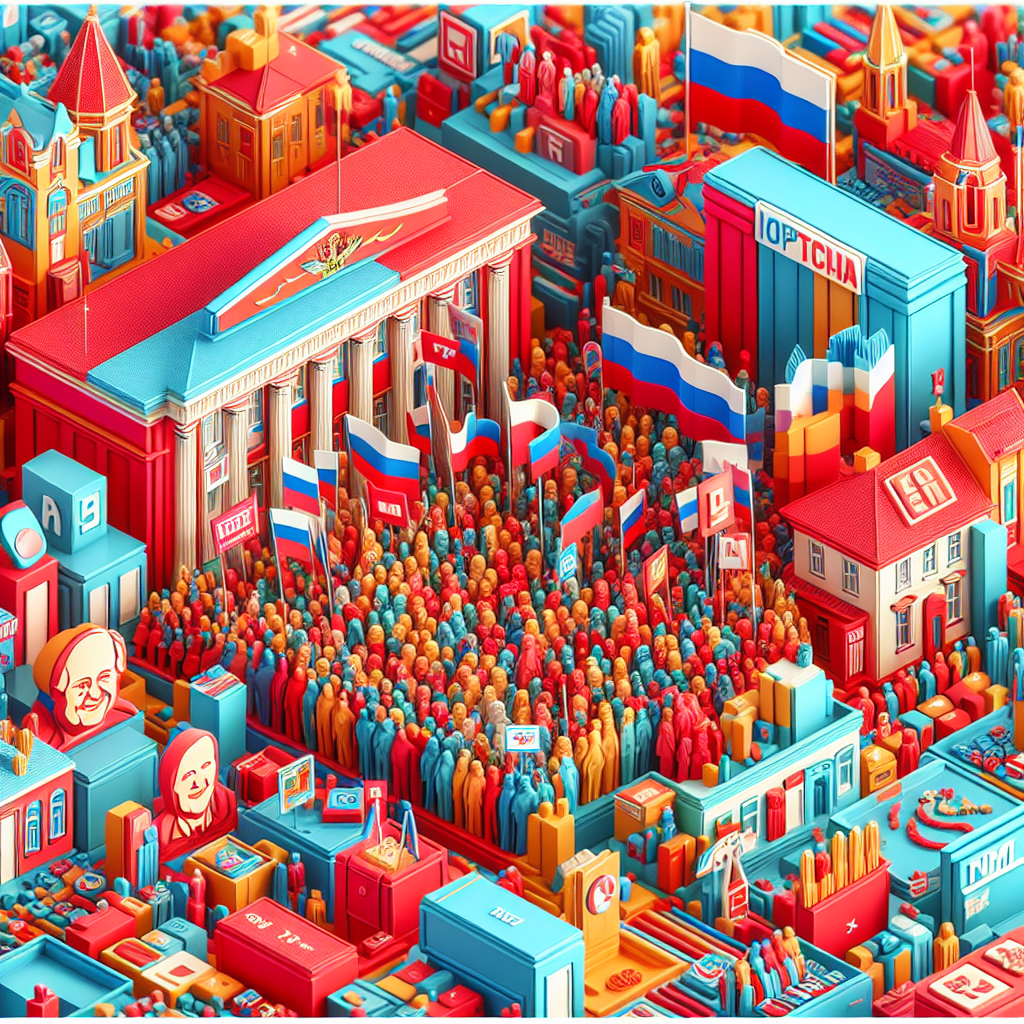

Unwrapping the Political Evolution of Russia’s Democratic Party
Welcome to the fascinating political landscape of Russia, where the Democratic Party of Russia emerges as a captivating entity. Established in 1990 amid the socio-political upheavals surrounding the dissolution of the Soviet Union, this party quickly carved its niche in Russia's rapidly changing political terrain. Headquartered in Moscow, it was initially a beacon of democratic reform and liberal policies, aiming to guide the nation through a tumultuous period of transformation. Why did this party come into existence, and what path has it taken since its inception? Let's break it down scientifically, yet optimistically, to understand the profound impacts and the journey of this intriguing political player.
The Origins of the Democratic Party of Russia
The Democratic Party of Russia (DPR), or Demokraticheskaya Partiya Rossii in Russian, was founded on May 26, 1990. This was a time when Russia was yearning for reform, rooted in the extensive changes sweeping across the Soviet Union. Amid the winds of perestroika and glasnost, policies heralded by then-General Secretary Mikhail Gorbachev, citizens were awakening to the possibilities of freedom and individual rights. The DPR tapped into these aspirations and sought to expand democratic freedoms, promote human rights, and create an economically prosperous Russia, encapsulating the spirit of optimism that characterized the era.
The Era of Political Transitions
Initially, the DPR gained significant traction by aligning itself with the larger democratic movement, which was led by prominent Russian figures who advocated for change. These politically dynamic and optimistic moments saw the party expanding its influence and grabbing the attention of international observers. Who could resist the allure of a nation on the brink of transformation, right?
During the early 1990s, the DPR participated in pivotal debates concerning Russia's future, contributing to policies that advocated market economy transitions and political pluralism. The party drew support from many intellectuals, professionals, and young citizens eager to distance Russia from the shadows of its Soviet past. Its early years also witnessed collaborative efforts with other democratic reform parties, cementing its role in shaping new political discourses. Notably, its leaders played roles in the Congress of People's Deputies of Russia, the precursor to Russia's Parliament.
Peaks and Valleys: Challenges and Changes
Despite its promising start, the Democratic Party of Russia faced a landscape fraught with challenges. The collapse of the Soviet Union, while initially beneficial due to the expanded discussion space for democratic ideals, also gave rise to unpredictable economic conditions and political turmoil throughout Russia. During the mid-1990s and early 2000s, the DPR struggled to maintain its influence amid the rise of other political parties, such as the Communist Party and Vladimir Putin's United Russia.
These years were marked by trying to redefine its position in an increasingly competitive political environment. Yet, it remained markedly resilient, attributing its endurance to adaptability and ongoing devotion to its foundational principles of human rights and market reforms. However, diminishing electoral fortunes and internal disagreements often challenged the party's unity and purpose, curbing its impact even as it continued to advocate for democratization.
Rediscovery and Renewal Efforts
Efforts to revive the Democratic Party of Russia continued into the 21st century, showcasing the profound tenacity ingrained in its core. In a landscape dominated by robust, well-backed parties, the DPR engaged in numerous strategic partnerships and alliances to bolster its visibility and engage the public.
In subsequent years, the party has attempted to embrace modernization with vigor, recognizing that connecting with voters must evolve alongside technological advancements and shifting societal norms. Advocacy has often focused on using social media platforms and digital campaigns, aiming to resonate with tech-savvy younger generations who are crucial for nurturing long-term political support.
While often remaining a minor political entity amid Russia's expansive political framework, the Democratic Party of Russia's positions on democracy, liberalization, and reform continue to inspire conversations about the country's development directions.
The Broader Impact: Repercussions Beyond Politics
Understanding the nuanced history of the Democratic Party of Russia provides immense insight into the broader changes within Russian society. The party represents more than just political ideals; it reflects a societal yearning for dignity, change, and improvement—a reflection of humanity's continual quest for betterment and democratic expression.
The Democratic Party of Russia's enduring presence acts as a poignant reminder of the complexities associated with political transitions in vast, culturally diverse settings like Russia. Its journey—bespeaking both obstacles and achievements—serves as a poignant testament to the trials, aspirations, and undeterred human spirit that underpin modern democracies worldwide. Within this ongoing narrative lies a profound and scientifically optimistic understanding of potential: a signal of hope that continues to light the way for reformists and dreamers alike.
Encouragement for Future Curiosity
Isn’t it captivating to track how political entities navigate the agitated waters of change and reform? History, particularly political history, is a garden rich with lessons for present and future generations. The Democratic Party of Russia, with its tales of resilience and reform, becomes a living archive that prompts reflections on democratic processes, civil rights, and reformist dreams.
In examining its intricate path, we witness how political ideologies evolve and adapt, ultimately fulfilling an essential place in the pantheon of global political discourse. So, as we unravel the political fabric of any nation or principle, let's remain staunchly committed to learning, staying optimistic, and cherishing humanity’s intrinsic potential for betterment through understanding and cooperation.