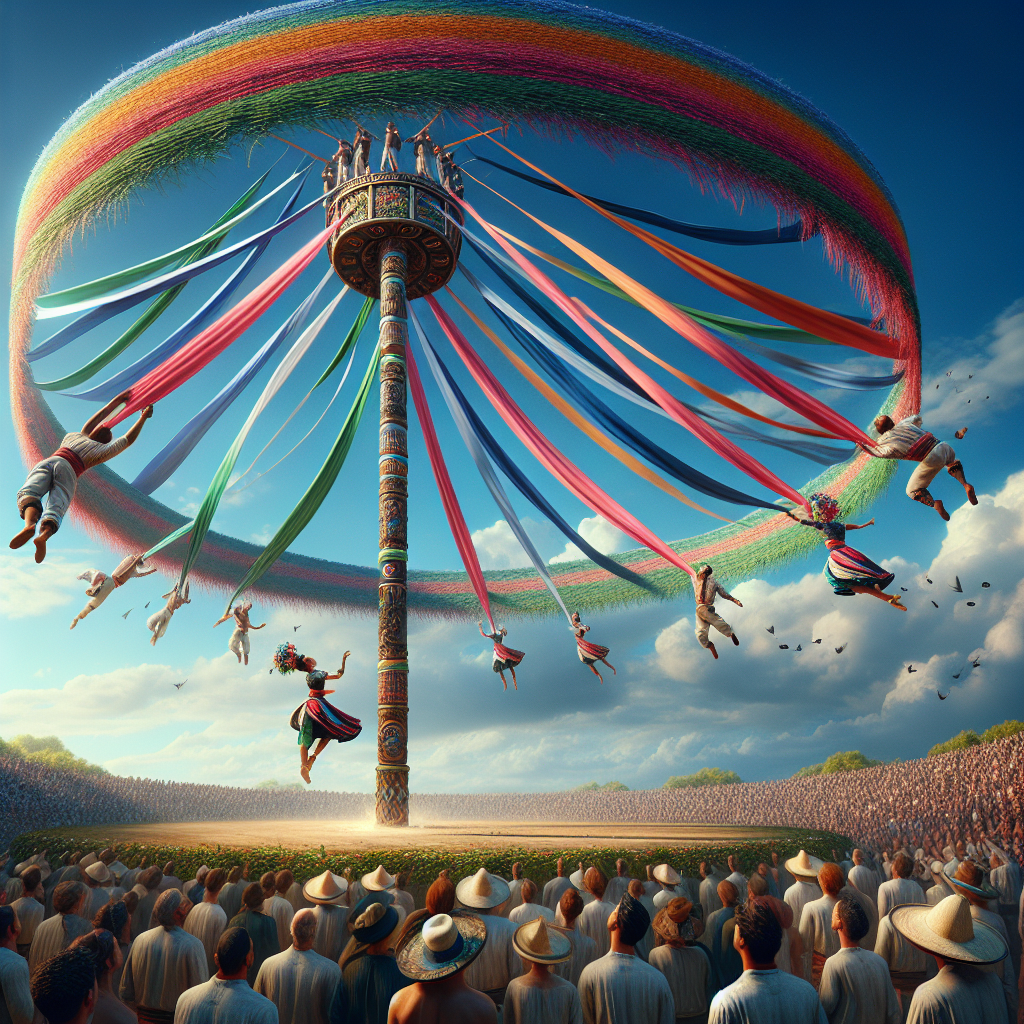

The Daring Dance of the Voladores: A Skyward Tradition
Imagine spinning through the air, tethered only by a rope, as you descend gracefully from a towering pole. This is the breathtaking spectacle of the Danza de los Voladores, a traditional Mesoamerican ceremony that has been captivating audiences for centuries. Originating from the Totonac people of Veracruz, Mexico, this ritual is believed to date back over 500 years, with its roots deeply embedded in the cultural and spiritual practices of the region. The dance is performed by five participants, known as "voladores" or "flyers," who climb a 30-meter pole, with one remaining at the top to play a flute and drum, while the other four leap off, spinning around the pole as they descend to the ground.
The Danza de los Voladores is not just a thrilling performance; it is a profound expression of cultural identity and a plea for fertility and rain, essential for agricultural success. The ritual is traditionally performed during festivals and special occasions, often in the heart of Totonacapan, but it has also spread to other parts of Mexico and Central America. The dance is a testament to the resilience and creativity of indigenous cultures, preserving their heritage through the art of flight. In 2009, UNESCO recognized the Danza de los Voladores as an Intangible Cultural Heritage of Humanity, highlighting its significance and the need to protect this extraordinary tradition for future generations.
The dance's origins are shrouded in myth and legend, with stories suggesting it was created to appease the gods during a time of drought. The voladores' descent symbolizes the descent of the gods to the earth, bringing with them the life-giving rains. Each of the four flyers represents one of the cardinal directions, and their 13 rotations around the pole add up to 52, a sacred number in the Mesoamerican calendar, symbolizing the completion of a cosmic cycle.
Today, the Danza de los Voladores continues to inspire awe and admiration, drawing spectators from around the world to witness this daring dance of devotion and cultural pride. It serves as a reminder of the rich tapestry of human history and the enduring power of tradition to connect us to our past, while also propelling us into the future with a sense of wonder and respect for the diverse cultures that make up our world.