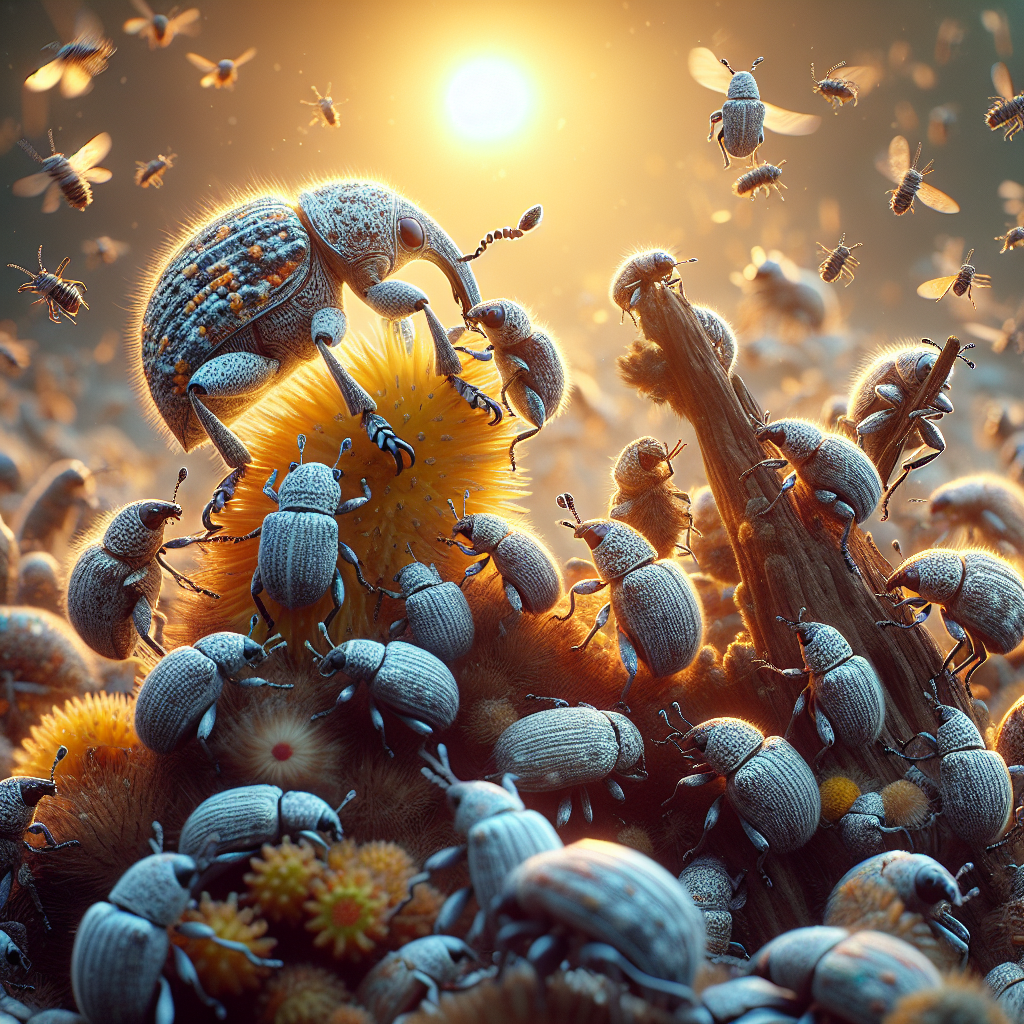

The Wonderful World of Curculionidae: Nature's Tiny Engineers
Imagine a world where tiny creatures are the architects of their own universe, shaping ecosystems with their intricate designs. Welcome to the fascinating realm of Curculionidae, commonly known as weevils! These small beetles belong to the family Curculionidae, which is one of the largest animal families on Earth, boasting over 60,000 species. They can be found all over the globe, from lush rainforests to arid deserts, and have been around for millions of years, with fossil records dating back to the Jurassic period. But why are these little critters so important? Well, they play a crucial role in the environment as both pests and pollinators, influencing agriculture and natural ecosystems alike.
Curculionidae are known for their distinctive elongated snouts, which they use to bore into plants, making them notorious agricultural pests. However, their impact isn't all negative. Many weevils are vital for the pollination of certain plants, contributing to biodiversity and the health of ecosystems. Their ability to adapt to various environments and diets is a testament to their evolutionary success. Some species have even developed symbiotic relationships with plants, showcasing the intricate balance of nature.
The lifecycle of a weevil is a marvel of nature. It begins with the female laying eggs inside plant tissue, where the larvae hatch and feed, often causing significant damage to crops. This has led to extensive research into pest control methods to protect agriculture from weevil infestations. Yet, despite their reputation as pests, weevils are also a source of fascination for scientists studying evolution and adaptation.
Curculionidae's diversity is astounding, with species exhibiting a wide range of colors, sizes, and behaviors. Some weevils have evolved to mimic their surroundings, providing them with camouflage against predators. Others have developed unique defense mechanisms, such as the ability to feign death or release noxious chemicals. This adaptability has allowed them to thrive in nearly every corner of the planet.
In the grand tapestry of life, Curculionidae are a testament to the complexity and wonder of nature. Their dual role as both pests and pollinators highlights the delicate balance of ecosystems and the importance of understanding and preserving biodiversity. As we continue to study these remarkable beetles, we gain insights into the intricate web of life that sustains our planet. So next time you spot a weevil, remember that you're witnessing a tiny engineer at work, shaping the world in ways both seen and unseen.