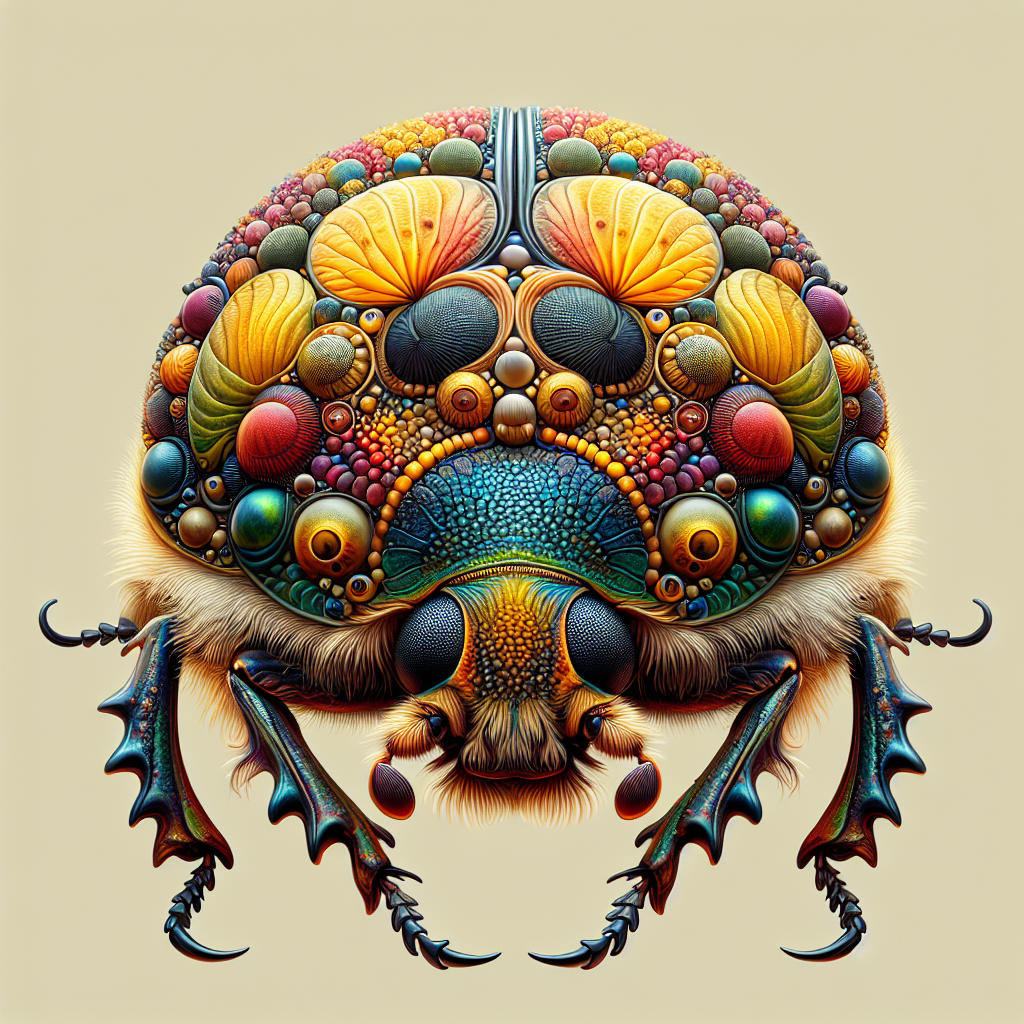

If you think jewel thieves are exciting, wait until you meet Cryptocephalus castaneus, a shimmering beetle species that out-dazzles any necklace heist story! Indigenous to forests across Europe, this beetle was first described scientifically in the 18th century. Why are we still captivated by this tiny insect today? Because this insect represents a spectrum of nature's bounty.
Who is Cryptocephalus castaneus?
Cryptocephalus castaneus is a member of the leaf beetle family, Chrysomelidae, a diverse family blessed with colorful and fulgent members. Its very name—'Cryptocephalus'—means 'hidden head', aptly describing how the beetle's head is concealed beneath its pronotum, the area behind the head. If you've ever stumbled upon a beetle while taking a leisurely stroll in a European woodland, there's a slim chance you spied Cryptocephalus castaneus, flashing a coppery gleam in the sunlight.
What Makes Them Unique?
So, what makes these beetles the toast of entomologists? For one, their striking exoskeleton, which glimmers like a chestnut gemstone, gives them a unique visual allure. This shininess serves a dual purpose: it wards off predators by reflecting the light in ways that confuse visual hunters, and it impresses potential mates during the courtship period. This beetle is about 3.5 to 5.5 mm long—imagine carrying that much glamour in such a small package!
Where Can They Be Found?
As a denizen of Europe, Cryptocephalus castaneus populates deciduous forests, especially areas lush with abundant foliage that provides both food and shelter. They'll most likely be munching on the leaves of broad-leaved trees and shrubs. If you're keen on spotting one of these glittering beetles, it's best to look during the warmer months, particularly from May to August, when they are most visibly active.
When Did They Gain Attention?
While these beetles have surely been flitting around forests for millennia, they caught the scientific spotlight back in the 18th century when European entomologists were classifying nature's myriad creatures. Their fine detailing was identified by using rudimentary magnifying equipment at best, which speaks to the vibrant allure these beetles possessed even in those days.
Why Should We Care?
Generally, when we talk about beetles, it's easy to overlook the vital roles they play in ecosystems. This particular beetle, despite its diminutive size, contributes to a sophisticated ecological web. As a leaf-eater, it participates in controlling vegetation growth, participating in a naturally regulated 'pruning' team. Its presence or absence can signal changes in environmental health, acting as a living gauge for the health of forest ecosystems.
Fascinating Lifecycle
You might be surprised to hear that something so small could have such an intricate life story! The lifecycle of Cryptocephalus castaneus begins with the female laying eggs on suitable host plants. After hatching, larvae start feeding on plant leaves, growing as they molt through several stages. The metamorphosis concludes when the larva pupates on the plant or in the soil, culminating in the emergence of an adult beetle.
Conservation Concerns
Despite being relatively inconspicuous to the layman's eye, there's an increasing concern about their habitat due to deforestation and environmental changes. The forest habitats that these beetles call home are decreasing rapidly, and with it, their numbers. Conservation initiatives that aim to protect broad-leaved forests indirectly contribute to the survival of Cryptocephalus castaneus and other dependent species.
A Source of Inspiration
In the realm of biomimicry, where design and technology take inspiration from natural phenomena, the unique blend of colors displayed by Cryptocephalus castaneus could very well inspire innovations in materials science. Their reflective exoskeleton has properties that scientists are keen to understand and potentially replicate in materials that require reflective surfaces, like paints and coatings.
By understanding and appreciating the small marvels like Cryptocephalus castaneus around us, we are reminded of the intricate tapestry of life that Earth supports—inviting us to be stewards of both its wonders and its challenges. Advancing our knowledge even of the tiniest creatures not only satiates our curiosity but stokes our drive to protect and cherish the intricate beauty that exists all around us.