
What’s All the Buzz About?
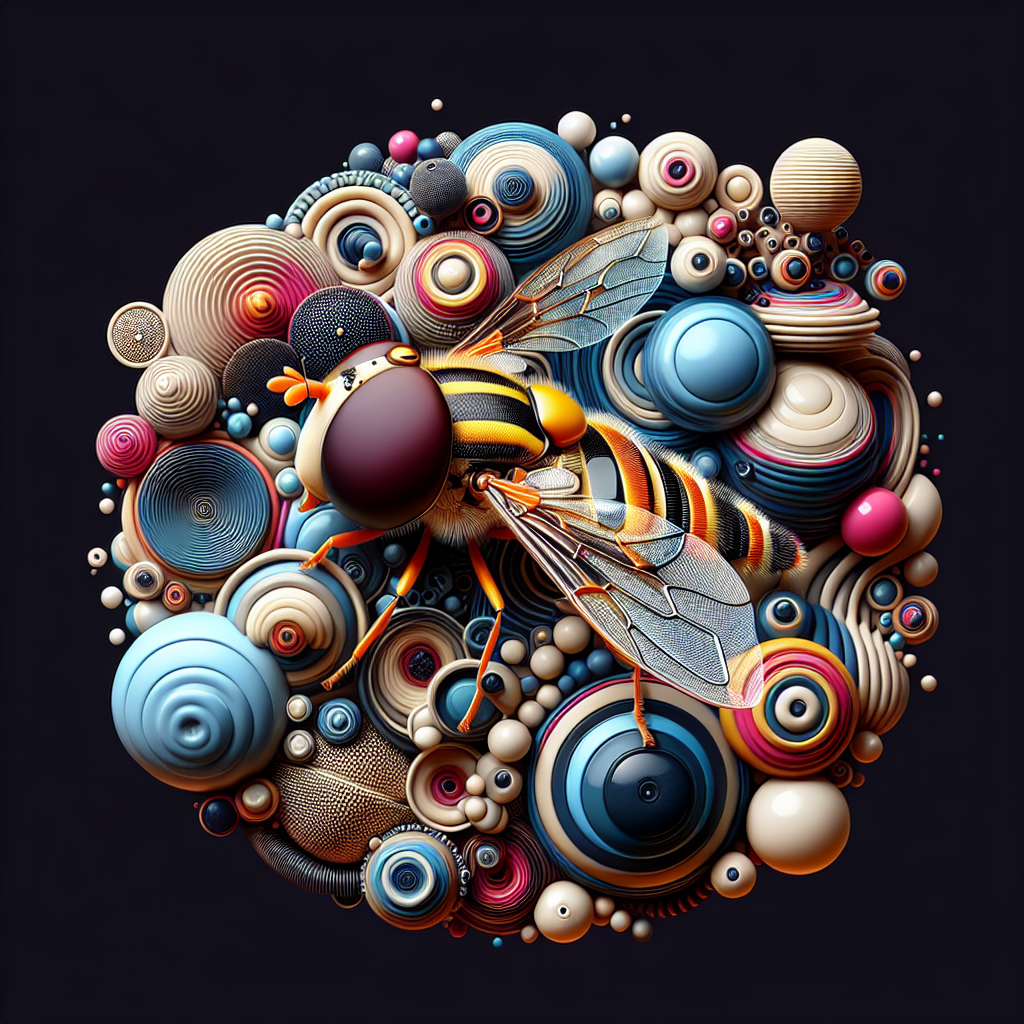
In the enchanted realm of entomology, Criorhina pachymera steals the show with its fascinating masquerade! Native to Europe and North America, this intriguing creature, often mistaken for a bumblebee, is actually a fly. Emerging first in documented form in the mid-19th century, Criorhina pachymera has captivated scientists and nature enthusiasts alike due to its remarkable mimicry that plays a pivotal role in its survival strategy.
Nature’s Trickster
Let's peel back the layers of this fantastic deception. Criorhina pachymera belongs to the hoverfly family, Syrphidae. Unlike bumblebees, it poses no danger—in fact, it doesn't even sting! Yet, its striking resemblance to more menacing insects provides a clever cloak of invisibility among predators. This is an epitome of Batesian mimicry, a natural form of trickery where a non-threatening species imitates a more dangerous one to avoid being eaten. This identity theft isn't just a frivolous curiosity; it’s a survival tool honed by evolution, offering us a glimpse into nature's creative genius.
A Closer Look at Criorhina pachymera
An adult Criorhina pachymera is about 0.8-1.6 centimeters long, characterized by its fuzzy yellow and black-striped thorax mimicking that of a bumblebee. Their vibrant coloration is not just for show; it serves to warn would-be predators of an unpleasant interaction, even though these hoverflies pose no actual threat. Females are typically larger than males, which is a fascinating aspect of their sexual dimorphism. The life cycle of Criorhina pachymera, like many other hoverflies, consists of a metamorphosis from larva to pupa, and finally, an adult.
The Role in Ecosystems
Now, you might wonder why Criorhina pachymera gets a standing ovation in the ecological theater. These remarkable flies are not only adept mimickers but also proficient pollinators. In their adult stage, they harken to the call of nectar and pollen, traveling from bloom to bloom, inadvertently transferring pollen and facilitating plant reproduction. This act of pollination is crucial for maintaining the biodiversity of the flora they frequent.
Evolutionary Insights
Studying the evolution of mimicry in Criorhina pachymera doesn't just tickle our curiosity; it also broadens our understanding of evolutionary processes. With a foot in the past and wings in the present, these hoverflies illustrate the dynamic and ever-changing nature of life on Earth. Scientists meticulously study their behaviors, interactions, and environmental adaptations to learn more about the genetic and ecological factors that drive mimicry. Each new discovery inches us closer to unraveling the complexities of evolutionary biology.
Conservation and Challenges
Despite their cunning evolutionary tricks, Criorhina pachymera face their share of challenges. Habitat loss, climate change, and declining floral resources threaten their existence. Conservation efforts underscore the importance of preserving habitats that support diverse pollinator populations. Initiatives targeted at garden enthusiasts and farmers to embrace biodiversity-friendly practices are helping to maintain the ecological balance.
Engaging with Nature
You don't need to be an expert entomologist to appreciate these incredible creatures. By simply fostering an environment rich in native flowers, anyone can play a part in supporting hoverfly populations. A garden adorned with a variety of flowering plants not only adds charm but also enhances ecological value by offering hoverflies and other pollinators a haven.
Taking Flight with Enthusiasm
In the grand tapestry of science and nature, the story of Criorhina pachymera is a testament to the extraordinary interconnectedness of life. This hoverfly, with its uncanny mimicry and vital ecological role, invites us to marvel at the small wonders that often flutter by unnoticed. Through the lens of curiosity and optimism, we can all take part in the journey of discovery and conservation, witnessing the delicate dance of life that this remarkable insect represents.
Embrace your inner student and become a champion for our natural world—because every bit of understanding brings us one step closer to preserving the wondrous complexity of life on Earth.