
Unraveling the Secrets of St Mary de Castro: Leicester’s Historical Gem
A thousand years from now, many modern structures will have long crumbled into dust, yet the Church of St Mary de Castro in Leicester stands resilient, telling tales from nearly a millennium of English history. This storied building, constructed around 1107 by Robert de Beaumont, 1st Earl of Leicester, is a quintessential representation of Romanesque architecture and serves as a time capsule transporting us back to the medieval period.
The Historical Tapestry of St Mary de Castro
Who and What: The Church of St Mary de Castro, translating to 'St Mary of the Castle', was founded by Robert de Beaumont as the chapel within Leicester Castle, a massive Norman stronghold in its heyday. It was dedicated to the Virgin Mary, which was a common practice for churches of that era. Throughout the centuries, this stone witness has been an integral part of the local community and has overseen significant historical events.
When and Where: Built, as mentioned, circa 1107, St Mary de Castro is strategically located in the medieval nucleus of Leicester, adjacent to what remains of Leicester Castle. The church's position signifies its importance in the context of both religious and civic life throughout medieval England.
Why: The church was not just a place of worship; it served as a focal point of feudal power. Within its ancient walls, connections between religion and governance were substantial. It is believed that the chapel was a fitting setting for an evolving town and its noble residents to intertwine faith with rule.
Exploring the Architectural Majesty
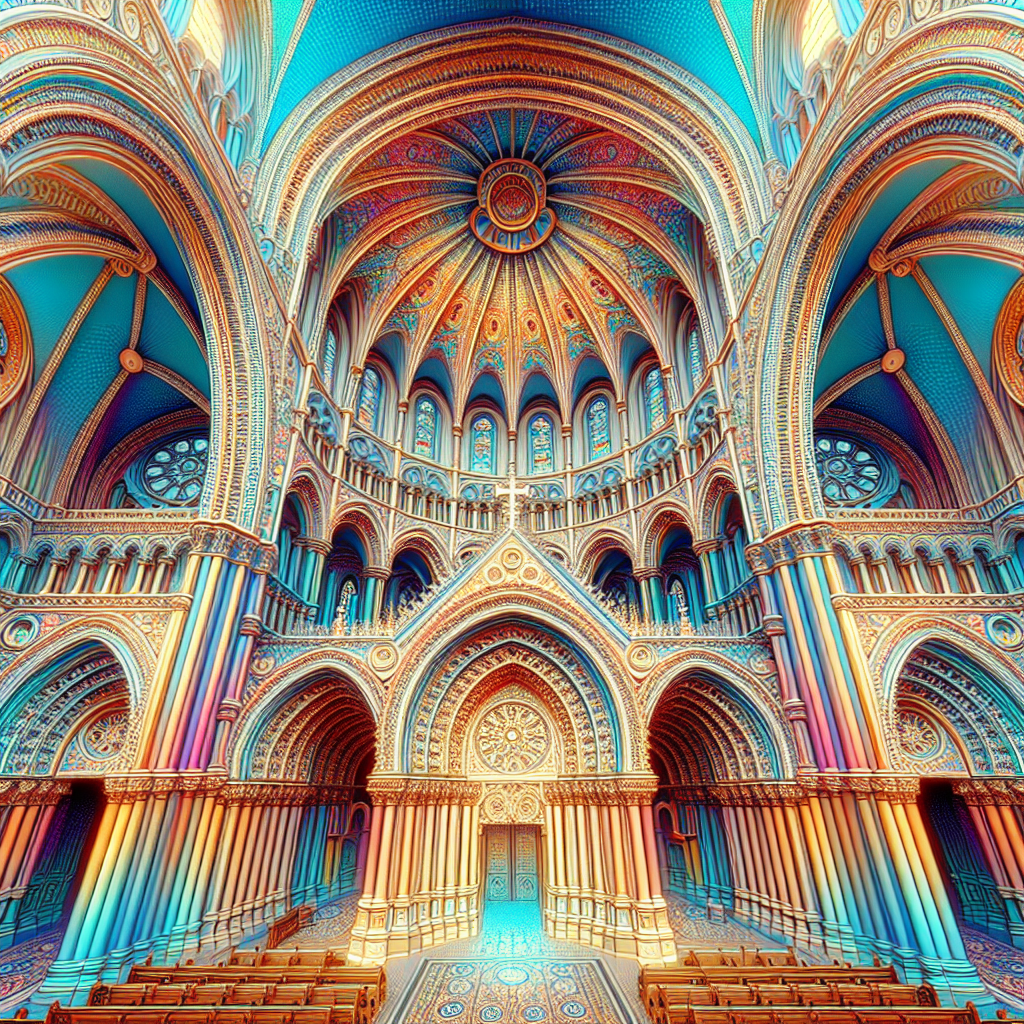
The grandeur of St Mary de Castro is encapsulated in its Romanesque and later Gothic architecture. Walking through its timeworn doors is like embarking on a journey through architectural evolution. The original Norman design featured a large nave and an undivided chancel, hinting at the monumental scale and purpose of the structure.
One of the most striking features is the slender and stately spire—a later addition from the 1400s—that punctuates the Leicester skyline, known for its elegance and occasionally referred to as the 'poet's spire'. The church also boasts exquisitely detailed arched doorways, imposing stone columns, and an impressive timber roof over the nave, offering a stunning display of medieval craftsmanship.
Historical Events and Intriguing Anecdotes
St Mary de Castro is more than an architectural marvel; it is the backdrop for events that have shaped local and national history. One such moment involves King Richard III. Before he ascended the throne, it's likely that he took communion at St Mary de Castro while residing at Leicester Castle.
Adding to its allure are the legends and anecdotes abundant in its history. One popular story concerns Geoffrey Chaucer, the father of English literature, who is said to have married Philippa Roet at this church. While some debate remains about this particular wedding's location, the tale nonetheless adds a literary flair.
The Resilient Spirit of St Mary de Castro
St Mary de Castro has faced adversities, including periods of neglect. In the 16th century, it bore the brunt of Reformation changes, and in subsequent centuries it underwent restorative efforts. These challenges have required continual care and preservation efforts by dedicated supporters who recognize its monumental worth.
Yet, despite the trials and tribulations, the church has remained a cornerstone of faith and community life. Its importance extends beyond its immediate congregation, serving as a beacon of heritage and a testament to Leicester’s continued vibrancy.
Visiting St Mary de Castro
Today, the church is accessible to those eager to appreciate its detailed history and breathtaking architecture. It serves as an active place of worship, education, and heritage exploration. Visitors can participate in guided tours to gain a deeper understanding of its historical significance and architectural intricacies.
Situated near other notable Leicester landmarks, such as the King Richard III Visitor Centre and the Jewry Wall, it makes for a compelling day of cultural and historical exploration.
The Promise of Preservation and Community
The church remains active not just as a historical site but as a thriving community center, hosting events that span beyond religious services to include cultural gatherings and educational programs. Its continued preservation relies heavily on local and national efforts supported by enthusiasts dedicated to maintaining its legacy.
Moreover, St Mary de Castro symbolizes more than just historical continuity; it encourages a shared identity and cultural awareness, propelling future generations to appreciate their history and actively engage in its preservation.
In conclusion, the Church of St Mary de Castro is more than brick and stone; it is the embodiment of a vibrant past, offering a glimpse into the intersections of history, culture, and architecture. As custodians of such heritage, our duty to protect and celebrate it ensures that its stories resonate for centuries to come.