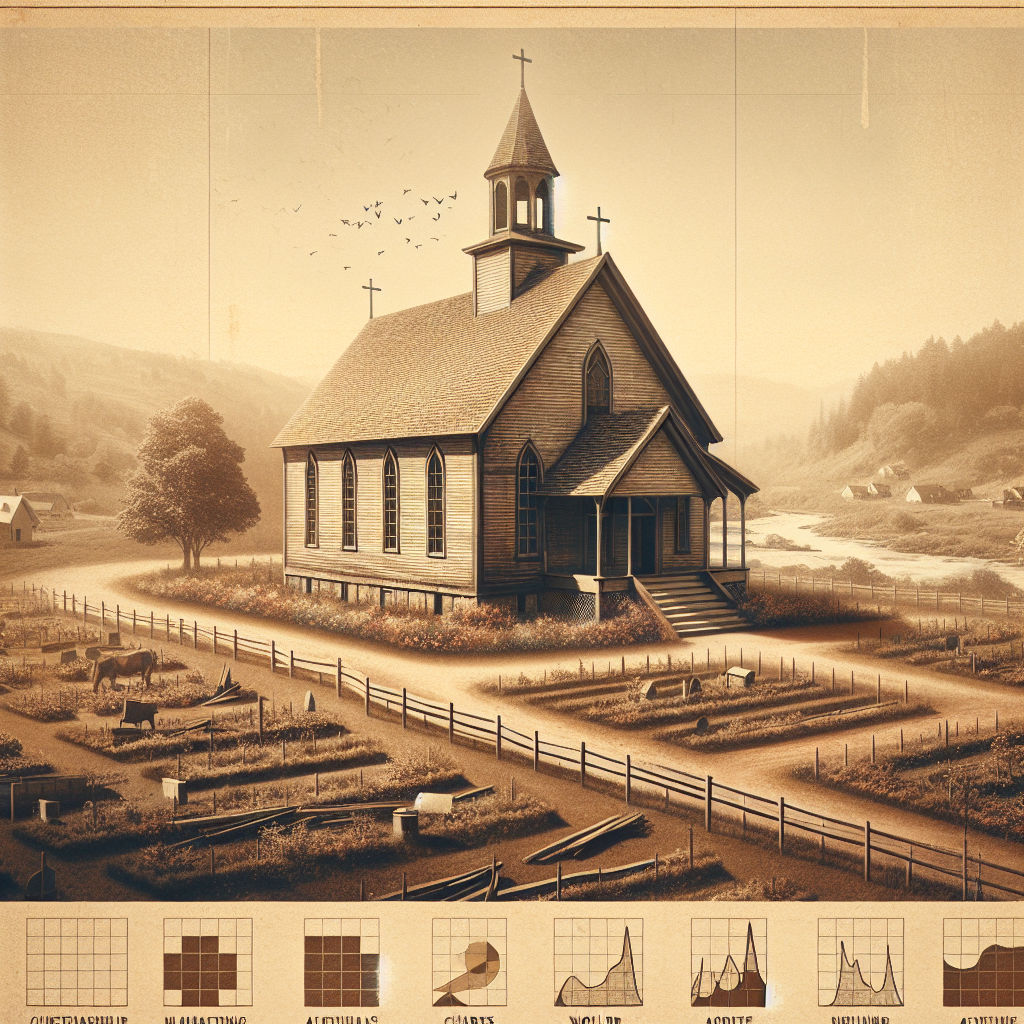

The Heartbeat of Community: Understanding the Christian Meeting House
Imagine stepping into a place where the air hums with stories of faith and hope, a hub of spiritual camaraderie that has served communities for centuries. Welcome to the Christian Meeting House—a space not just of walls and floors, but of history, connection, and shared purpose. Stretching across time and geography, this is where believers convene to foster spiritual growth and societal bonds.
The Genesis of the Meeting House
At its core, a Christian Meeting House is a building utilized by Christian congregations for worship, community gatherings, and social events. These meeting houses first blossomed in the 17th century, particularly utilized by groups like the Quakers and Puritans. Although the design and function have evolved with the times and cultures, the essence remains unchanged: it is a beacon of faith and fellowship.
These houses of worship are scattered globally, each with its unique architecture and ambiance, influenced by the culture and history of its location. In essence, they represent more than mere bricks and mortar; they are a testament to humanity’s enduring quest for connection and spiritual growth.
Architectural Simplicity and Functionality
The design of a Christian Meeting House often emphasizes simplicity. Unlike the grandiose cathedrals, meeting houses reflect a modest architectural style that underscores the essential function of the church—providing a communal space for worship without the distractions of opulent embellishment. They are typically rectangular structures with wooden pews either encircling a central platform or arranged facing forward. The emphasis is not on the building itself, but on the activities and relationships it nurtures.
In many traditional meeting houses, especially those used by Quaker congregations, you will find a space devoid of ostentation—there are no altars or religious icons. This starkness is designed to ensure the focus remains firmly on the inner practices of prayer, reflection, and community dialogue.
The Meeting House as a Catalyst for Community
One of the most fascinating aspects is how these meeting houses serve as more than just places for Sunday services. They act as community centers where social events, town meetings, and educational gatherings occur. In this multi-functional role, they become the epicenter of community life, hosting weddings, funerals, and baptisms—each occasion adding layers of shared experience among community members.
This adaptability and central role in life events offer a unique snapshot of how intertwined religious practice and daily community life can become. Meeting houses are often intergenerational spaces where the wisdom of elders combines with the dynamism of youth, nurturing relationships that strengthen communal bonds.
A Global Phenomenon
While meeting houses originated largely in Europe and America, their presence extends across the globe today. Each house tells a story of its people and their journey of faith. For example, meeting houses in Kenya blend African architectural styles with spiritual functions, creating an environment that feels both locally resonant and universally inviting. In South America, meeting houses might feature vibrant colors and communal spaces that reflect the vitality of local culture.
Every corner of the globe has adapted the concept of a meeting house to fit its local ethos, making each building a cultural artifact in its own right. This extraordinary adaptability speaks to a universal human experience: the desire for a shared space that nurtures faith and community.
The Meeting House and Technology: Embracing Modernity
In our fast-paced, technologically advanced world, you might wonder how these traditional spaces are adapting. Excitingly, many meeting houses are integrating modern technology, ensuring they continue to meet the needs of contemporary congregations. From livestreamed services to interactive educational sessions on faith-related topics, meeting houses are embracing tools that allow them to reach wider audiences while enriching local community life.
Moreover, these buildings often champion sustainability, incorporating green technologies such as solar panels or rainwater harvesting systems, combining centuries-old traditions with groundbreaking innovations in environmental stewardship.
The Cultural and Social Impact
Beyond the immediate community, the influence of a Christian Meeting House can ripple outwards, impacting broader societal structures. They often play a pivotal role in local charitable efforts, acting as organizational hubs for food drives, youth programs, and other social outreach initiatives. The ethical and moral guidance provided by these groups has inspired countless acts of kindness and humanitarian projects.
Moreover, the inclusive nature of meeting houses—welcoming people from diversely different backgrounds to congregate under a unifying banner of faith—can encourage a broader societal understanding and acceptance, reinforcing humanity's shared values and collective goals.
The Enduring Relevance of the Meeting House
As we look at our rapidly changing world, it’s incredible to see how spaces like the Christian Meeting House remain relevant and essential. They remind us that despite technological and societal shifts, the core human desire for connection, community, and a shared spiritual journey continues to resonate powerfully.
The Christian Meeting House stands not just as a testament to the past but as a vibrant, evolving entity that mirrors humanity's innate optimism and ability to adapt and thrive. It underscores the belief in a future full of promise, underscored by a deep-seated commitment to supporting each other on life’s journeys.
Whether you're engaging with a meeting house in your own community or visiting one as part of a broader exploration, you're likely to find a place that embodies humanity's best qualities—one that's both anchored in history and looking toward the future with hope.
In conclusion, these architectural sanctuaries of faith and community serve as poignant reminders of how our shared spaces can foster deeper human connections—a celebration of spiritual unity intertwined with real-world togetherness.