
The Canonization of the Romanovs: A Royal Journey to Sainthood
In a fascinating twist of history, the Romanov family, who once ruled Russia, were canonized as saints by the Russian Orthodox Church in 2000, a decision that has intrigued historians and believers alike. This event took place on August 20, 2000, at the Cathedral of Christ the Savior in Moscow, marking a significant moment in the post-Soviet religious revival. The canonization was driven by the desire to honor the Romanovs' faith and martyrdom, as they were executed by Bolsheviks in 1918 during the Russian Revolution. The Russian Orthodox Church recognized them as "passion bearers," a term used for those who face death with Christian humility and forgiveness.
The Romanovs, led by Tsar Nicholas II, were the last imperial family of Russia. Their tragic end came on the night of July 16-17, 1918, in Yekaterinburg, where they were executed by Bolshevik forces. This brutal act was part of the larger upheaval of the Russian Revolution, which sought to dismantle the monarchy and establish a communist state. The canonization process began in the 1990s, as Russia experienced a religious resurgence following the fall of the Soviet Union. The Russian Orthodox Church Outside Russia first canonized the family in 1981, and the Moscow Patriarchate followed suit in 2000, reflecting a broader reconciliation within the church.
The canonization of the Romanovs was not without controversy. Some critics argued that the family’s sainthood was politically motivated, aimed at fostering national unity and healing historical wounds. Others questioned the appropriateness of canonizing a family with a complex legacy, including Nicholas II's controversial reign. However, supporters emphasized the Romanovs' deep Christian faith and their dignified acceptance of martyrdom, which resonated with the church's teachings on forgiveness and humility.
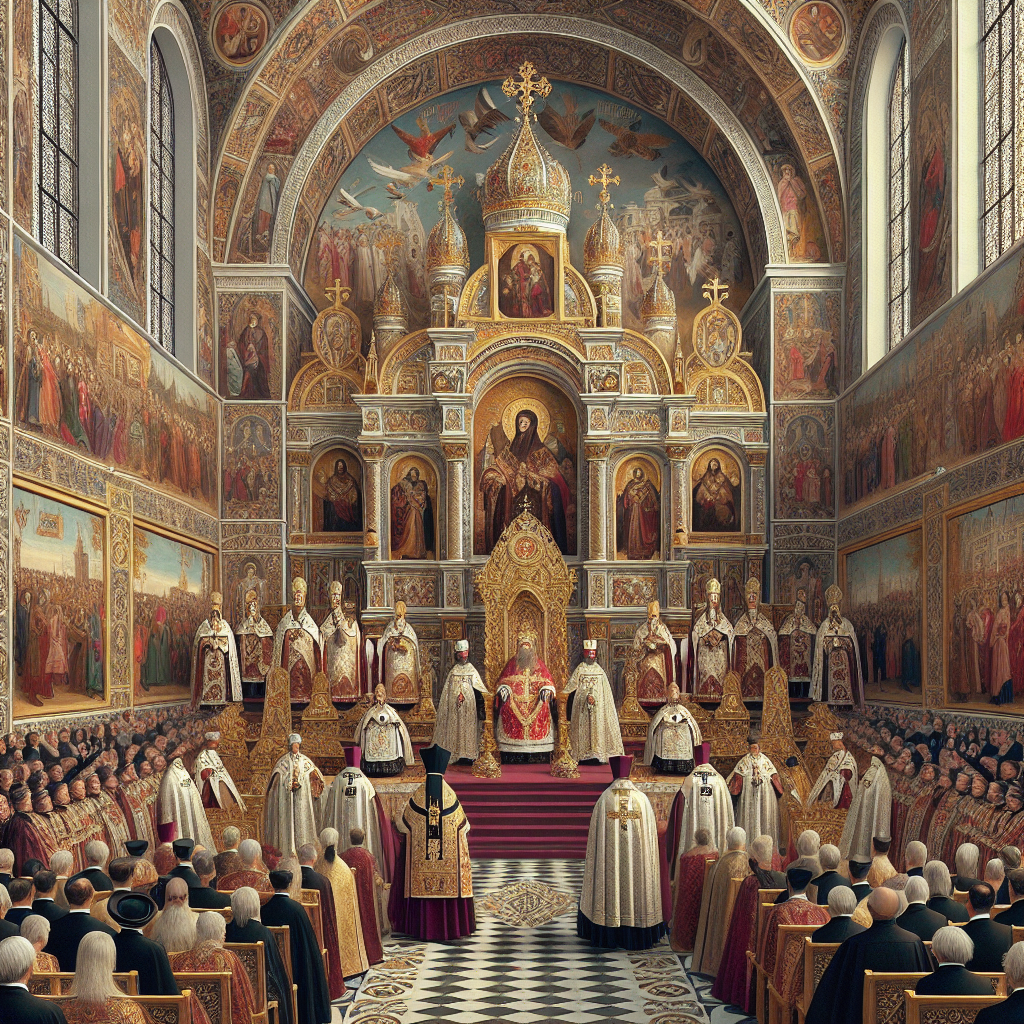
The canonization ceremony was a grand affair, attended by thousands of faithful, clergy, and dignitaries. It symbolized a moment of reflection and reconciliation for Russia, as the nation grappled with its tumultuous past and sought to redefine its identity in the new millennium. The Romanovs' sainthood has since become a symbol of the enduring power of faith and the possibility of redemption, inspiring countless believers around the world.
Today, the Romanovs are venerated in churches across Russia and beyond, their story serving as a poignant reminder of the complexities of history and the enduring human spirit. Their canonization highlights the intricate interplay between religion, politics, and culture, offering a unique lens through which to view the past and its impact on the present.