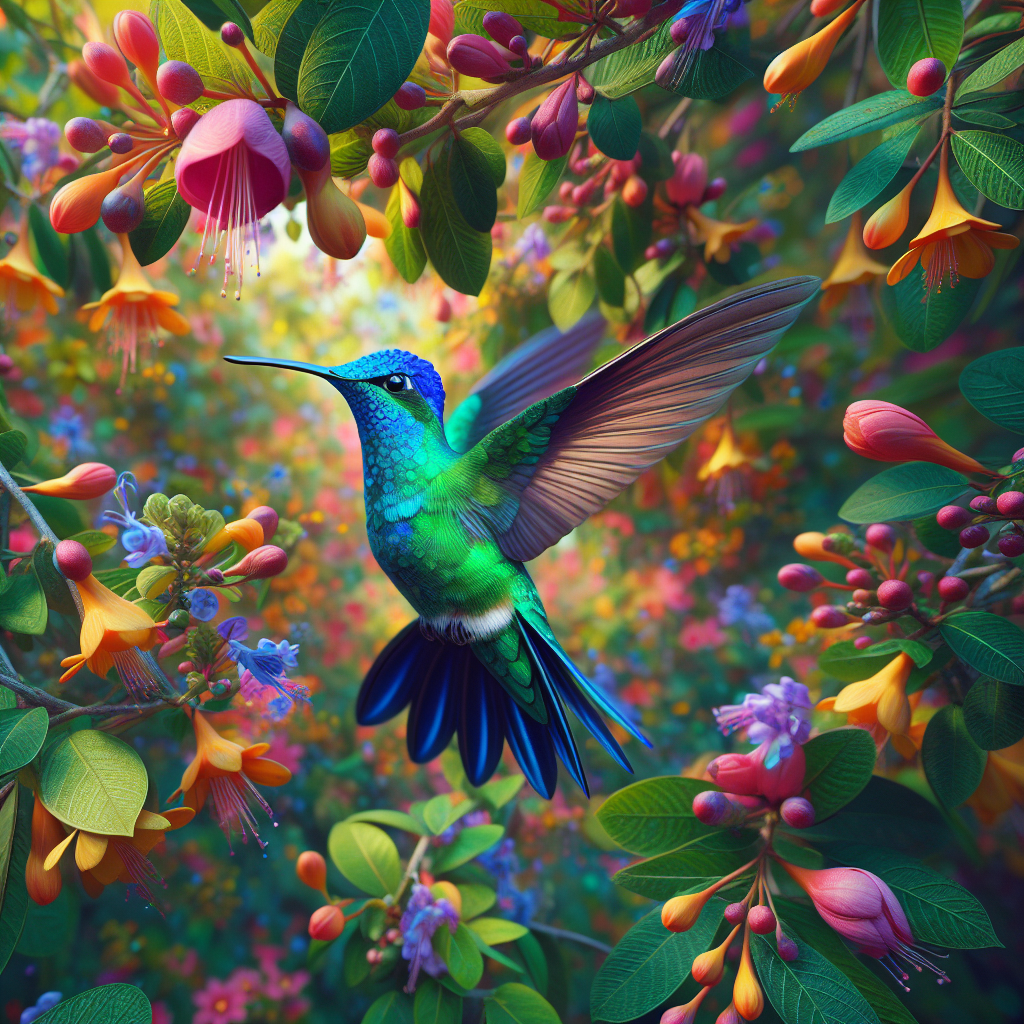

The Enchanting World of the Blue-Capped Puffleg: Nature's Tiny Marvel
Imagine a dazzling gem with wings, found fluttering in the lush Andean cloud forests! The Blue-capped Puffleg is not only a stunning species of hummingbird but also a remarkable testament to the intricate beauty of life on Earth. Known scientifically as Eriocnemis glaucopoides, this avian wonder is part of the Trochilidae family, prevalent in Colombia and Ecuador. Its vibrant iridescent plumage and the unique blue cap are a delightful sight that can ignite the curiosity of any observer.
This captivating creature’s existence, however, calls attention to the importance of preservation. Observed mostly in subtropical or tropical moist montane forests, the Blue-capped Puffleg relies on these particular habitats that face the threat of deforestation. As such, they offer us a profound reminder of why biodiversity is crucial to sustain and protect.
Getting to Know the Blue-Capped Puffleg
To better appreciate our feathered friend, let's start with its sensational appearance. The Blue-capped Puffleg stands out due to its sparkling green body topped with an iridescent, rich blue cap. Its compact size allows it to maneuver through dense forests with ease, showcasing nature’s efficiency in motion.
The remarkable puffs of white feathers around its legs, which give the bird its delightful name, resemble tiny cotton balls, a charming addition to its aesthetic appeal! These "pufflegs" are thought to serve as a display feature, possibly attracting mates or simply as an added allure in the lush green backdrop of their forest homes.
The Ecosystem Role: Tiny Bird, Big Impact
Despite its diminutive size, the Blue-capped Puffleg plays a significant role in its ecosystem. As a pollinator, it ensures the reproduction of various flowering plants in its environment—a thriving example of symbiotic relationships in nature. By feeding on nectar, this hummingbird facilitates cross-pollination, contributing to the genetic diversity of plant species and the overall health of its habitat.
The bird's keen sense of timing allows it to visit flowers when the nectar supply is at its peak, showcasing a natural synchronization akin to a finely-tuned dance with the ecosystem. This relationship emphasizes an often-overlooked fact: every organism, no matter how small, contributes to the balance of our world—inspiring for anyone passionate about nature and conservation.
Challenges and Conservation
Unfortunately, the natural habitats of the Blue-capped Puffleg are increasingly compromised by environmental degradation. Deforestation, driven by agriculture and urban expansion, represents a formidable threat to these birds. Without immediate intervention, the dense forest areas they call home might continue to shrink, threatening not only their homes but their survival.
Establishing conservation programs is crucial for the preservation of this species. Efforts must include habitat protection and restoration, alongside promoting sustainable practices within local communities residing in proximity to these birds. Engaging these communities in eco-tourism or conservation initiatives can be instrumental in relieving anthropogenic pressures on critical habitats.
Captivating the Curious and the Compassionate
For those captivated by the Blue-capped Puffleg, there is an array of exciting opportunities to support its conservation. Birdwatching adventures in the Andean regions provide a firsthand appreciation of this hummingbird's qualities while supporting local conservation efforts. Witnessing the bird’s breathtaking iridescence, the delicate beauty of its blue cap, and the fluff of its white leggings in their natural habitat is a rewarding experience. Such instances foster a profound connection to the environment and strengthen the call to act in its protection.
Furthermore, education and outreach can play pivotal roles in engaging broader audiences. Schools, conservation organizations, and nature documentaries can highlight the Blue-capped Puffleg’s story, using its allure to advocate for broader environmental awareness and action.
Why the Blue-Capped Puffleg Matters
In the grand tapestry of life on Earth, every species contributes to the vibrant and interlocking threads that form our natural world. The Blue-capped Puffleg, with its kaleidoscope of colors and ecological contributions, is a symbol of nature’s complexity and splendor. It reminds us of our stewardship duty, inspiring scientific curiosity, environmental responsibility, and appreciation for biodiversity’s richness.
By understanding and championing the needs of such splendid creatures, we not only secure their future but also ours. The challenges faced by the Blue-capped Puffleg shed light on the broader global environmental crisis that stresses urgency, education, and innovation in conservation. By fostering this awareness and taking action, we contribute to a brighter future where nature’s winged gems continue to adorn the skies.