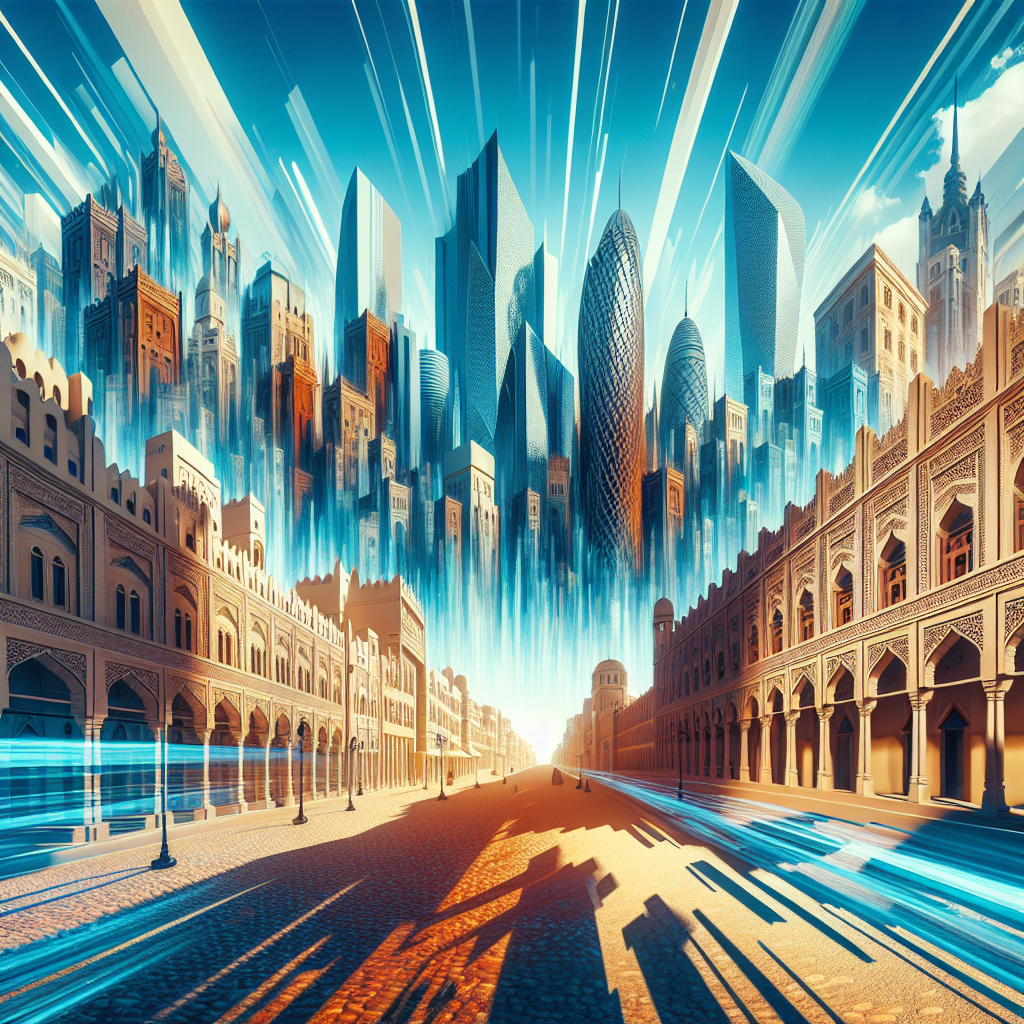

Imagine a bustling scene from thousands of years ago, an ancient city flourishing against the vast desert backdrop, a commerce hub and spiritual nexus, alive with the languages of diverse traders and pilgrims. This isn't a scene from fiction, but rather a snapshot of Bakkah, the historic city which has cemented its place in human history. But what exactly is Bakkah, where was it, and why is it often synonymous with spiritual awakening?
Unearthing the Origins of Bakkah
To understand Bakkah, one must whisk away the sands of time to an era that reshaped spiritual directives across the globe. Located in what is today part of modern-day Saudi Arabia, the city of Bakkah is historically linked with Makkah (Mecca). Scholars assert that Bakkah and Mecca refer essentially to the same city, though "Bakkah" was predominantly used to describe the older site before it evolved into today’s renowned pilgrimage destination.
What Made Bakkah So Special?
Nestled in a barren yet strategically crucial part of the Arabian Peninsula, Bakkah's significance was manifold. The city emerged as a vital trade node connecting the East and West. Yet, beyond commerce, its claims to fame lay within its spiritual realms. Bakkah is revered in Islamic texts as the birthplace of an ancient sanctuary — a sacred house believed to be constructed by Prophets Adam and Abraham. This sanctuary, called the Kaaba, stands as the focal point for Muslim prayers worldwide today.
Bakkah in Religious Scholarship
Much scholarly discourse delves into the etymology of Bakkah. The word itself is steeped in history, with some linguists suggesting it means “to debilitate” in Arabic, possibly depicting the state of humility or reverence. This is fitting because, in religious narratives, the area demanded profound respect from those who visited. A more optimistic view, however, is that Bakkah was derived from the Hebrew "Baca," meaning to “cry” or “weep,” indicating a place where souls came for spiritual revelation and solace.
Bakkah's Role in Islamic History
The city of Bakkah is frequently mentioned in Islamic history as a significant site long before the advent of Islam. Pre-Islamic Arabians venerated various deities here, and the Kaaba was a sanctuary for idols. Subsequently, Prophet Muhammad, born in the city, revolutionized its spiritual landscape, transforming Bakkah and its centerpiece, the Kaaba, to a monotheistic worship of one God, Allah. This transformation unified tribes and shaped religious practices still observed worldwide, elevating Mecca as a pivotal axis in Islamic faith.
Journey of Transformation
Over time, as Bakkah transitioned to Mecca, the city retained its allure. What began as an ancient city became the heart of the Islamic world, witnessed through the centuries as empires and pilgrims came and went. These travelers contributed to the culture and knowledge, generating vibrant exchanges that spurred intellectual growth in the Islamic Golden Age and beyond. Traders and pilgrims alike stitched new cultural tapestries as they introduced and exchanged ideas, sciences, and stories.
Importance for Modern Humanity
But why should we, modern explorers, care about Bakkah? Understanding Bakkah is akin to journeying into the roots of human civilization — it speaks to our innate desire to connect to something greater than ourselves. Bakkah's story is a testament to humanity's never-ending quest for spiritual understanding, cross-cultural interactions, and peace.
This city's tale carries universal lessons about unity and diversity. It teaches us that, despite being in a desert with minimal natural resources, humanity can create wonders. The unification of tribes under one banner of spirituality and coexistence emanates with relevance today amidst our tumultuous global landscape.
The Future of Historical Narratives
As someone who revels in scientific advancement and the boundless potential of human cognition, the lessons from Bakkah fuel optimism. They remind us that our shared history provides the foundation to build cooperative futures. Moreover, archaeology and historical sciences continue to piece together ancient narratives that reveal even more about the genesis and evolution of pivotal cities like Bakkah.
Closing Thoughts on Bakkah’s Legacy
Peering through the lenses of science, history, and optimism, Bakkah presents itself as more than a city. It is an emblem of human resilience, curiosity, and the ceaseless drive to explore and understand life’s mysteries. As we navigate through our era of rapid change, Bakkah stands as a reminder of where we’ve come from and the myriad possibilities of where we can go, with optimism lighting the way.