
Discovering the Secrets of the Aye-aye
What has the paws of a primate, the teeth of a rodent, and a middle finger longer than your average school ruler? Meet the aye-aye, one of nature's most astounding oddballs! Native to Madagascar, this peculiar primate roams the treetops of the island’s forests under the veil of night. Often misunderstood and shrouded in legend, the aye-aye is a remarkable example of adaptation and biodiversity in the animal kingdom.
Who is the Aye-aye?
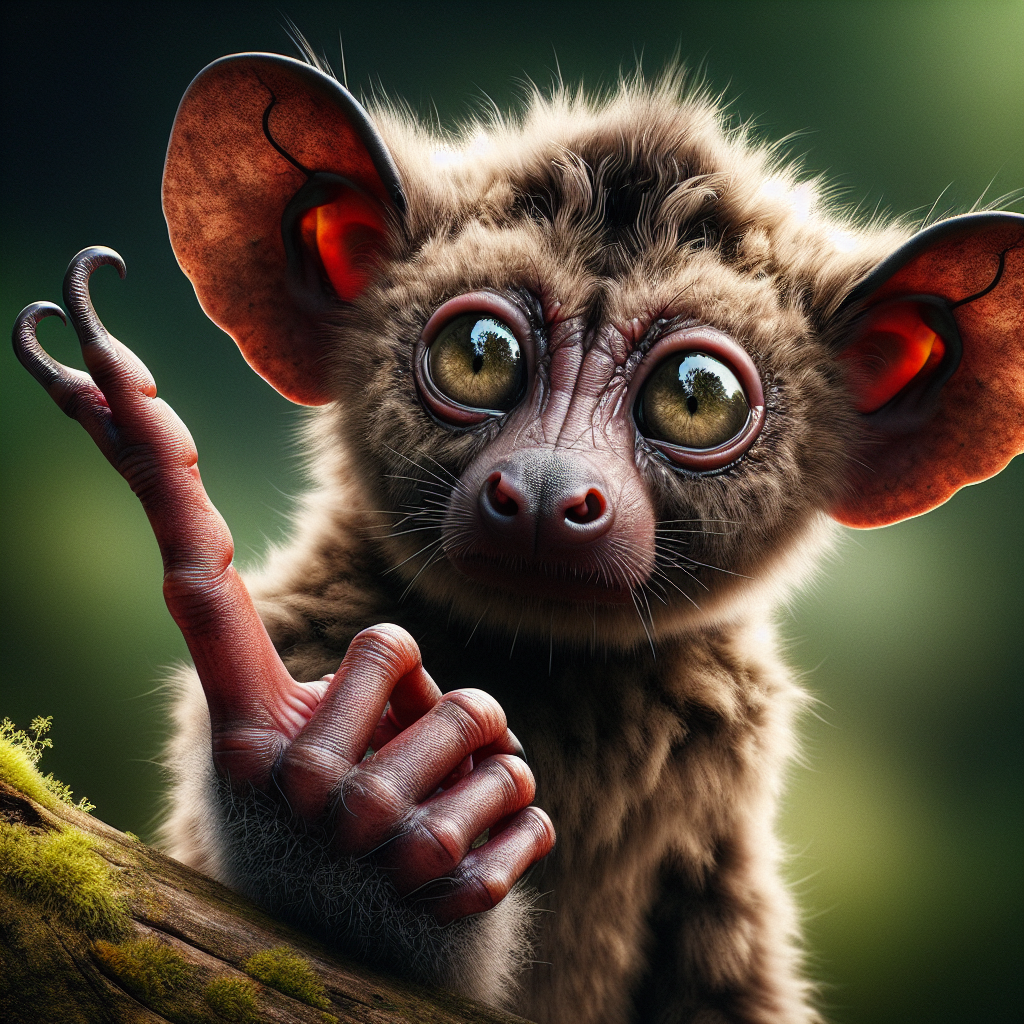
The aye-aye (Daubentonia madagascariensis) is not just an unusual member of the primate family; it is a fascinating representation of Madagascar's unique ecosystem. This species belongs to the lemur family, yet it stands out due to its rare physical traits. With its pointed ears, bushy tail, and ever-growing incisors akin to a rodent, it showcases the beautiful eccentricities that evolution can conjure.
When and Where do Aye-ayes Live?
These nocturnal creatures have made Madagascar their exclusive home. Primarily occupying the rainforests and sometimes venturing into plantations, the aye-aye leads a solitary lifestyle. With steps as quiet as a whisper, the aye-aye embarks on nightly adventures from dusk until dawn, navigating through the dense foliage using its acute sense of hearing and an unparalleled set of skills.
What Makes the Aye-aye Unique?
Perhaps the most intriguing feature of the aye-aye is its elongated third finger, a tool of high precision. As the world’s largest nocturnal primate, its dietary habits have evolved to suit its surroundings. The aye-aye is an insectivore, primarily feasting on larvae hidden inside trees. Here’s where its remarkable finger comes into play. The aye-aye performs a practice called “percussive foraging,” systematically tapping on wood to detect hollow cavities housing grubs. Once it identifies a suitable spot, its sharp teeth gnaw at the bark, and that extraordinary finger acts as a probe to fish out its prey.
The Aye-aye's Role in Culture and Mythology
The distinctive appearance of the aye-aye has been both a blessing and a curse. In Malagasy culture, it has often been considered a harbinger of bad luck. Legend has it that the aye-aye would sneak into homes at night and use its long finger to pierce the hearts of sleeping humans! Such tales, fueled by superstition, have historically led to the unfortunate persecution of these creatures.
Conservation Status and Efforts
Today, the aye-aye faces threats primarily from habitat destruction and anthropogenic pressures. Classified as Endangered by the IUCN, the species suffers from deforestation and is often killed on sight due to its superstitious associations. Conservation organizations and scientists are tirelessly working to change these perceptions and educate communities on the crucial role aye-ayes play in the ecosystem. Efforts include habitat protection, ecotourism, and captive breeding programs, which have proven successful in supporting the species' numbers.
Why Are Aye-ayes Important?
Ecologically speaking, aye-ayes play a significant role in their habitat. As they forage for grubs, they help control insect populations, contributing to the health of their forest ecosystem. Moreover, as seed dispersers, they also assist in promoting plant diversity. Aye-ayes remind us of the delicate balance necessary to maintain our world's biodiversity and the magnificent intricacies of nature’s designs.
Humanity’s Role in Preserving the Aye-aye
As citizens of Earth, our understanding and appreciation of creatures like the aye-aye hold the key to fostering harmony between human ambitions and preserving wildlife. Developing sustainable systems and embracing ecological education can diminish fears rooted in myths. By doing so, we not only ensure the survival of unique species like the aye-aye but also enrich our understanding of the planet’s vast tapestry of life.
The Optimistic Future
While the aye-aye’s future might appear shadowed by threats, there is hope. Increased awareness and scientific interest offer a beacon of possibility. As global efforts grow to protect natural habitats and combat climate change, there lies the potential for these enigmatic creatures to thrive peacefully in the forests of Madagascar.
Conclusion: Embracing Nature’s Diversity
The story of the aye-aye is a compelling illustration of evolution's wonders and humanity’s potential to coexist with nature. By choosing to learn, respect, and adapt, we can pave the way for a world where creatures like the aye-aye symbolize the vibrancy of life and the triumphs of conservation. Let's celebrate the aye-aye not just as an animal of curiosity, but as a testament to the marvel of biodiversity.