
The Birth of a Revolutionary Aviator
When you think of innovation, what comes to mind? Perhaps smartphones or electric cars? Now, let's journey back to the 1920s when aviation was the burgeoning field brimming with potential, and imagine a plane that dared to speak the language of modernity. Enter the Avia BH-1, a trailblazing small aircraft that carved its name in Czech aviation history. It was created by two ingenious minds, Pavel Beneš and Miroslav Hajn, in 1920 in the heart of the then Czechoslovakia.
The Avia BH-1 was more than just a flying machine; it was the emblem of a belief that the spirit of innovation could uplift not just the plane, but humanity itself. Beneš and Hajn, passionate aeronautical engineers, saw beyond the conventional designs of their era. They dreamed of an aircraft that was not only efficient but could also easily be piloted by enthusiasts, thereby democratizing the art of flying during a time when aviation was still widely viewed as an elite endeavor.
The Ingenious Design
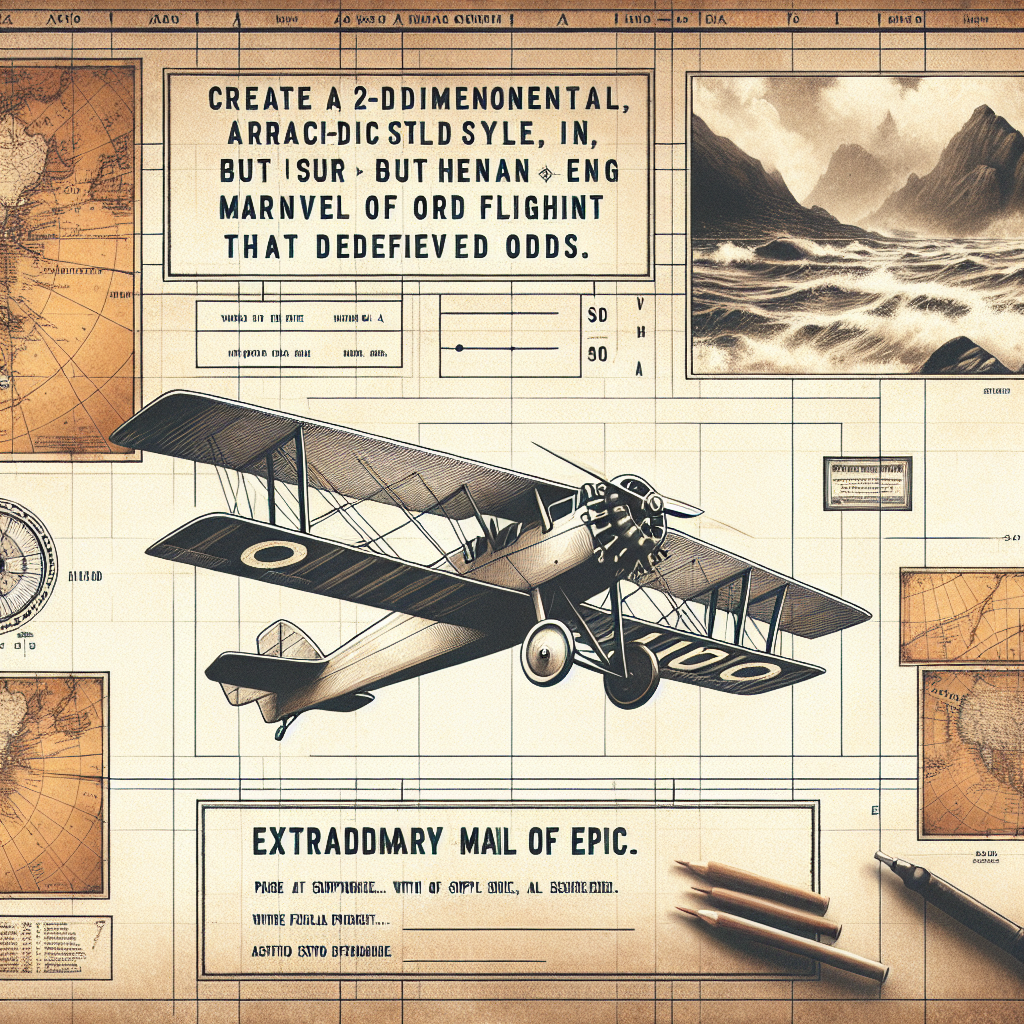
The BH-1 was a monoplane, a term denoting that it has a single wing structure per side which, back then, was quite avant-garde since biplanes—aircraft with two wings stacked one above the other—were the accepted norm. With its low-wing configuration and cutting-edge semi-monocoque design, the BH-1 debunked the myth that small planes couldn’t exhibit excellent aerodynamic qualities.
Its wooden structure was masked by a simple yet effective fabric finish, and at its core was a simple 30 hp BMW IIIa engine—a piece carefully scavenged and revitalized by the creators. This choice of engine proved both economical and educational, showcasing that even modest resources, when coupled with creative engineering, could yield remarkable results.
Impact on the Aviation World
You might wonder, why should we be excited about a 100-year-old plane? The Avia BH-1 wasn't just about being the first; it was about being better and innovative. It symbolized the shift from biplanes to monoplanes, marking significant progress in aerodynamics and efficiency.
Its performance in the air was sterling for its time. Though it initially struggled with power and ultimately had a short operational life—punctuated by a crash landing in 1921 and subsequent modifications—its creators didn’t back down. Instead, they saw this as an opportunity to refine their work. They later adapted these insights to produce the Avia BH-3, which found success and furthered their reputations.
A Legacy of Innovation
Perhaps what's most inspiring about the story of the BH-1 is how it laid the groundwork for Czechoslovakian aviation prowess in the future. This small plane was a precursor to many more advanced and successful designs that came out of that region, proving the potent mix of ingenuity and perseverance.
Innovations from the BH-1 lived on, influencing designs for military and sporting aircraft. The Avia company, initially a small operation born of ambition and creativity, grew to be a significant player in the aviation industry, eventually shaping the designs that would power WWII fighters.
The Human Spirit in Flight
The Avia BH-1 is a testament to the power of human spirit—demonstrating what is possible when visionaries dare to chase their dreams even in the face of limited means and countless challenges. It serves as a hopeful reminder that success isn't always immediate, but rather the sum of learned lessons and relentless perseverance.
As we glimpse into our current age, where innovation is sparse not for lack of ideas but perhaps courage, the BH-1's story compels us to push boundaries, question norms, and never underestimate the capacity of a seemingly small idea to fly high and inspire generations.
I hope you'll share my enthusiasm for this small plane that did more than just take flight; it soared in ambition and discovery. In commemorating the Avia BH-1, we also celebrate the indomitable human spirit—a spirit that insists on a brighter, soaring tomorrow.