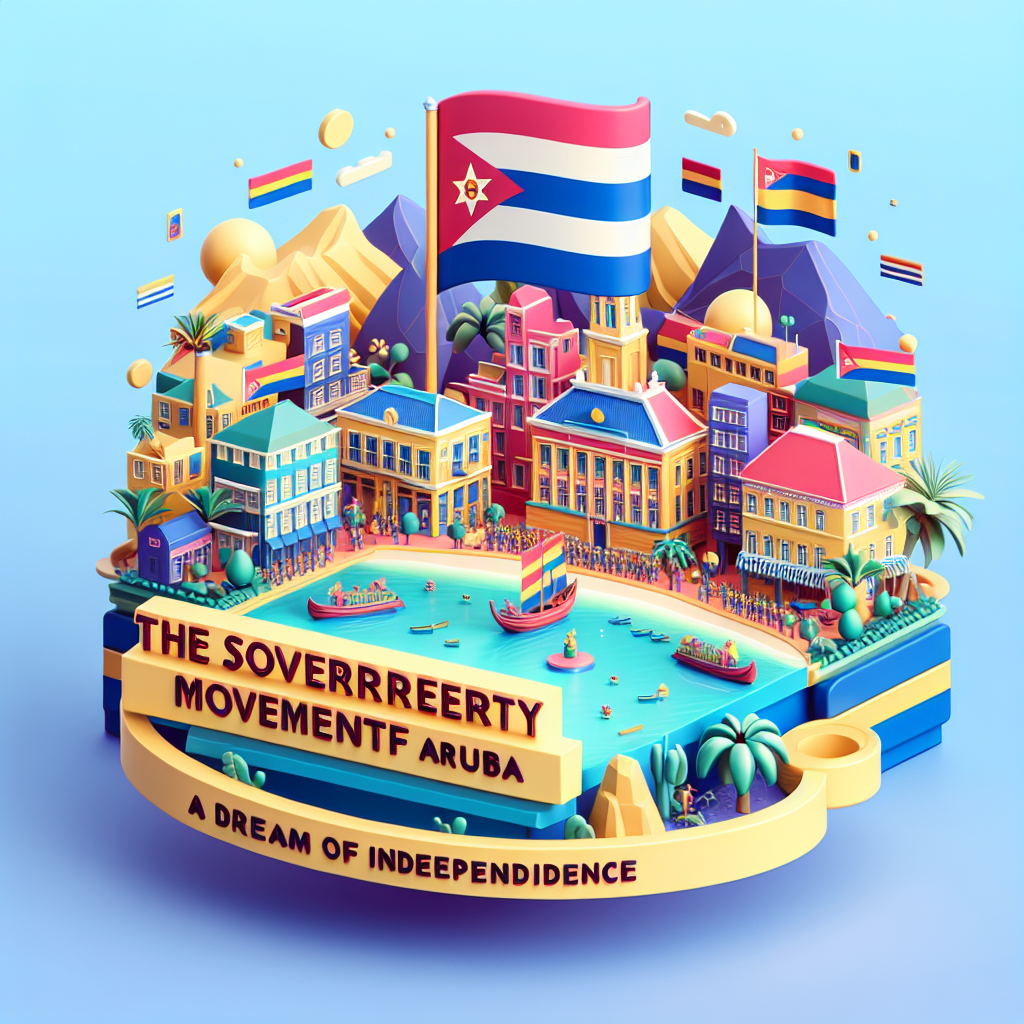

Opening the Island's History
Curious about how a small island nation can inspire waves of political passion and thrilling possibilities? Welcome to the captivating story of the Aruban Sovereignty Movement, where dreams of self-determination blend with a sunny island landscape. While the world often sees Aruba as a Caribbean paradise known for its white sandy beaches and crystalline waters, a vibrant and fascinating socio-political narrative quietly brews beneath its calm exterior.
The Aruban Sovereignty Movement signifies efforts by Aruban citizens to transition from a constituent country within the Kingdom of the Netherlands to achieving complete independence. This movement has roots in a complex tapestry of historical events and economic considerations dating back to the mid-20th century. From international negotiations to local activism, this journey of independence weaves together the voices, aspirations, and determination of an island community that wishes to reveal its capacity for self-governance and innovation.
Charting the Historical Backdrop
To appreciate the persistency of Aruban advocacy for self-determination, let’s gently sail back in time. Aruba, though officially colonized by the Dutch in the 17th century, has a rich blend of cultural influences due to a storied past of interactions with indigenous Arawak peoples, Spanish, and Dutch settlers. Until the partitioning in 1986, Aruba was part of the Netherlands Antilles, a group of islands under Dutch rule with a degree of semiautonomous governance.
The idea of an independent Aruba was popularized mainly during the economic boom of the 20th century brought on by the local oil refinery industry, which instilled a robust sense of potential self-reliance among its people. In the stirring political climate of post-World War II decolonization, the islanders intensified their efforts toward a distinct identity and governance, culminating in Aruba achieving a 'Status Aparte' in 1986. This effectively granted Aruba autonomous statehood, allowing the administration of internal affairs separate from the Netherlands Antilles, though still under the Kingdom of the Netherlands.
Motivations Behind the Movement
So what fuels this sovereignty movement, you might wonder? Picture the waves of collective ambition—both practical and ideological—sweeping through a modernizing world. Advocates for full independence harbor visions of greater economic autonomy, cultural preservation, and control over their resource management. The more optimistic ones even dream of raising Aruba's profile on the international stage as a testament to the island's uniqueness and resilience.
Economically, Aruba has showcased a surprising ability to reinvent itself, especially after the decline of its oil refinery industry. Today, its vibrant economy draws predominantly from tourism, service industries, and offshore banking. As an optimist myself, I can relate to how many Arubans view independence as a horizon of opportunity that could unlock further economic innovation and diversification.
Culturally, it's about celebrating and preserving Aruba's rich identity—a mix of languages, traditions, and thriving creativity. Advocates argue that true sovereignty would enable Arubans to better protect this cultural tapestry from external influences and forge a future that reflects their shared identity.
Challenges and Considerations
Of course, pursuing independence isn’t without its hurdles—the sea isn't always calm. For instance, embracing full sovereignty might require Aruba to tackle extensive legal, economic, and geopolitical changes. The transition would demand establishing entirely new international relationships and possibly restructuring its economic dependencies, requiring robust planning and strategic execution.
Yet it's the resilient, adaptable Aruban spirit that offers exciting prospects in these challenges! The island community, with its strong emphasis on education and technological advancements, might very well pave innovative pathways in addressing these hurdles. Whether in cultivating eco-friendly tourism or pioneering digital solutions, Aruba's willingness to learn from global successes paints a promising picture for tackling potential roadblocks.
A Future of Possibilities
Imagine the varied paths Aruba could take—perhaps as an entirely independent nation, a pioneering regional model of sustainable development, or perhaps maintaining a unique and modernized role within the Kingdom of the Netherlands that provides greater local autonomy. Whichever direction the Aruban people choose, it's a vivid exploration of self-governance, cultural pride, and a modern optimism that feels incredibly enriching.
Aruba’s sovereignty movement reflects humanity’s enduring quest for self-definition and is a testament to the island’s dynamic spirit. It urges us to consider not only the political dimensions of autonomy but also the cultural stories and emotional investments that fuel such aspirations. Whatever the outcome, it promises to be a journey of learning, innovation, and community resilience worth following closely.
In our fast-paced world, where global connections interweave with local identities, Aruba’s story inspires the exciting possibilities that lie in the hands of determined, innovative communities ready to navigate their own destinies.