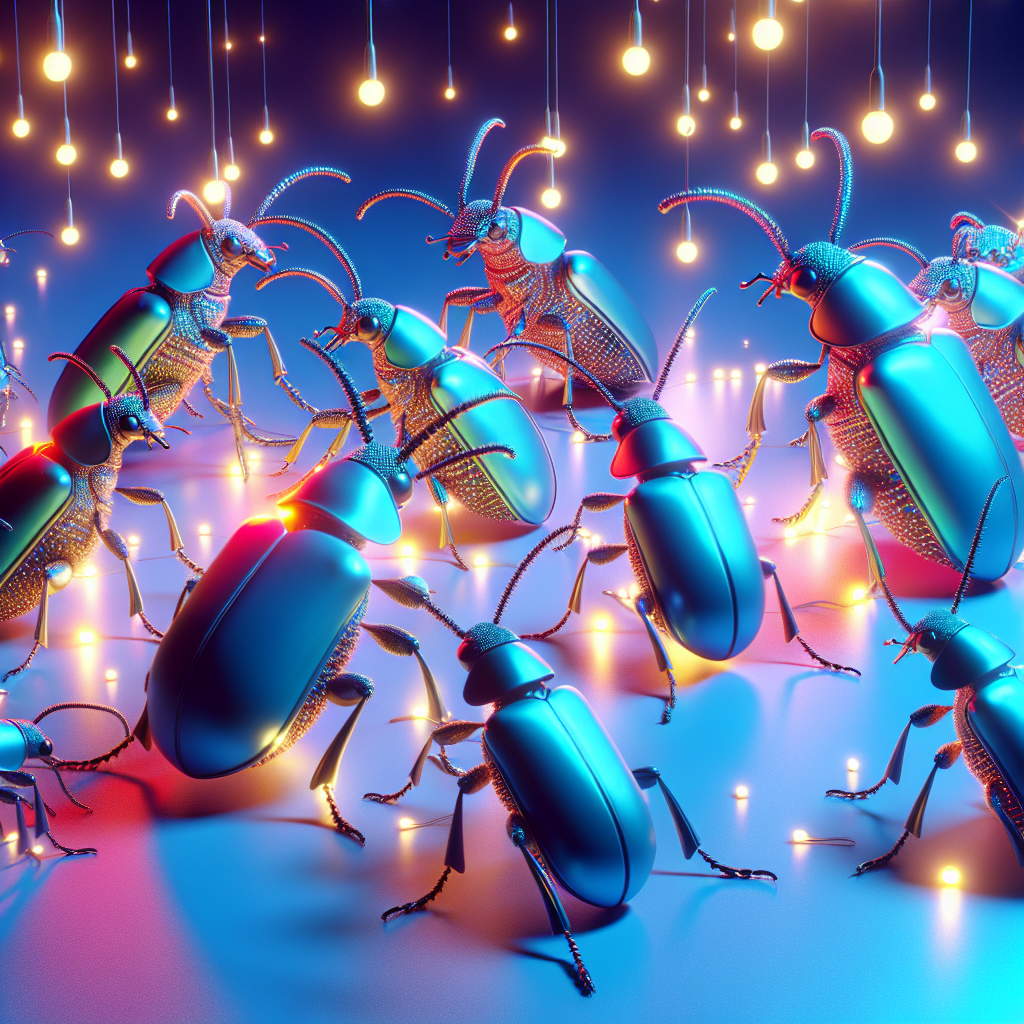

The Festive World of Anoplognathus pallidicollis: The Christmas Beetle
Imagine a beetle that embodies the spirit of the holiday season with its vibrant colors and festive appearance! Meet Anoplognathus pallidicollis, commonly known as the Christmas beetle. These dazzling insects are part of the scarab family and are native to Australia, where they make their grand appearance during the warm summer months of November to February, coinciding with the Christmas season in the Southern Hemisphere. Their presence is a delightful reminder of the holiday cheer, and they are often seen in large numbers, adding a natural sparkle to the Australian landscape.
Anoplognathus pallidicollis is known for its striking metallic sheen, which can range from golden to green, making them a visual treat. These beetles are primarily found in the eastern parts of Australia, where they thrive in eucalyptus forests. The reason behind their seasonal appearance is linked to their life cycle. The larvae, known as "curl grubs," develop in the soil, feeding on organic matter and roots, before emerging as adults in time for the festive season. This timing ensures that they have ample food sources and optimal conditions for reproduction.
The Christmas beetle plays a significant role in the ecosystem. As adults, they feed on eucalyptus leaves, which can sometimes lead to defoliation, but they also contribute to the aeration and nutrient cycling of the soil during their larval stage. Their presence is a testament to the intricate balance of nature, where each species has a role to play in maintaining ecological harmony.
Despite their festive charm, Anoplognathus pallidicollis faces challenges due to habitat loss and climate change, which threaten their populations. Conservation efforts are crucial to ensure that these beetles continue to grace the Australian summer skies. By understanding and protecting their habitats, we can help preserve the natural wonder that is the Christmas beetle, allowing future generations to enjoy their seasonal spectacle.