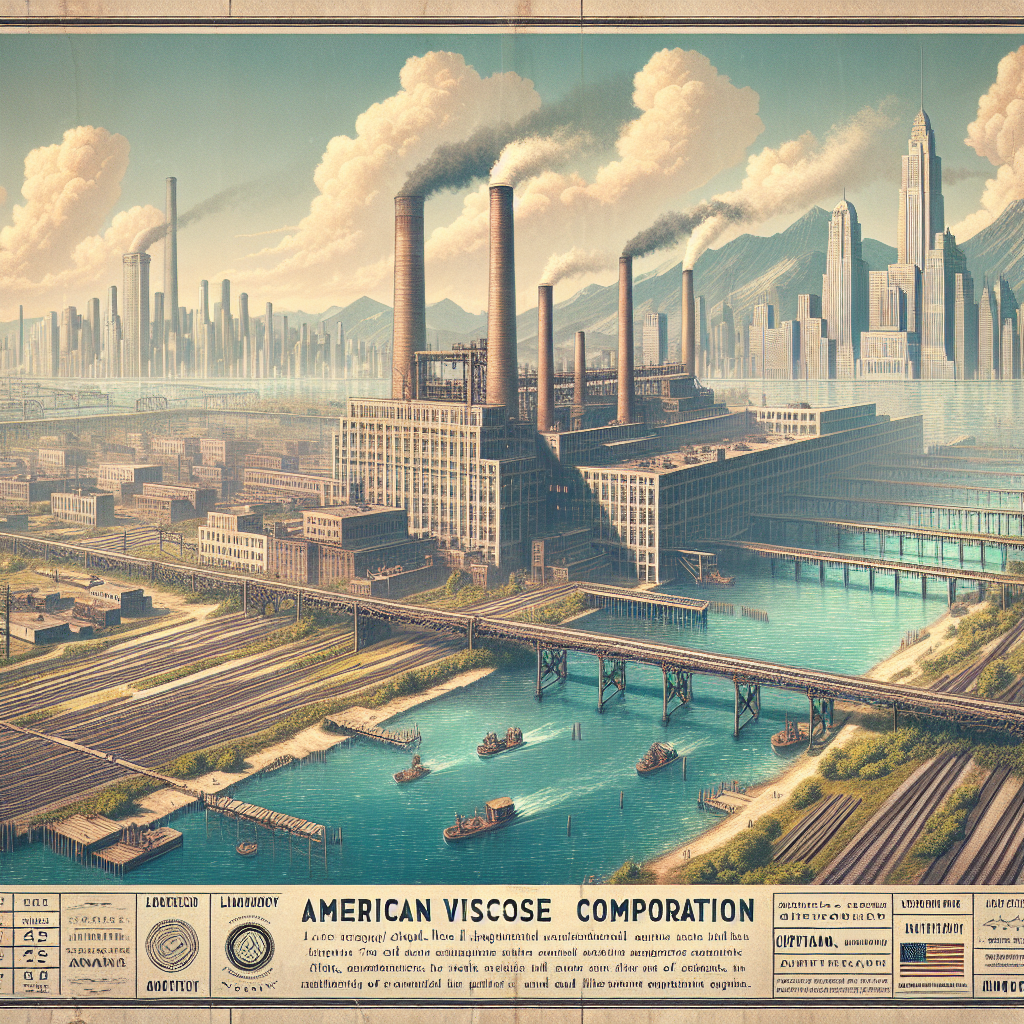

Weaving Innovation: The History and Impact of the American Viscose Corporation
Imagine a time when the world of textiles was on the cusp of transformation, and the buzzword was not 'digital' but 'viscose'! Welcome to the captivating world of the American Viscose Corporation, a pioneer that wove both innovation and opportunity into the fabric of America. This visionary company emerged in the early 20th century, specifically in 1910, setting up shop in the bustling industrial town of Marcus Hook, Pennsylvania. Its mission? To revolutionize the textile industry by producing viscose, a type of rayon, which was a shiny, versatile fabric that could be used in everything from clothing to interior furnishings.
A Textile Revolution Begins
The roots of the American Viscose Corporation trace back to the dynamism of the Industrial Revolution, a period teeming with inventions and technological leaps. Originally born from the concepts developed by the British chemists Charles Frederick Cross, Edward John Bevan, and Clayton Beadle, viscose rayon was a material that emerged from scientific endeavors aimed at replicating the luster and versatility of silk at a fraction of the cost.
The American Viscose Corporation saw immense potential in this fibrous wonder, responding to the growing demand from a burgeoning middle class eager for affordable yet elegant apparel. The company was adept in recognizing and addressing the market's needs, leading to its rapid rise as a textile titan.
The Science Behind the Shine
To truly appreciate the American Viscose Corporation's impact, we must understand the science of viscose production, a process that harmonized chemistry with industrial mechanics. Viscose rayon is made by dissolving cellulose in alkali and carbon disulfide to obtain a viscous solution, which is then forced through tiny holes into a coagulating bath where fibers are formed and spun into yarn.
This seemingly simple sequence belies the sophisticated chemistry underlying it, which the American Viscose Corporation mastered with precision. The company’s successes were a testimony to human ingenuity and the power of innovation in transforming complex natural resources into fashionable and functional goods.
Impact on Society and Industry
The rise of the American Viscose Corporation marked a pivotal moment in both the textile industry and society at large. As one of the foremost producers of rayon, the company significantly contributed to the democratization of fashion. Gone were the days when luxurious clothing was solely the privilege of the wealthy. Viscose provided an affordable alternative that maintained the appearance and feel of opulence.
Moreover, the company played a critical role in economic growth during the 20th century. By the 1930s, rayon production was soaring, increasing employment opportunities and signaling America's shift towards a modern industrial economy. The labor force that the American Viscose Corporation employed at its peak extended beyond thousands, providing livelihoods and stability in cities like Marcus Hook and beyond.
Environmental and Social Challenges
While the production of viscose was revolutionary, it did not come without challenges—particularly environmental and social issues that resonate even in today’s context. The chemicals involved in viscose production posed potential hazards to both workers and the environment. However, the company's operations predated modern environmental awareness, which means the measures for sustainable practices were not robustly in place.
These environmental concerns ignited conversations about industrial responsibility and spurred further innovations to mitigate adverse effects, embodying humanity's need to learn and adapt for future generations.
Legacy of Innovation
By mid-20th century, competition in synthetic fibers began to intensify with the advent of materials like nylon and polyester. Despite this, the American Viscose Corporation's legacy perseveres in its role as a catalyst for innovation and industry practices. Its history serves as a reminder of the crucial intersection between science, industry, and culture.
The facilities that once hummed with the production of viscose may not echo today as they did before, but the story of the American Viscose Corporation continues to inspire an optimistic outlook on how industry and innovation can evolve thoughtfully and sustainably.
A New Era of Viscose
Today, viscose remains an integral part of the textile industry, viewed through a lens of sustainability and eco-friendly practices. Researchers and companies are constantly innovating to produce rayon in ways that harmonize with natural ecosystems, opening avenues for environmentally responsible fashion.
The story of American Viscose Corporation is an enriching tale that inspires further inquiry into how we can learn from past industrial practices to craft a future where science and sustainability weave a seamless thread.
Embarking on this journey through the fascinating narrative of the American Viscose Corporation teaches us that the spirit of innovation is undying. As humanity progresses, there will always be new fabrics of life awaiting to be crafted by curious minds ready to harness the wonders of both the natural world and human creativity.