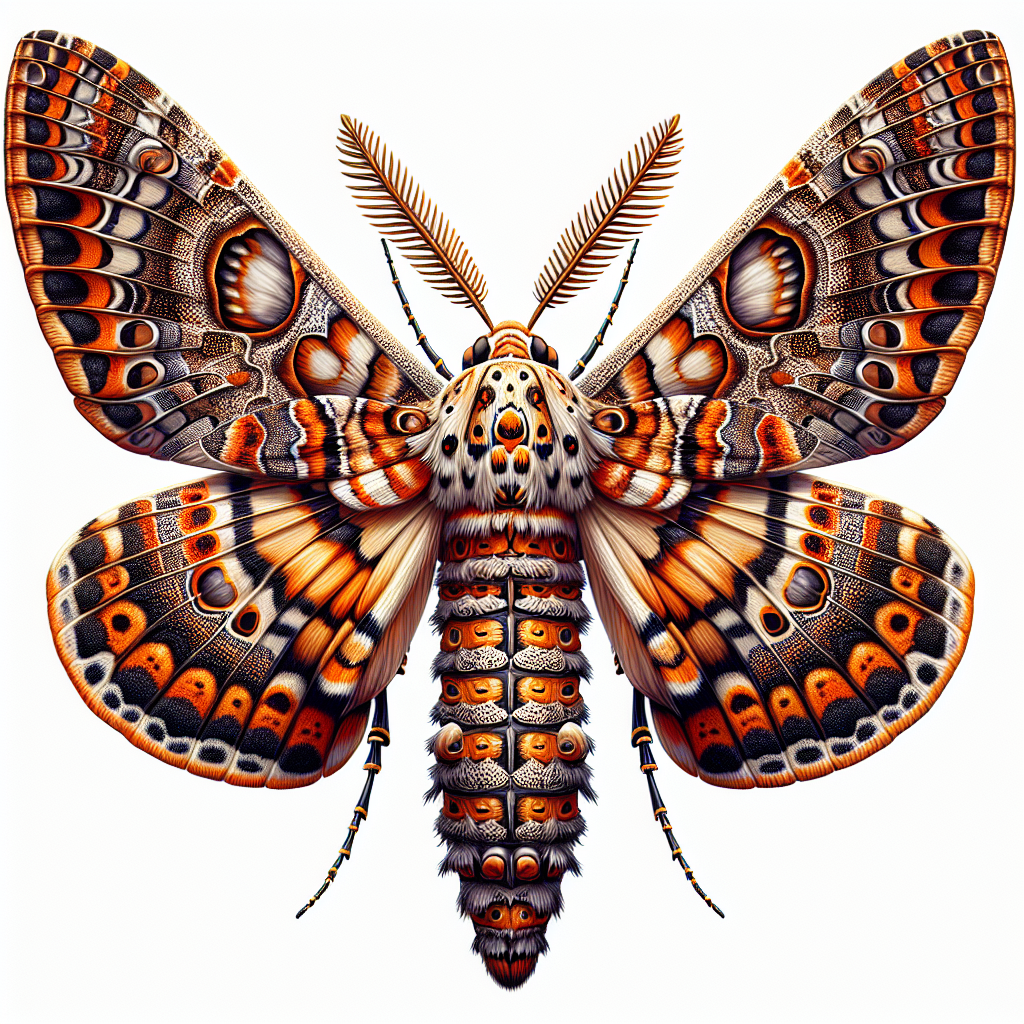

The Ailanthus Webworm: Nature's Colorful Weaver
The Ailanthus webworm, a vibrant and fascinating creature, is a moth that masquerades as a beetle, captivating entomologists and nature enthusiasts alike. This intriguing insect, scientifically known as Atteva aurea, is found primarily in North America, where it thrives in regions abundant with its host plant, the tree of heaven (Ailanthus altissima). The Ailanthus webworm is most active during the warmer months, typically from late spring to early fall, when it can be seen flitting about gardens and forests, weaving its intricate webs.
The Ailanthus webworm is a member of the Yponomeutidae family, a group of moths known for their striking patterns and colors. What makes this moth particularly interesting is its mimicry of a beetle, with its elongated body and bright orange, white, and black markings. This mimicry is not just for show; it serves as a defense mechanism against predators, who may mistake it for a less palatable beetle.
The life cycle of the Ailanthus webworm is a testament to nature's ingenuity. The adult moths lay their eggs on the leaves of the tree of heaven, and once hatched, the larvae begin to spin communal webs. These webs serve as both a protective shelter and a feeding ground, as the larvae consume the leaves within. This behavior can sometimes lead to defoliation of the host plant, which is why the Ailanthus webworm is considered a pest in some areas.
Despite its pest status, the Ailanthus webworm plays a role in the ecosystem by providing food for birds and other predators. Its presence also highlights the complex interactions between species and their environments. The Ailanthus webworm's reliance on the tree of heaven, an invasive species in many parts of the world, adds another layer of complexity to its ecological impact.
In summary, the Ailanthus webworm is a small but significant player in the natural world, showcasing the beauty and intricacy of moths. Its unique appearance and life cycle offer a glimpse into the wonders of evolution and adaptation, reminding us of the delicate balance that sustains our ecosystems.