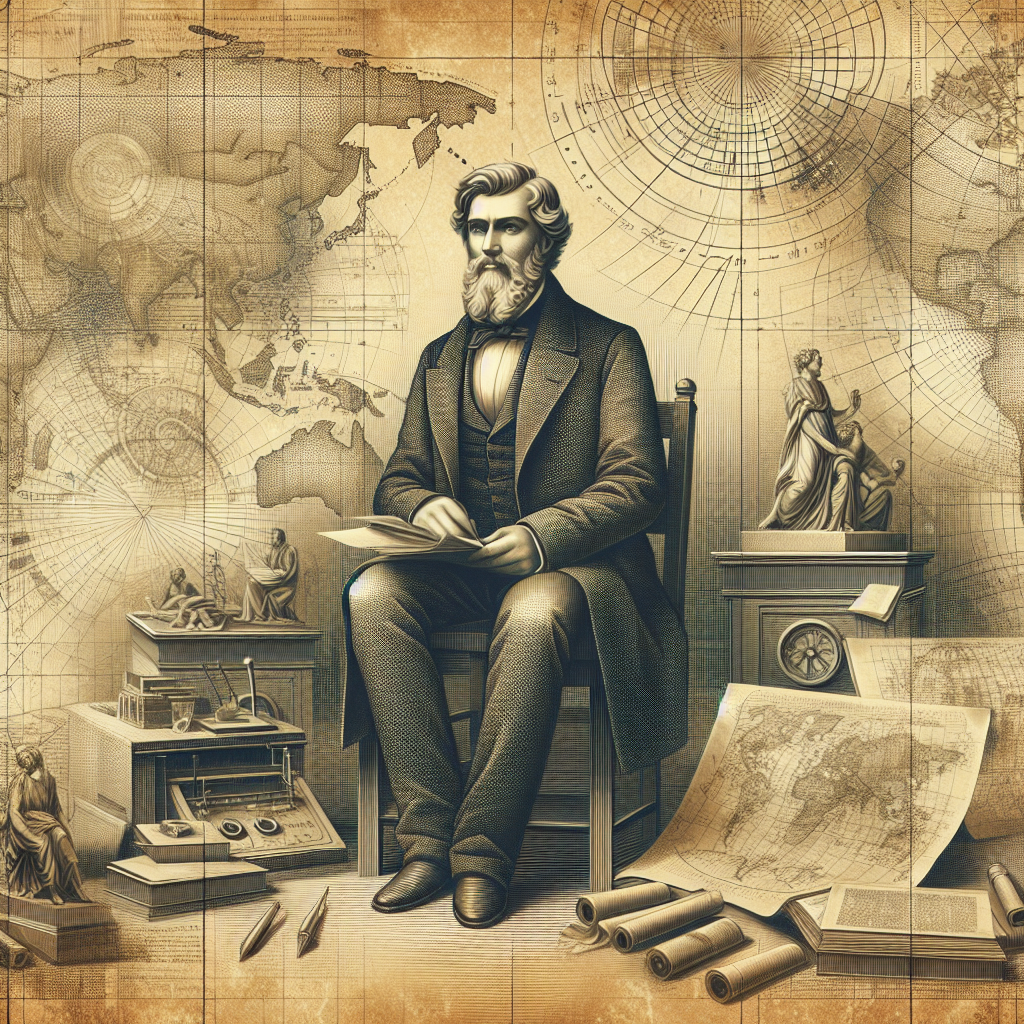

Agostino Nifo might not be a household name, but his profound impact during the Renaissance extends far beyond the dusty corridors of academia, leaving an indelible mark on philosophy and science alike. Born around 1473 in Sessa Aurunca, Italy, Nifo made the epochal leap from the Middle Ages to the dawn of modern science by reinterpreting the ancient wisdom of Aristotle and other classical thinkers to fit the context of Renaissance humanism.
Who Was Agostino Nifo?
Agostino Nifo was an Italian philosopher and scholar during the Renaissance, a period of cultural reawakening and intellectual exploration. He lived between 1470 and 1546, a time when Europe was transitioning from medieval scholasticism to modern science and humanism. While he spent most of his career in Italy, teaching in universities such as Padua, Pisa, and Rome, Nifo also engaged in extensive scholarly correspondence with thinkers across Europe, stitching together a vibrant intellectual tapestry that would lay the groundwork for future scientific advancements.
What Did Nifo Achieve?
At the heart of Nifo’s work was his dedication to Aristotelian philosophy. During his lifetime, Nifo produced commentaries on numerous Aristotelian texts, focusing on the intersection of natural philosophy (what we today call science) and metaphysics. Importantly, Nifo worked to interpret and translate these concepts into language and ideas that could be understood within the context of Renaissance humanism—making Aristotelian thought not only accessible but also relevant to the burgeoning fields of Renaissance science and philosophy.
Agostino Nifo was also known for his foray into psychology and what we might consider early cognitive science. He wrote on the theme of intelligence and the soul, investigating how mental processes work and what constitutes human rationality. His focus on such topics reveals the seismic shifts happening in intellectual circles of the Renaissance, where questions about the mind and its relationship to the body and the universe took center stage.
When and Where Did Nifo Work?
Nifo’s scholarly career blossomed during the first half of the sixteenth century, placing him at the very heart of the Renaissance. As European societies began to question long-held theological and philosophical assumptions, Nifo contributed to this discourse through his teaching and writing. Universities were the locus of intellectual life in Europe during this time, and Nifo's roles at several prominent Italian universities underscored his influence on the philosophical and scientific dialogues of his era.
Agostino Nifo worked across several key Italian cities, intellectually vibrant locales that served as hubs for Renaissance ideas. By operating in places like Padua and Pisa, he contributed to Italy's thriving educational atmosphere, where scholars convened to debate, teach, and evolve ideas that would later springboard into the wider Enlightenment movement.
Why Is Nifo Important Today?
Though centuries have passed since Nifo’s era, his efforts articulate the timeless human quest for understanding. By bridging ancient and then-contemporary thought, Nifo played a pivotal role in shaping the shift from medieval to modern philosophy. His work exemplifies how scientific and philosophical thought need not be stagnant; it can evolve, gain new interpretations, and adapt to cultural contexts.
Nifo’s legacy lies not just in his specific philosophical ideas but in his embodiment of Renaissance humanism—a belief in the power of human reason and the value of pursuing knowledge for its own sake. His attempts to reconcile ancient philosophy with emerging scientific ideas demonstrate a profound optimism in humanity's capacity for learning and adaptation.
Breaking Down Nifo's Philosophy
Aristotelian Foundations: Central to Nifo’s philosophy was Aristotle. Unlike some of his contemporaries who zealously critiqued or wholly embraced ancient texts without context, Nifo approached Aristotelian thought with fresh eyes. He recognized the importance of adapting these ideas into a framework that could engage a world rife with new discoveries.
The Mind and the Soul: Nifo’s inquiries into the soul reflect a curiosity that anticipated later developments in psychology and cognitive science. His work asked essential questions about what it means to think, to reason, and to exist—a hallmark of Renaissance humanistic exploration.
Compatibility with Theology: Another fascinating aspect of Nifo's writing was his pursuit of harmonizing secular and religious thought. In a time when contradictions were rife, Nifo attempted to generate a dialogue between science and faith, proving that deep philosophical inquiry could coexist with traditional theological tenets.
Nifo's Influence on Modern Thought
While Nifo’s name might not frequently surface in modern discussions, his influence is woven into the fabric of educational and philosophical advancements. By emphasizing the significance of interpreting ancient knowledge within contemporary contexts, Nifo paved the way for later thinkers to consider philosophy and science as dynamic fields subject to the interrogation and insights of every new generation.
Today, his work reminds us that understanding our predecessors is essential for progress. By engaging with and reevaluating past thought, we gain clearer insights into present challenges and unearth new potentials for future exploration.
Conclusion
Agostino Nifo exemplifies the spirit of the Renaissance—a period vibrant with discovery and transformation. His intellectual journey showcases the importance of applying fresh perspectives to established wisdom and underlines our endless quest to comprehend the world around us. His optimism about knowledge and human potential resonates even now, urging us to bridge the past with the future in our own pursuit of understanding.