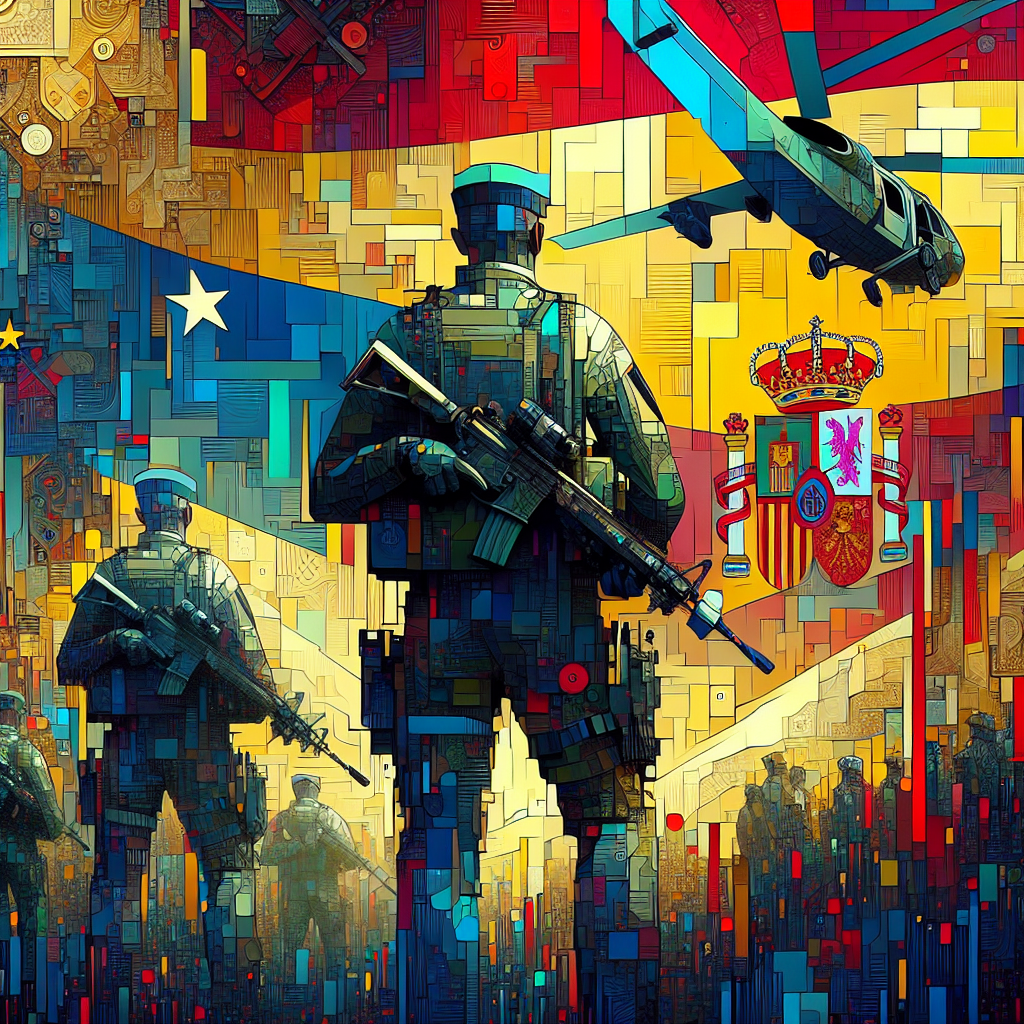

The 26th Division: Spain's Anarchist Vanguard in the Spanish Civil War
Imagine a division of soldiers not just fighting for territory, but for a radical vision of society itself! The 26th Division, also known as the Durruti Column, was a unique and influential anarchist military unit during the Spanish Civil War, which took place from 1936 to 1939. This division was formed by the Confederación Nacional del Trabajo (CNT), a major anarchist trade union in Spain, and was named after the legendary anarchist leader Buenaventura Durruti. The 26th Division was primarily active in Catalonia and Aragon, regions in northeastern Spain, where they fought against the Nationalist forces led by General Francisco Franco. Their mission was not only to defend the Spanish Republic but also to promote anarchist principles of self-management and workers' control.
The 26th Division was born out of the fervent revolutionary spirit that swept through Spain in the 1930s. When the Spanish Civil War erupted in July 1936, the CNT quickly mobilized its members to form militias to defend the Republic against the Nationalist coup. The Durruti Column, which later became the 26th Division, was one of the most prominent of these militias. It was named after Buenaventura Durruti, a charismatic and influential anarchist leader who was instrumental in organizing the column. Durruti's vision was to create a society based on equality and freedom, free from the oppression of both fascism and capitalism.
The 26th Division was unique in its organization and ideology. Unlike traditional military units, it operated on principles of direct democracy and collective decision-making. Soldiers elected their own officers, and decisions were made through assemblies where everyone had a voice. This approach reflected the anarchist belief in horizontal structures and the rejection of hierarchical authority. The division was also known for its commitment to social revolution, as it sought to implement anarchist principles in the areas it controlled, such as collectivizing land and industry.
The division's most notable engagement was the defense of Madrid in November 1936, where Durruti himself was killed under mysterious circumstances. Despite his death, the division continued to fight valiantly on various fronts, including the Aragon front, where they played a crucial role in the Battle of Belchite. However, the division faced numerous challenges, including a lack of resources, internal conflicts, and pressure from the central government to conform to more traditional military structures.
The legacy of the 26th Division is a testament to the power of ideas and the human spirit. It represents a bold experiment in combining military action with revolutionary ideals, and its story continues to inspire those who dream of a more just and equitable world. The division's commitment to anarchist principles, even in the face of overwhelming odds, serves as a reminder of the enduring struggle for freedom and equality.