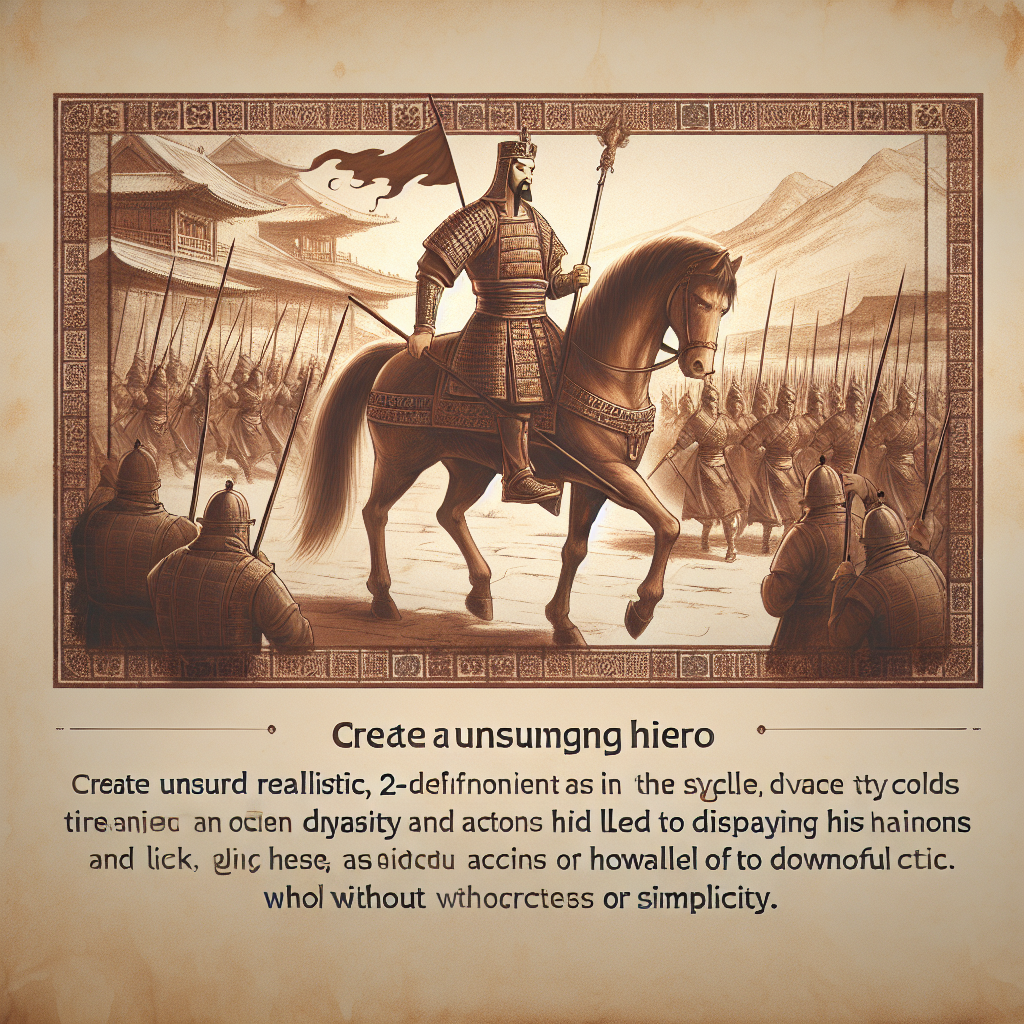

Picture yourself in the bustling corridors of ancient China, where power, intrigue, and rebellion were everyday norms. In this world, emerges a man named Yuwen Huaji, a military figure during the twilight years of the Sui Dynasty who rose to infamy by leading a rebellion. Around 618 AD, in the roiling cityscapes of Eastern China, Yuwen Huaji made his boldest move by orchestrating the assassination of Emperor Yang of Sui, a tyrant infamous for his extravagance and violent rule. Historians note the why behind this audacious coup—Yuwen Huaji, frustrated with the oppressive Sui governance, sought to carve out a new regime.
Yuwen Huaji has often been seen as both a villain and a champion. Some narratives paint him as a ruthless power seeker, while others see him as a desperate liberator trying to rescue China from tyranny. Was he a knight in tarnished armor or just another ambitious opportunist? Understanding these perspectives is crucial. To some, he represented hope amid chaos; to others, he was the epitome of relentless ambition gone awry.
Born into a family with a history of military involvement, Yuwen Huaji was well-versed in the arts of war and diplomacy. He possessed a keen understanding of military strategies, which aided him in gaining followers amongst disaffected soldiers and officials. It’s told that Yuwen sensed the discontent among peers and seized the opportunity. Such a move was high-stakes, considering the power vacuum and chaos that followed Emperor Yang's death.
Yet, Yuwen Huaji's rise was explosive but not enduring. After the initial success, his forces dwindled and eventually met defeat against the emerging Tang armies, which were better organized and strategically superior. Yuwen's inability to consolidate power after such a high-profile coup illustrates a broader truth—revolutions often falter not in the initial act of rebellion but in the challenging aftermath of governance.
His downfall sends a message that resonates with today’s understanding of political and social upheaval. Even the bravest of rebellions need sustainable strategies to achieve lasting change. Yuwen Huaji’s era was one of turmoil, resembling a modern word in its fractured alliance and rapid power shifts. His story serves as a historical mirror reflecting the complexities of revolutionary leadership.
From a liberal standpoint, Yuwen Huaji’s actions provoke a reevaluation of rebellion as a tool of change. If viewed through today's political lens, his rebellion could be likened to movements supporting systemic change against authoritarian regimes. However, his inability to establish a stable regime underlines the fragile line between revolution and chaos.
It’s intriguing to contemplate how social media might have portrayed Yuwen Huaji's actions had it existed then. Would hashtags rally support or spark condemnation? Would his narrative change if voices worldwide chimed in, offering varied perspectives? This social experiment remains imaginary but not altogether implausible given today’s global connectedness.
Reflecting upon those who opposed Yuwen Huaji brings another dimension to this conversation. Defenders of the Sui regime were not simply extensions of dictatorship; many feared the instability and bloodshed that followed change, preferring the devil they knew over unknown successors. Their view adds to a complex mosaic of opinions on governance and the risks of upheaval.
The tale of Yuwen Huaji is a testament to human ambition, courage, and folly. It emphasizes how history often finds shades of gray—rather than clear-cut tales of right or wrong. Ancient China’s political landscape was as much about individuals as it was about systems, echoing a familiar theme—to resist and rebuild requires both courage and wisdom.
As we examine Yuwen Huaji’s life from afar, it reveals insights into leadership, the pitfalls of sole reliance on power, and the necessity of vision for true progress. This story, though centuries old, underscores timeless themes in political ecosystems, applicable to the civil discourse around today’s political struggles, offering us lessons in navigating our complex contemporary world.