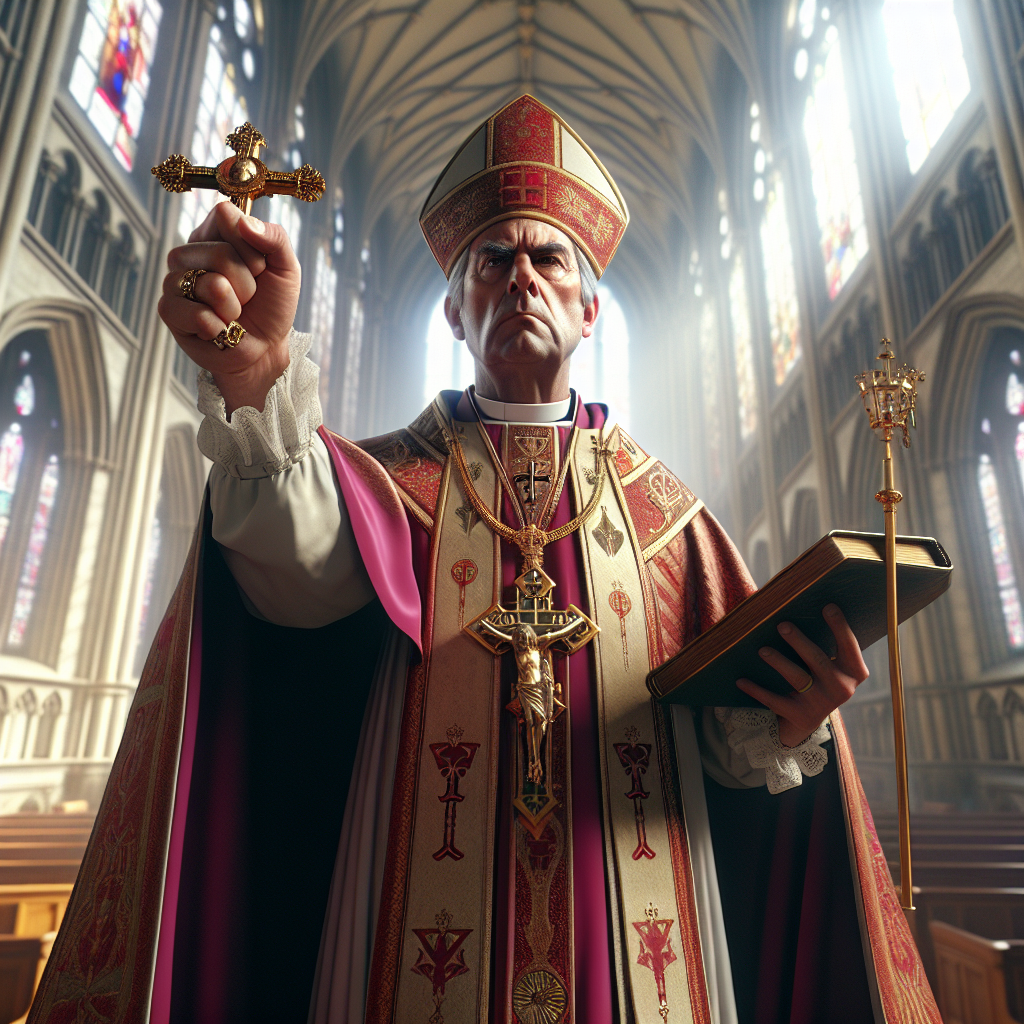

In the grand theater of history, few figures have walked the tightrope between faith and politics as precariously as William Sancroft. Born in Fressingfield, Suffolk, in 1617, Sancroft is a name that might not ring immediate bells like those of the kings or queens, but his role in the English Church during times of upheaval ensures that his legacy deserves a spotlight. As Archbishop of Canterbury during the later 17th century, his life intensely intertwined with the turbulent shifts in government and theological controversies. He was manning the helm of the Church of England during the Transitory 1660s through to the Glorious Revolution of 1688, a period when the structures of government and the church were evolving – or more accurately, being pulled apart and sewn together repeatedly.
Sancroft started on a path familiar for ecclesiastical leaders of his time. After graduating from Emmanuel College, Cambridge, he took various minor church roles before being catapulted to Dean of St. Paul's Cathedral. With the English Restoration of 1660, an epoch marked by the return of monarchy under Charles II, Sancroft enjoyed a supportive political climate for the established church. However, he didn't crawl into complacency; instead, he oversaw the massive rebuilding of St. Paul's Cathedral after the Great Fire of London, ensuring the church's place both physically and spiritually in the heart of England.
His rise continued when he was appointed as the Archbishop of Canterbury in 1678. From this point onward, he found himself amidst polarizing political and religious crosscurrents. Imagine being a religious leader who must navigate the treacherous waters of loyalties divided between Parliament and a monarch with Catholic leanings. It was no easy task, especially during a time when Catholicism was met with a fierce 'no thanks' by much of Protestant England.
Enter the Glorious Revolution. James II, the king under whom Sancroft served, took a more significant step towards Catholic tolerance. This evolution didn’t sit well with Sancroft and other Anglican bishops. In what was both a bold and risky move, Sancroft, alongside six other bishops, refused to publicly endorse James II's Declaration of Indulgence, which aimed to relax the penal laws against Catholics. This act of defiance ended with their arrest and subsequent acquittal, a turning point that contributed to the monarch's downfall and the protestant stabilization under William III and Mary II.
Although hailed as a hero of Anglicanism for his stand, Sancroft's refusal to swear allegiance to the new monarchs after the revolution sealed his fate. His doctrine of the Divine Right of Kings ascribed to an unyielding loyalty to James II even after his ouster. This belief put him in a precarious position. He was relieved of his duties, and in 1690, he retired to his hometown, draped in ecclesiastical and political isolation.
Yet, the story of William Sancroft isn't merely about a churchman caught between personal conviction and evolving political realities. It reflects the broader struggle of allegiance versus change. Many of us can relate to his crisis, pondering the same question: when do beliefs become so unyielded that they bar us from adapting to new realities?
Critics might say he was too rigid. There's a view that Sancroft's steadfastness was stubbornness masquerading as principle, a myopic commitment to a dethroned king that blinded him to the broader potential for church reform and societal change. Is there wisdom in defending a lost cause? To Gen Z, witnessing a world in continual flux, the notion of obstinate adherence to outmoded ideals sparks reflection and at times, raises eyebrows.
However, others argue that Sancroft maintained integrity in his personal belief system, resisting the bending winds of popular sentiment. Standing firm in one's convictions amidst immense pressure certainly demands respect. In today's times, deciding whether to assimilate or resist forms many social and political dialogues. Choose where to stand firm and where to evolve remains a puzzle for each era.
William Sancroft's life stands as a candle flickering in the vastness of history's winds. His story allows us to immerse in a less-discussed chapter of England's religious and political history while encouraging us to ponder our journeys and where they lead us when the winds of change blow fiercely.