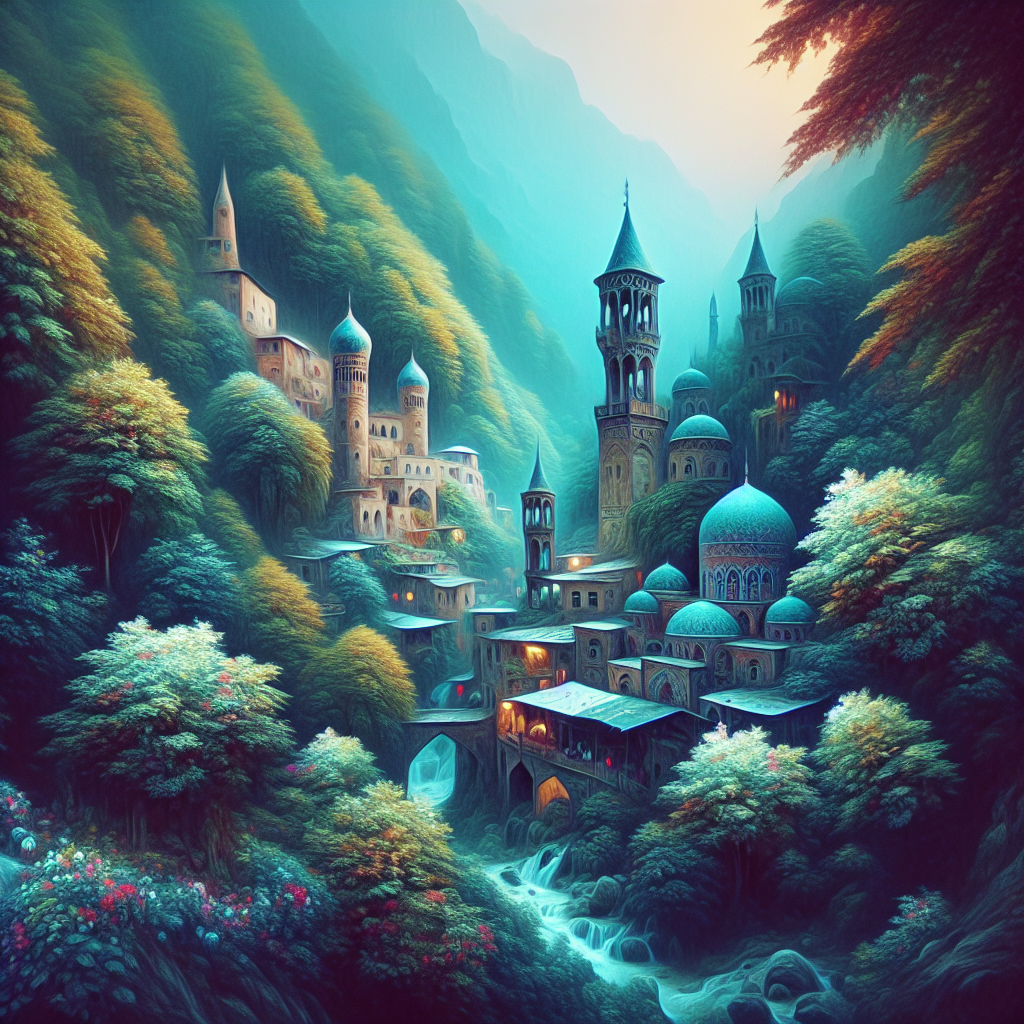

There once roamed a ruler in 10th century Persia, Vushmgir—you might say his name sounds like a word someone would invent under pressure in a word game. However, there’s nothing trivial about the role Vushmgir played in history. As a Ziyarid ruler, he reigned over present-day northern Iran from 935 to 967 AD. He governed a region stretched along the south coast of the Caspian Sea, providing a fascinating glimpse into medieval geopolitics.
Vushmgir wasn’t just any leader. His journey was shaped by alliances and betrayals typical of the tumultuous nature of Iranian dynastic politics of the time. He wasn't particularly remarkable for grand cultural advancements, but his reign was a crucial bridge between the pastoral mountain tribes and the more centralized Persian states. His story is filled with intrigue, resilience, and the relentless pursuit of power that typified Persian rulers in this era.
For those unfamiliar with the Ziyarid dynasty, it’s essential to understand that it was one of the “Daylamite” states which often engaged in alliances with larger powers such as the Abbasids and the Samanids. These alliances allowed Vushmgir to consolidate his power, though not without constant challenges from rival rulers. Despite being a pawn in the tug-of-war among greater empires, Vushmgir managed to assert his autonomy, showing an astute adaptability that may remind some of our politically-savvy contemporaries.
When assessing Vushmgir's legacy, it would be simplistic to only look at his territorial expansions or the years he managed to maintain his throne amidst frequent political upheavals. What stands out from a modern liberal perspective is how Vushmgir engaged in diplomacy and warfare out of necessity. His decisions were shaped by the cultural and geographical context of the time—a reminder of the complexity inherent in governance throughout history.
For Generation Z readers, Vushmgir's multilayered maneuvers might seem distant from our hyperconnected world, yet there's a resonating similarity in how today’s leaders navigate their positions through a web of alliances and rivalries. Whether negotiating policies or battling for rights and recognition, engaging softly with diplomacy or rallying fiercely in protest, there’s a piece of Vushmgir in the cultural and political strategies they employ.
Yet, like any historical figure, Vushmgir’s reign also provides a playground for debating the ethics of power and leadership. From an alternate viewpoint, it’s worth considering how his rule represented the challenges of maintaining authority in the face of external influence. Was he merely responding to the vast geopolitical pressures of the time, or could he have forged a different path with more profound societal impacts?
Traditionally, accounts of historical rulers are filtered through the lens of victors or primary sources that lack the critical scrutiny we apply today. It’s crucial for modern thinkers, especially those who align with liberal values, to understand that historical narratives can often underpin power structures. By questioning the motivations and outcomes of rulers like Vushmgir, we deepen our appreciation of history, recognizing both its continuity and its disruption.
This exploration isn't just about recounting battles or territorial gains but about recognizing the reflections past leaders cast on our present society. Vushmgir’s legacy prompts us to question how we write history and whose voices are amplified or muted. As digital natives with an eye on justice and equality, Generation Z would find in Vushmgir’s story a chance to discuss power dynamics, cultural exchange, and how history shapes collective memory.
While some may argue that Vushmgir was merely a figure among many, others might find that his ability to secure his realm’s independence under constant threat was an impressive feat. Vushmgir’s story isn’t just about a ruler of an ancient empire; it’s about the interplay of power, culture, and resilience—a tableau where history and contemporary insights intersect.
Vushmgir, like many other historical figures before and after him, offers a canvas for discussing the exercise of power and the moral complexities leaders face in pursuing their goals. This narrative remains relevant today, urging us to reflect not only on where humanity has been but on where it might be heading.