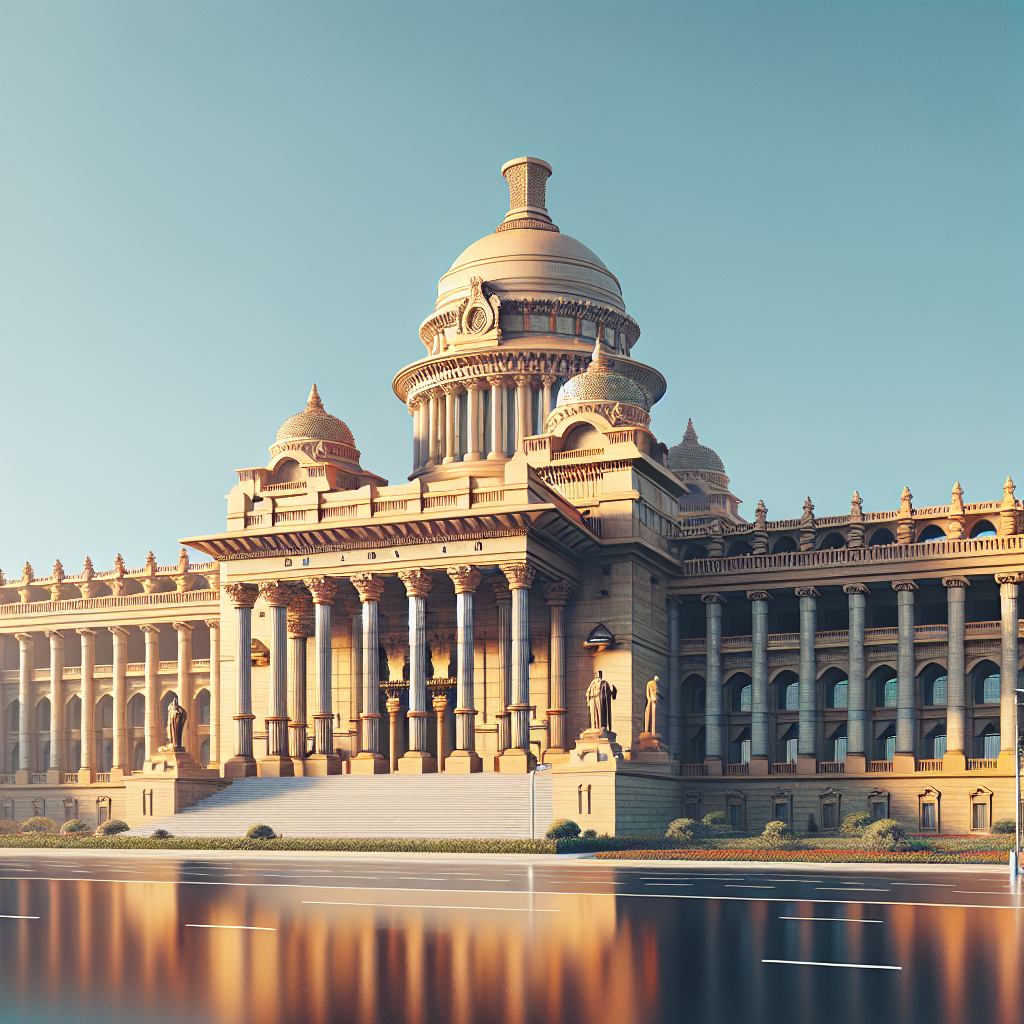

The Majestic Vidhana Soudha: A Symbol of Democracy and Heritage
Imagine a building so grand that it not only houses the legislative chambers of a state but also stands as a testament to the architectural brilliance of a bygone era. This is the Vidhana Soudha, located in Bangalore, Karnataka, India. Constructed between 1951 and 1956, this imposing structure serves as the seat of the state legislature of Karnataka. It was envisioned by Kengal Hanumanthaiah, the then Chief Minister of Mysore State, who wanted a building that would reflect the sovereignty and pride of the people of Karnataka. The Vidhana Soudha is not just a government building; it is a symbol of democracy, heritage, and the aspirations of a newly independent India.
The Vidhana Soudha is an architectural marvel, blending Dravidian, Rajasthani, Chola, and Indo-Saracenic styles. Its construction involved over 5,000 laborers and 1,500 skilled masons, showcasing the collaborative effort that went into its creation. The building is made primarily of granite, sourced from nearby quarries, and its intricate carvings and massive pillars are a sight to behold. The central dome, which is adorned with the Indian national emblem, adds to its grandeur. This fusion of styles and the sheer scale of the building make it a unique landmark, attracting tourists and architecture enthusiasts from around the world.
While the Vidhana Soudha is a source of pride for many, it also represents a complex history. The decision to build such an extravagant structure was met with criticism at the time, as India was still recovering from the economic strains of colonial rule. Critics argued that the funds could have been better spent on infrastructure and development projects. However, supporters believed that the building would serve as a lasting symbol of India's democratic ideals and cultural heritage. This debate highlights the ongoing tension between preserving cultural identity and addressing practical needs, a theme that resonates in many aspects of modern governance.
The Vidhana Soudha is not just a relic of the past; it plays an active role in the present. It is the hub of political activity in Karnataka, where important legislative decisions are made. The building hosts the sessions of the Karnataka Legislative Assembly and the Legislative Council, where elected representatives debate and pass laws that impact the lives of millions. This makes the Vidhana Soudha a living, breathing entity, constantly evolving with the changing political landscape. It stands as a reminder of the democratic process and the responsibility of elected officials to serve their constituents.
For the people of Karnataka, the Vidhana Soudha is more than just a government building. It is a symbol of their identity and aspirations. It represents the progress that has been made since independence and the challenges that lie ahead. The building is often illuminated during national holidays and special occasions, serving as a beacon of hope and unity. It is a place where citizens can witness democracy in action, reminding them of their role in shaping the future of their state and country.
In a world where modern architecture often prioritizes functionality over form, the Vidhana Soudha stands as a testament to the power of design to inspire and uplift. It is a reminder that buildings can be more than just structures; they can be symbols of our values and aspirations. The Vidhana Soudha continues to captivate and inspire, serving as a bridge between the past and the future, and a reminder of the enduring power of democracy.