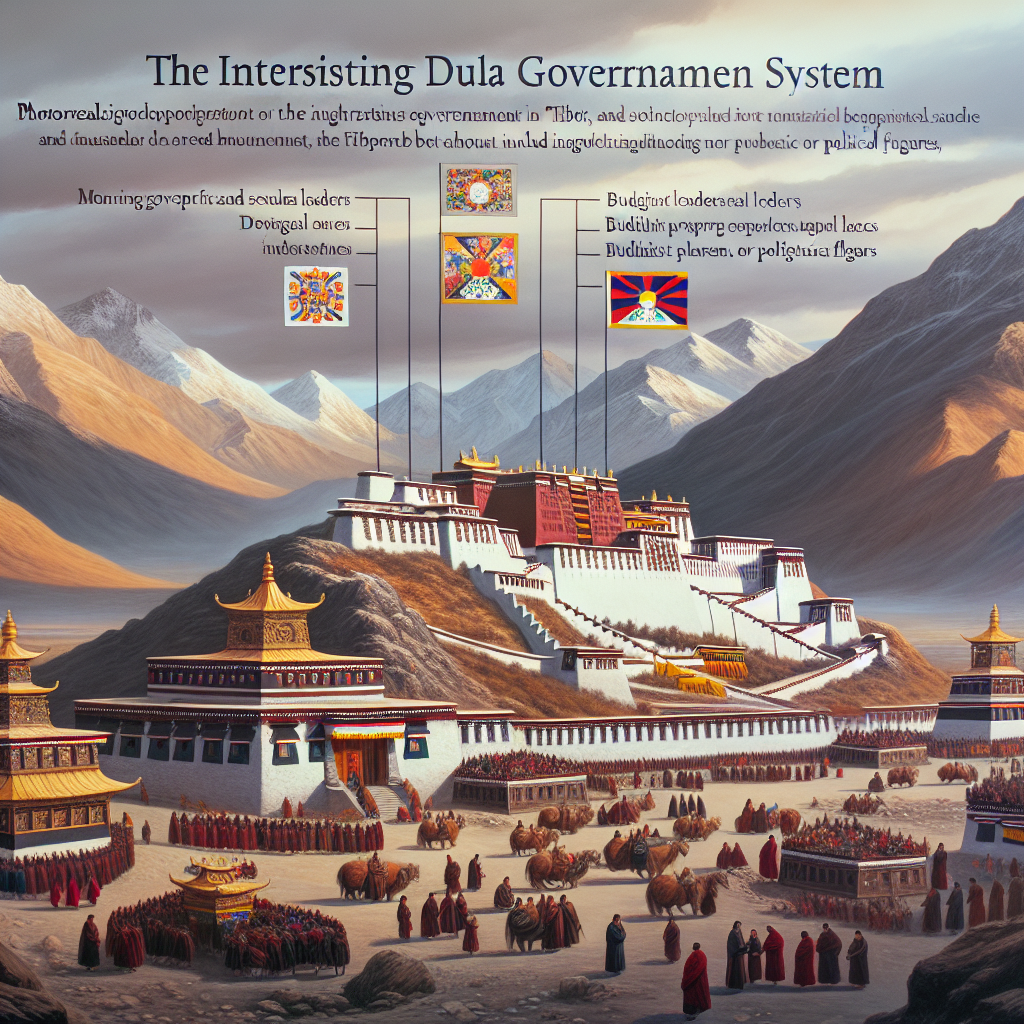

The Intriguing Dance of the Tibetan Dual System of Government
Imagine a government where spiritual and temporal powers waltz together in a delicate balance. This is the essence of the Tibetan dual system of government, a unique political structure that has been in place since the 17th century in Tibet. The system was established by the Fifth Dalai Lama, Ngawang Lobsang Gyatso, in 1642, in the region that is now part of modern-day China. The dual system, known as "Chos-srid gnyis," combines religious leadership with secular governance, reflecting the deeply intertwined nature of spirituality and politics in Tibetan culture.
The Tibetan dual system of government is fascinating because it merges theocratic and secular elements. The Dalai Lama, as the spiritual leader, holds significant influence over religious matters, while a secular leader, known as the Desi or Regent, manages the day-to-day affairs of the state. This system was designed to ensure that both spiritual and temporal needs of the Tibetan people were met, creating a harmonious society where religion and governance were not at odds but rather complementary forces.
Supporters of the dual system argue that it provides a holistic approach to governance. They believe that the spiritual guidance of the Dalai Lama ensures that moral and ethical considerations are at the forefront of political decisions. This, they argue, leads to a more compassionate and just society. The secular leader, on the other hand, is responsible for practical governance, ensuring that the state's infrastructure, economy, and social services function effectively. Together, these roles create a balanced government that addresses both the spiritual and material needs of its people.
Critics, however, point out potential flaws in the dual system. They argue that combining religious and political power can lead to conflicts of interest and may hinder progress. In a rapidly changing world, they suggest that a government heavily influenced by religious doctrine might struggle to adapt to new challenges. Additionally, critics worry about the concentration of power in the hands of a few individuals, which could lead to authoritarianism or corruption.
The dual system faced significant challenges in the 20th century, particularly with the Chinese invasion of Tibet in 1950. The Chinese government sought to dismantle the traditional Tibetan government structure, viewing it as feudal and outdated. This led to the exile of the 14th Dalai Lama in 1959 and the establishment of a Tibetan government-in-exile in India. Despite these challenges, the dual system remains a symbol of Tibetan identity and cultural heritage.
In recent years, there has been a growing interest in the Tibetan dual system of government, particularly among those who seek alternative models of governance. Some see it as a potential solution to the increasing disconnect between political leaders and the people they serve. By integrating spiritual values into governance, they argue, it is possible to create a more compassionate and equitable society.
The Tibetan dual system of government is a testament to the rich cultural and spiritual heritage of Tibet. It represents a unique approach to governance that prioritizes both the spiritual and material well-being of its people. While it may not be a perfect system, it offers valuable insights into how we might rethink the relationship between religion and politics in our own societies. As we continue to grapple with the complexities of modern governance, the Tibetan dual system serves as a reminder of the importance of balance, compassion, and ethical leadership.