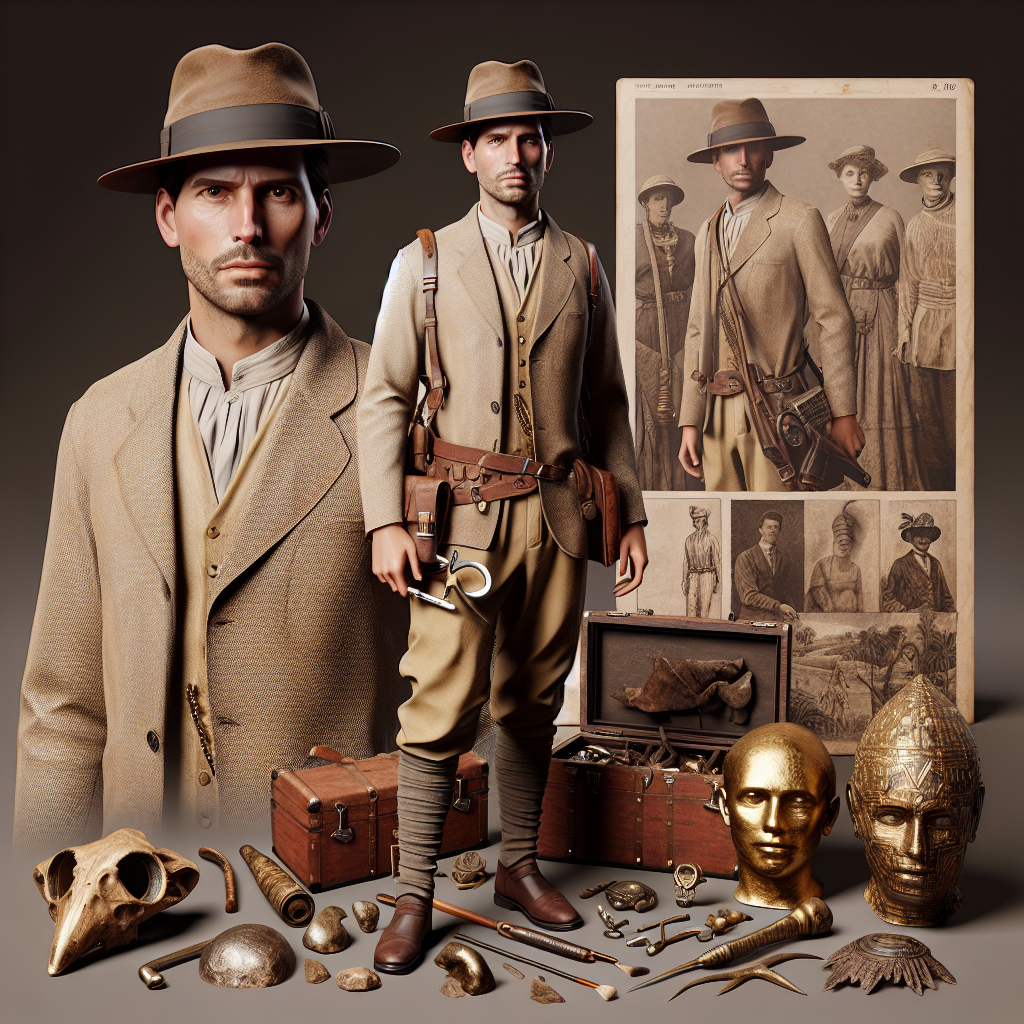

The Curious Life of Thomas Bateman: The Antiquary Who Unearthed History
Imagine a man so passionate about history that he spent his life digging up the past—literally. Thomas Bateman, born in 1821 in Derbyshire, England, was an antiquary who dedicated his life to archaeology and the study of ancient artifacts. He lived during the 19th century, a time when the field of archaeology was still in its infancy. Bateman's work primarily took place in the English countryside, where he excavated numerous burial mounds and ancient sites. His relentless pursuit of historical knowledge was driven by a desire to understand the lives of those who came before us.
Bateman's fascination with history began at a young age, influenced by his father, who was also an avid collector of antiquities. This early exposure to historical artifacts sparked a lifelong interest in archaeology. Bateman was not formally trained in the field, but his passion and dedication led him to become one of the most prolific antiquaries of his time. He meticulously documented his findings, contributing significantly to the understanding of prehistoric Britain.
Despite his lack of formal education in archaeology, Bateman's work was highly regarded by his contemporaries. He was known for his methodical approach to excavation, which was considered advanced for his time. Bateman's detailed records and careful preservation of artifacts set a standard for future archaeologists. His work provided valuable insights into the burial practices and daily lives of ancient Britons.
However, Bateman's methods were not without criticism. Some modern archaeologists argue that his excavations were more focused on collecting artifacts than on preserving the sites themselves. This approach, while common in the 19th century, often led to the destruction of valuable archaeological contexts. Critics suggest that Bateman's eagerness to unearth artifacts sometimes overshadowed the importance of preserving the integrity of the sites he excavated.
Despite these criticisms, Bateman's contributions to the field of archaeology cannot be overlooked. His extensive collection of artifacts, which he housed in his own museum, provided a wealth of information for future researchers. Bateman's work laid the groundwork for more systematic and scientific approaches to archaeology that would develop in the following decades.
Bateman's legacy is a testament to the importance of passion and dedication in the pursuit of knowledge. His work reminds us that understanding our past is crucial to understanding our present and future. While his methods may not align with modern archaeological practices, his contributions to the field are undeniable.
In reflecting on Bateman's life and work, it's important to consider the context in which he operated. The 19th century was a time of great curiosity and exploration, and Bateman was very much a product of his era. His enthusiasm for uncovering the past was shared by many of his contemporaries, who were eager to learn more about the history of their own land.
Thomas Bateman's story is one of passion, curiosity, and a relentless pursuit of knowledge. His work as an antiquary has left an indelible mark on the field of archaeology, and his legacy continues to inspire those who seek to understand the mysteries of the past.