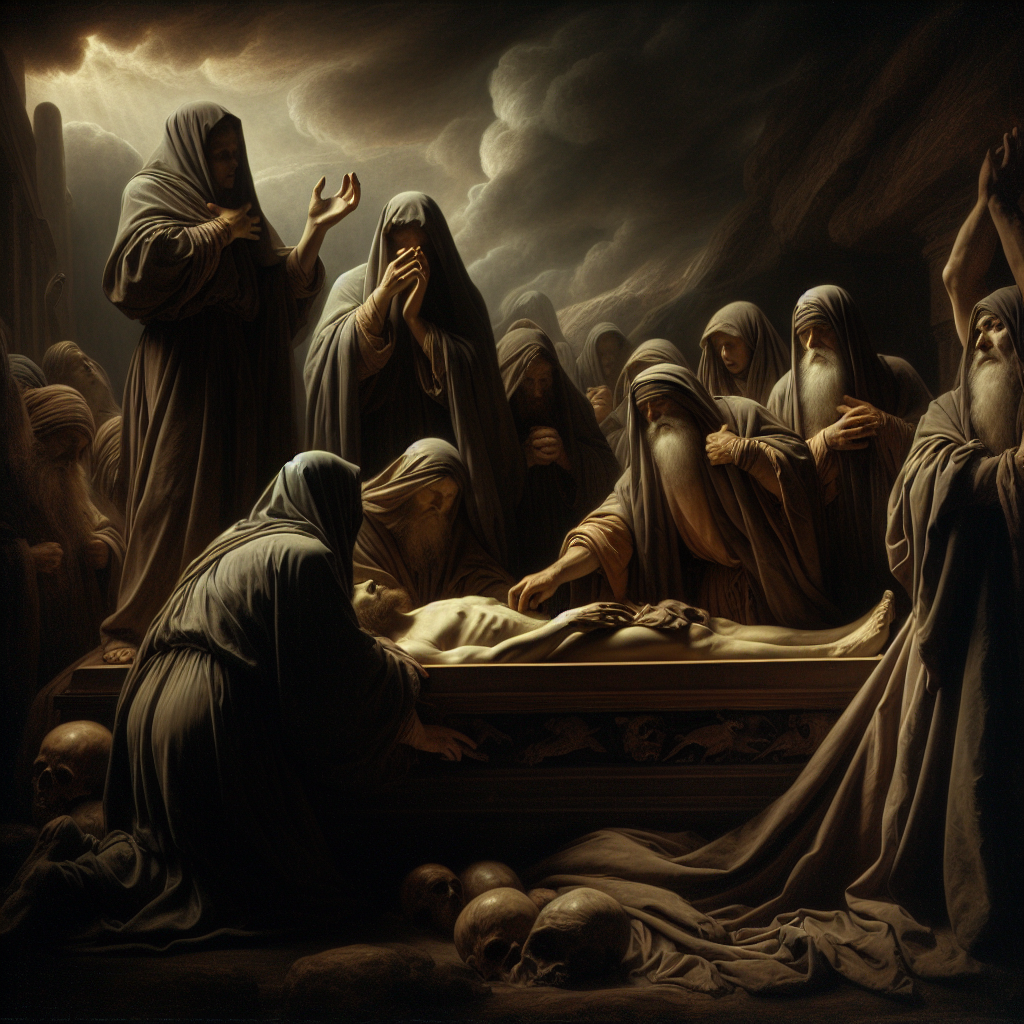

The Entombment of Christ: A Masterpiece by Rembrandt
Imagine a painting so profound that it captures the raw emotion of one of history's most poignant moments. "The Entombment of Christ," painted by the legendary Dutch artist Rembrandt van Rijn in 1639, is one such masterpiece. This artwork, created during the Baroque period, is housed in the Alte Pinakothek in Munich, Germany. It depicts the somber scene of Christ's body being laid to rest after the crucifixion, a moment that holds deep significance in Christian theology. Rembrandt's ability to convey the depth of human emotion and the gravity of the event through his use of light and shadow is what makes this painting a timeless piece of art.
Rembrandt was known for his exceptional skill in capturing the human condition, and "The Entombment of Christ" is no exception. The painting is a testament to his mastery of chiaroscuro, a technique that uses stark contrasts between light and dark to create a sense of volume and depth. In this work, the light seems to emanate from Christ's body, drawing the viewer's eye to the central figure and highlighting the sorrow etched on the faces of those surrounding him. This use of light not only emphasizes the sanctity of the moment but also serves to guide the viewer's emotional response.
The painting is not just a religious depiction but also a reflection of the human experience of grief and loss. The figures in the painting, each with their own expressions of sorrow and despair, invite the viewer to empathize with their pain. Rembrandt's ability to portray such a range of emotions speaks to his deep understanding of human nature. This emotional depth is what allows the painting to transcend its religious context and resonate with viewers of all backgrounds.
While the painting is a powerful representation of a biblical event, it also invites discussion on the broader themes of mortality and the human condition. The entombment of Christ is a moment of transition, symbolizing both an end and a beginning. It is a reminder of the inevitability of death and the hope of resurrection, themes that are universally relevant. Rembrandt's portrayal of this moment encourages viewers to reflect on their own beliefs and experiences with life and death.
Critics and art historians have long debated the significance of Rembrandt's choice to focus on the entombment rather than other moments from the Passion of Christ. Some argue that this choice reflects Rembrandt's interest in the human aspects of the story, rather than the divine. By focusing on the entombment, Rembrandt highlights the shared human experience of loss and the hope for redemption. This interpretation aligns with the broader humanist trends of the Baroque period, which emphasized the importance of individual experience and emotion.
Despite its religious subject matter, "The Entombment of Christ" has been appreciated by audiences of various beliefs for its artistic brilliance and emotional depth. The painting serves as a bridge between the sacred and the secular, inviting viewers to engage with its themes on a personal level. Rembrandt's ability to capture the complexity of human emotion in a single moment is what makes this painting a masterpiece that continues to captivate audiences centuries after its creation.
In a world where art often serves as a reflection of society's values and beliefs, "The Entombment of Christ" stands as a testament to the enduring power of empathy and understanding. Rembrandt's work reminds us of the importance of connecting with others through shared experiences, even in moments of profound sorrow. As we continue to grapple with the challenges of our own time, this painting offers a timeless reminder of the resilience of the human spirit.