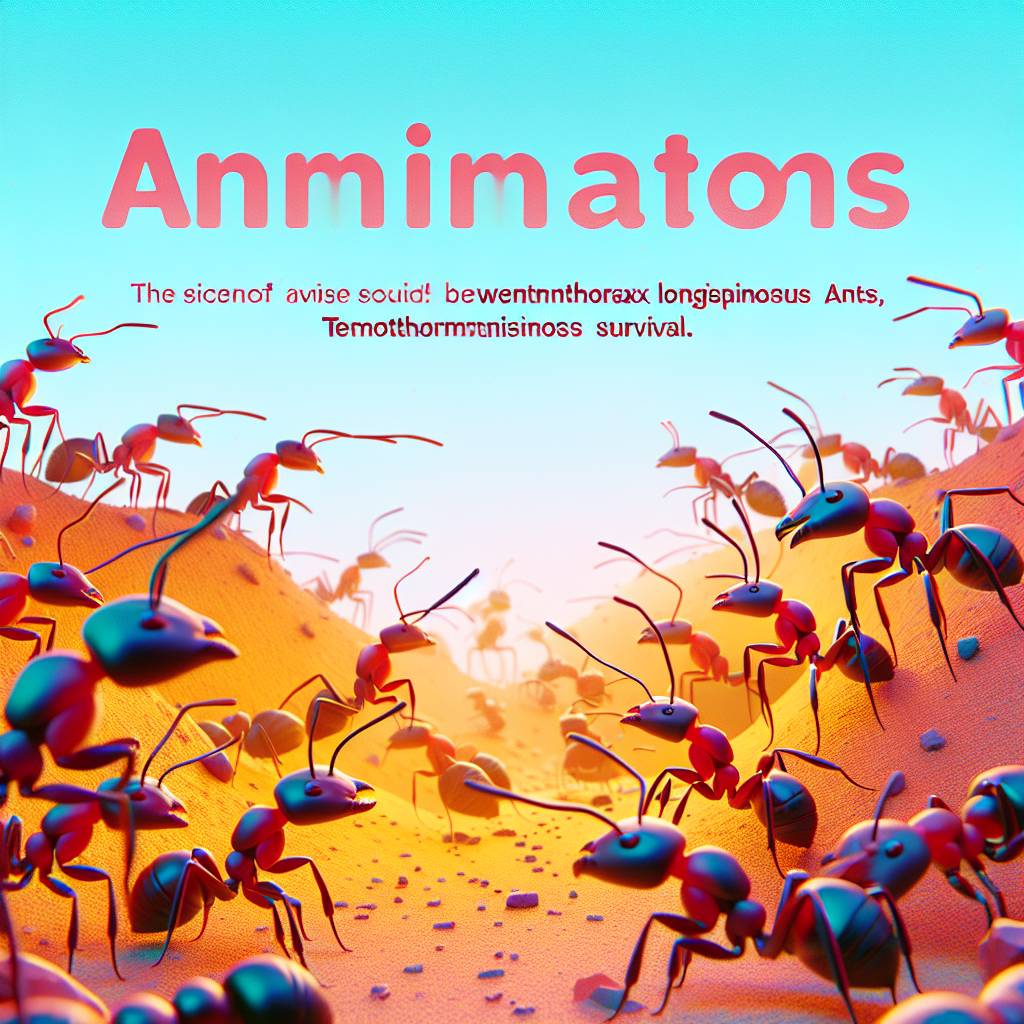

The Tiny Warriors: Temnothorax longispinosus and Their Battle for Survival
Imagine a world where tiny ants wage epic battles for survival, and you have the fascinating story of Temnothorax longispinosus. These small but mighty ants, native to the forests of North America, are known for their unique social structure and intriguing behavior. They are often found in the leaf litter and rotting wood of deciduous forests, where they play a crucial role in the ecosystem. The species is particularly interesting due to its interactions with other ant species, especially in the context of "slave-making" ants, which raid their colonies to capture workers.
Temnothorax longispinosus ants are not just passive victims in these raids. They have developed sophisticated strategies to defend their colonies and ensure their survival. This includes aggressive defense tactics and even the ability to recognize and reject parasitic queens. These ants are a testament to the complexity and adaptability of nature, showcasing how even the smallest creatures can have a significant impact on their environment.
The existence of Temnothorax longispinosus raises important questions about the balance of power in nature and the ways in which species adapt to threats. Their interactions with slave-making ants highlight the ongoing struggle for survival that defines much of the natural world. This dynamic is not just a battle of strength but also of wits, as these ants employ various strategies to outsmart their adversaries.
From a broader perspective, studying Temnothorax longispinosus can provide insights into the evolutionary arms race that occurs between species. It also offers a glimpse into the complex social structures that can develop in animal communities. These ants, with their intricate social behaviors and survival strategies, challenge our understanding of intelligence and cooperation in the animal kingdom.
While some might view the actions of slave-making ants as cruel, it's essential to recognize that these behaviors are part of a natural process that has evolved over millions of years. The interactions between Temnothorax longispinosus and their adversaries are a reminder of the harsh realities of nature, where survival often depends on adaptability and resilience.
For those who are passionate about conservation and biodiversity, the story of Temnothorax longispinosus underscores the importance of preserving natural habitats. These ants, like many other species, rely on specific environmental conditions to thrive. Protecting their habitats ensures that these fascinating creatures continue to play their role in the ecosystem.
In a world where human activities increasingly threaten biodiversity, understanding and appreciating the complexity of species like Temnothorax longispinosus is more important than ever. They remind us of the delicate balance that exists in nature and the need to protect it for future generations. As we learn more about these tiny warriors, we gain a deeper appreciation for the intricate web of life that surrounds us.